Monday, April 16, 2018

Will 5G Become a Substitute for Australian NBN?

Will 5G displace NBN or complement the Australian NBN network? Much arguably depends on pricing. And full mobile substitution is not actually the bigger danger, but the degree of substitution. In competitive markets, share shifts of 10 points can mean the difference between profit and loss.

It is possible that 5G will offer potential buyers a speed advantage over the fixed NBN network, if NBN speeds top out at 100 Mbps, but 5G offers gigabit speeds. If latency performance is comparable, then the key issue will be retail tariffs.

Up to this point, the mobile cost per gigabyte has been as much as an order of magnitude higher than the cost of using a fixed network alternative. But mobile operators know they must erase that differential to be competitive, and that is why lots of new millimeter spectrum, spectrum sharing, small cells, aggregation of unlicensed spectrum, open source technology and virtualization are so vital.

All of those developments will allow mobile operators to reduce the cost per gigabyte of mobile solutions to fixed network levels. By some estimates, perhaps 15 percent of U.S. internet users already rely exclusively on mobile internet access.

And that is under circumstances where mobile access is slower and ten times more expensive than fixed services.


Over the past several years, concerns about millimeter wave signal propagation have lessened. In its own tests, AT&T has found it can deliver gigabit speeds from small cells at commercially-viable distances (450 feet to 900 feet from a base station).

Will 5G be priced in ways that some potential buyers can justify using 5G as a full substitute for fixed network internet access? That is the key issue.

Strategically, mobile substitution is almost certain to become a direct product substitute for fixed access, as mobility has become the primary way users consumer voice services, with the fixed network being a supplement.

In fact, in the U.S. market, some already have noted that fixed internet access might have reached a peak in 2013. What is not clear is what is happening in the consumer broadband market, as compared to the business customer segment, as the consumer segment is where the product substitution is likely to be most obvious.

What Does "5G Leadership" Mean?

In economic terms, 3G often is said to have been “lead by Europe,” and 4G often is said to have been “lead by the United States.”

So a new report commissioned by CTIA argues that “China, South Korea, and the United States are currently leading the race to 5G.”

That term most applies to the potential impact on firms supplying the market. “America’s 4G leadership resulted in economic and job growth that would have otherwise gone to other countries,” the report states. “Losing wireless leadership in 3G and 4G had significant, long-term, negative effects on the Japanese and European telecommunications industries.”

Though it is understandable that an industry trade group would say such things, the claim that “leadership” in 3G or 4G had direct benefits for industry suppliers has to be qualified.

Consider the matter of mobile phone suppliers. In the “mobile equipment industry, we had 80 percent of the market in 2008 and because we were not ready for 4G mass deployment, the EU industry lost almost its entire market share for mobile phones,” the report has an EU source saying.

Many would say that is a result of the fact that smartphone sales shifted to Apple (based in the United States) and away from Nokia (Finland-based).

Likewise, in the case of handset suppliers, the report states that “most Japanese corporations exited the handset business and their early lead in mobile internet services faltered.” Again, that is largely a function of market share leadership (and unprofitability for most handset suppliers) except for Apple and Samsung (Korea-based).

Most recently, Chinese suppliers have surged as suppliers of lower-cost handsets.

Then there is the area of applications, where, by all accounts, U.S. firms such as Google, Facebook, Amazon and Netflix have been big beneficiaries of the shift to mobile application use and business models, no comparable European firms have grown, and scale players rivaling U.S. firms have emerged mostly in China.

In other words, “winners” in 4G have come in the area of device suppliers and at-scale applications providers, at a time when network infrastructure “leadership” has been questionable. No U.S. or Canadian firms arguably “lead” global telecom network infrastructure markets, the remaining European suppliers are facing profitability concerns, while Chinese firms currently are taking market share.

In other words, “4G leadership” has been true for a few firms in the device and applications area, but has had less-clear advantages in the network infrastructure areas.

To be sure, government policies to release much more spectrum for 5G services does matter. Without such additional spectrum, 5G will not be easy, if possible at all. But service providers will have to discover and create new revenue streams in the 5G era, beyond simply shifting revenue from 4G to 5G, as service revenue likewise was shifted in the transition from 3G to 4G.
The point is that 5G leadership is probably going to be more complex than expected. In the network infrastructure area, a few Chinese firms are poised to win. The same likely holds in the device area and applications area.

Beyond that, it remains hard to see how firms in Europe, the United States or other areas will fare. As understandable as industrial policy preferences might be, what “5G leadership” means, and whether it is actually possible to create new winners--beyond the trends we already see--is open to debate.

Thursday, April 12, 2018

Mobile Substitution in India

Some observers are relatively unconcerned about the potential impact of 5G and other untethered access offers on fixed internet take rates and subscriber volume. Reliance Jio’s massive disruption of the mobile industry might also suggest that untethered access is subject to mobile and wireless substitution.

Reliance Jio’s average usage levels of around 10 gigabytes per customer are much lower than the 56 GB per month that buyers of fixed broadband connections in India consume,  according to Analysys Mason estimates.

In that sense, there is--with existing offers--a natural limit of the substitution effects. Reliance Jio has fair use limits of 4 GB per day, and arguably does not always operate at speeds that are functionally comparable to fixed access offers.

However, Reliance Jio also offers JioFi MiFi devices, the users of which are likely to represent a single percentage point figure of its overall subscriber base.

On the other hand, Reliance Jio does offer usage plans offering 112 GB per month worth of usage, selling for about $8 a month. So long as typical usage does not exceed close to 4GB each day, that can make such a plan a reasonable substitute for fixed service.

The evidence for growing mobile substitution is that fixed internet accounts have dipped since mid-2017, as Reliance Jio gained mobile market share.


Fixed broadband subscribers, India, November 2015–November 2017
Figure 1: Fixed broadband subscribers, India, November 2015–November 2017


Wednesday, April 11, 2018

Is Sprint Merger with T-Mobile US Possible? Would it Succeed?

With the news that Sprint and T-Mobile US are once again talking about a merger, it is worthwhile to note that big mergers of almost any sort have a high failure rate, or fail to deliver promised strategic advantages.

According to one study by KPMG, perhaps 83 percent of studies U.S. mergers actually failed, in terms of increasing equity value of the new entities.

About 32 percent of merged firms showed equity value increase, while almost 70 percent actually reduced shareholder worth or, at best, were neutral.

Perhaps tellingly, the amount of increase--where it happened--is arguably less than if the firms had not merged, KPMG found.

Of course, that gamble obviously gets taken frequently, in the telecom and other markets. Sometimes “being early” is as bad as “being too late.” Recall that back in 1998, AT&T, then a long-distance voice provider, acquired the largest U.S. cable TV provider, Tele-Communications Inc., in a $48 billion deal.

The logic was simple. AT&T owned no local access networks, and needed such assets to compete with the former Regional Bell Operating Companies, which provided local access, but were moving into the long distance and other new lines of business.

As crazy as it might seem in retrospect, the big prize was viewed as the ability to use TCI’s cable TV assets to provide local phone service, not the ability to enter the video entertainment business. The internet access business was yet nascent, and while viewed as an advantage, it was the local phone revenue streams that drove the transaction logic.

Nor was that the first such proposed deal. In 1993, RBOC Bell Atlantic Corp. also tried to buy TCI for $16.7 billion, less to support its long distance voice operations but to gain leverage in the coming “information superhighway” arena (internet and content). The deal would, at that time, have been the largest-ever U.S. merger.

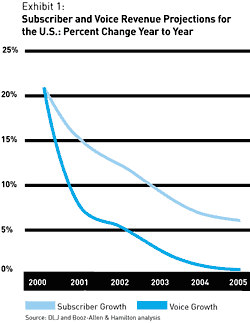
In retrospect, the whole strategic thrust was misplaced, as the voice business was at the cusp of major decline as a driver of revenue and profit. At the time, voice conservatively was described as a $100 billion annual business.”


Presumably that referred to the amount of local access revenue, as total fixed network revenues  in 1998 were closer to $246 billion. In 1999, long distance voice alone represented about $111 billion.

The point is that the big revenue upside driving the AT&T merger with TCI was viewed as local voice services.

Instead, U.S. voice line usage peaked around 2000, with revenues peaking about 2002. And revenue growth shifted to mobility (product substitution) and internet access (fixed network).

So the question is whether a merger of Sprint and T-Mobile US, intended to strengthen the new firm’s ability to compete against Verizon and AT&T in the mobile segment, is any better, as a strategy, than spending capital and effort to gain share in the voice business was in 1998.

It already seems possible that revenue growth and value are shifting again. Where voice growth was replaced by revenue gains from mobile substitution and fixed network internet access and entertainment video, so one might well ask whether growth in the next phase might shift again.

Already, observers predict that the value of a fixed network is shifting, with more value driven by small cell backhaul and enterprise customers. Mobile account and internet access revenue growth is flat.

Others might argue that the whole point of consolidation (Sprint combining with T-Mobile US) is the ability to raise prices in the mobile segment of the business, which is the practical meaning of the argument that a merged entity could better compete with the likes of AT&T and Verizon.

On a practical level, since antitrust regulators signaled a year ago that such a combination would be challenged, it is not clear that anything major has changed.

A few such horizontal mergers have been opposed in recent years (AT&T plus T-Mobile US; Sprint plus T-Mobile US; Comcast plus Time Warner Cable). And even though vertical mergers that do not reduce the number of competitors in a market have been cleared (Comcast plus NBCUniversal; AT&T plus DirecTV), even some proposed vertical mergers (AT&T plus Time Warner) are being challenged by antitrust authorities.

One key question is the minimum number of suppliers needed to ensure reasonable levels of competition. It is empirically unclear whether, in any market, the minimum number of suppliers is as low as two, or as high as four.

It is possible that three major contestants would still provide reasonable competition in the mobile market, even if such consolidation also allows more pricing power within the market. Of course, the markets are in motion. Long-term roles for fixed and mobile operators are fluid; new competitors are emerging and revenue sources are evolving.

At some point, when Comcast and Charter emerge as bigger providers, possibly as facilities-based suppliers, such a merger might not have the same consequences. Or, alternatively, it is possible that a Comcast or Charter actually becomes the owner of one or both of those assets.

In principle, that leaves open the possibility that the “mobile market” could still be lead by four providers (Verizon, AT&T, Comcast and Charter, each owning either Sprint or T-Mobile US). ]

Other combinations also are possible, of course.

The point is that antitrust action that was signaled a year ago still seems likely, should a Sprint-T-Mobile US merger be proposed again. And even if unopposed, the likelihood of long-term sustainable success is somewhat doubtful (the markets are changing and big mergers fail more than they succeed).

Tuesday, April 10, 2018

AT&T Mobile 5G Tests Confirm Gigabit Speeds at 450 to 900 feet Distances

If AT&T is to launch mobile 5G service in 2018, it has to be sure its millimeter-wave frequencies and small cells work as planned. And tests suggest signal propagation will not be a problem.

In its Waco, Texas tests providing service to small and mid-sized businesses, mobile speeds of 1.2 Gbps, with latency between nine and 12 milliseconds were obtained at (roughly 450 feet) 150 meters distance, supporting “hundreds of simultaneous connected users” using the 5G network.

In Kalamazoo, Michigan AT&T found its small cell sites and millimeter wave frequencies were not degraded by rain, snow or other weather events. The signals even were able to penetrate significant foliage, glass and even walls better than initially anticipated.

Speeds greater than 1 Gbps in line of sight conditions were obtained at 900 feet (about 300 meters).

In South Bend, Indiana customers (consumer and small business) worked in both line of sight and some non line of sight locations.

U.S. Mobile Net Adds Shifting to IoT

Making sense of mobile account churn in the U.S. market is becoming more complicated, as net additions increasingly are driven by non-human accounts such as those supporting connected cars.

In 2017, for example, for the full year, more connected car accounts were added than phone accounts. Internet of Things, in other words, is going to reshape the “new account additions” figures, obscuring changes in market share of “human” smartphone accounts.  


There are other implications, such as account lifetime value increasing, as customer lifetimes are getting longer.

Monday, April 9, 2018

Mobile Real-Time Entertainment Will Approach Fixed Network Levels

In a test that shows why mobile operators are going to be needing lots more bandwidth as they become major distributors of entertainment video, Dish Network demonstrated delivery of signals using the new broadcast ATSC 3.0 standard (4K TV) in Dallas, Texas, using 700 MHz E Block spectrum (former broadcast TV channel 56).

The ATSC standard allows multiple bit rates in a standard 6-MHz channel, ranging from 1 Mbps to 57 Mbps.

In 2015, in peak usage periods, real-time entertainment video drove 41 percent of downstream bandwidth demand, according to Sandvine.  Since perhaps 2011, real-time entertainment has driven more than 50 percent of mobile data usage in the U.S. market.  

In 2018, U.S. mobile data demand could break 63 percent of total usage, Sandvine has estimated. In other words, mobile video consumption is approaching fixed network levels.

On all networks, video entertainment drives as much as 70 percent of bandwidth demand.


Is Sora an "iPhone Moment?"

Sora is OpenAI’s new cutting-edge and possibly disruptive AI model that can generate realistic videos based on textual descriptions.  Perhap...