Thursday, November 21, 2019

How Long Can 5G be Delayed by Extending Life of 4G?

Some might ask why mobile operators do not try and avoid 5G by adding more spectrum to their 4G platforms, and that is a good question, if seldom asked. The answer is that most mobile operators will rely on 4G, and 4G capacity improvements, for quite some time.

And, yes, the strategy in many cases will be to delay 5G investments as long as possible.

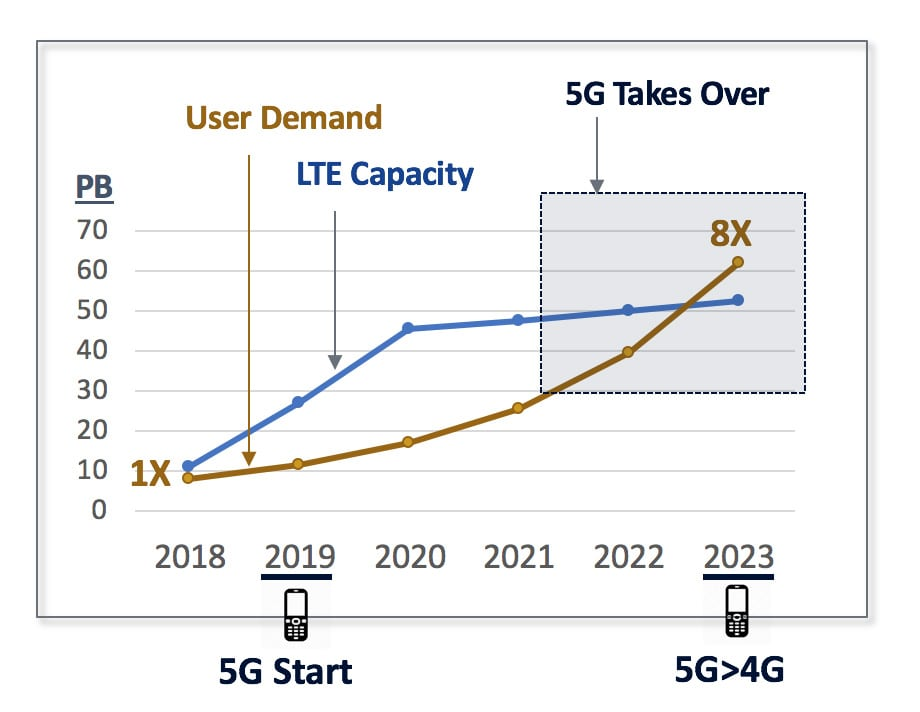
But there are clear limits to how much can be done. Eventually, 4G simply fails to keep pace with the anticipated growth of bandwidth consumption. And, at that point, 5G really has to be used.

There are many reasons why communications networks--especially those serving consumer customers--must constantly drive capital investment and operating costs down. But data consumption and ability to pay are the two biggest reasons. The former is unlimited; the latter sharply limited. 

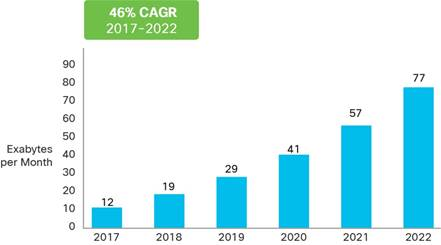
Data consumption simply keeps growing, Cisco Visual Networking Index always shows. 


Consumer spending is quite limited. As data from the United Kingdom shows, consumer spending on mobility, mobile data or communications services does not change much from year to year. Data from the U.S. market shows similar trends

The big takeaway is that consumer budgets tend to be highly fixed. 

So the big business challenge for mobile operators is finding ways to increase the supply of bandwidth, for roughly the same retail prices, while maintaining profit margins. 

And 5G, though touted for enabling many new use cases and applications, actually is one solution to the need for lower capex and opex. 

To be sure, 4G can keep supplying additional capacity, up to a point. A few technologies, better radios and small cell architectures are key to that effort.

Among the technology improvements, many would point to MIMO radios, 256 QAM for more intense modulation and carrier aggregation (for 60 MHz bandwidth or more) as ways to get to gigabit 4G.

The 3GPP standards for 4G support aggregating up to 32 carriers for LTE. Not only does that create bigger channels that support more bandwidth, and therefore higher speeds, but doing so also increases efficiency, eliminating bandwidth that otherwise would be wasted for guard bands. 

Operators are deploying massive MIMO antenna configurations with up to 128 antenna elements (64 transmit and 64 receive), which increases bandwidth by essentially creating multiple parallel channels where a single-antenna system has but one channel. 

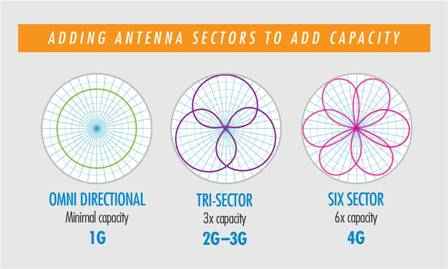
Radios also are using more heavily sectorized radios, which supply more effective bandwidth by reducing interference. Where traditionally cell tower radios have used three sectors, 4G cell sites now use six sectors or nine sectors.
Denser networks using smaller cells also are part of the solution, creating more effective bandwidth by more intensively reusing existing spectrum. 

So one might ask why not simply use 4G and add more new spectrum. Part of the issue is that the 4G standard only includes frequencies up to 5 GHz, not any frequencies above that range. Standards-compliant network elements and platforms therefore cannot be purchased to support spectrum above 5 GHz. 

The point is that 4G can continue to increase bandwidth, using a number of known technologies and architectures, but only up to a point. We cannot use spectrum above 5 GHz for 4G networks, by design. 

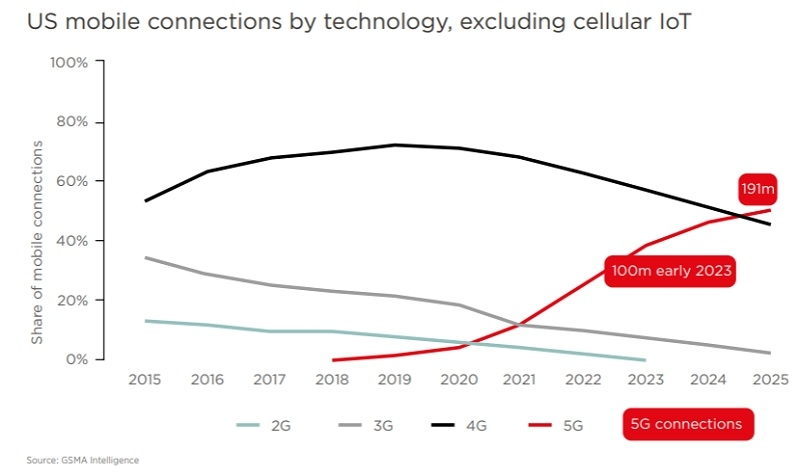
For that reason, LTE capacity will typically saturate for mobile operators from around 2020. And that is why some mobile operators already are moving to add 5G capacity. 
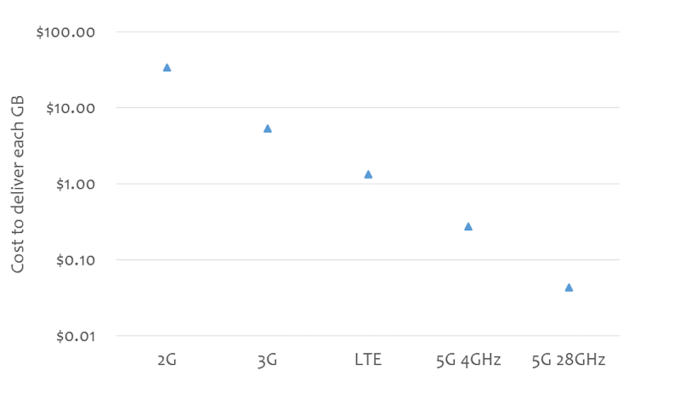
The cost of bandwidth--not just its supply--is another reason for the planned switch to 5G. As users continue to increase their bandwidth consumption, their propensity to pay does not. 

In fact, the fundamental reality is that more bandwidth must be supplied at roughly the same retail price, all other things being equal.

So 5G makes sense because it offers a cost per gigabyte at least 10 times lower than 4G, to start, and using a range of technologies and architectures might conceivably get to cost per gigabyte 100 times lower than 4G. That will especially be possible using millimeter wave spectrum. 


German Preference for 4G Seems Low

We often are surprised at the resilience of legacy services. That appears to be the case for German mobile users and 3G. According to a recent study by Opensignal, as many as half of German subscriber identity modules (mobile accounts) are not enabled for 4G service.

According to Opensignal, perhaps 81 percent of those non-users have for some reason elected not to buy 4G service. Some might suggest the “poor” state of German 4G networks explains why people do not buy. That seems unlikely. 

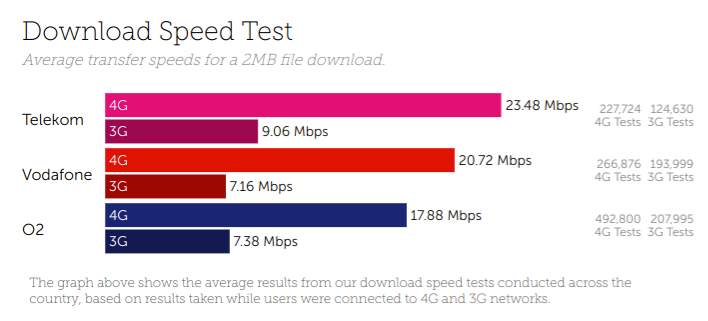
In a July 2019 study by Tutela, 4G downstream speeds averaged 23.5 Mbps on Telekom’s network, 21 Mbps on Vodafone and 18 Mbps on O2 networks. 


To be sure, German downstream speeds tend to be slower than in Switzerland or Austria, as measured by Tutela, but average downstream speeds--based on both 3G and 4G activity--of about 14 Mbps do not seem out of line on a global basis. 

Also, recent tests show typical 4G speeds in German cities ranging from about 25 Mbps to 35 Mbps, which does not seem slow, as far as 4G goes. 


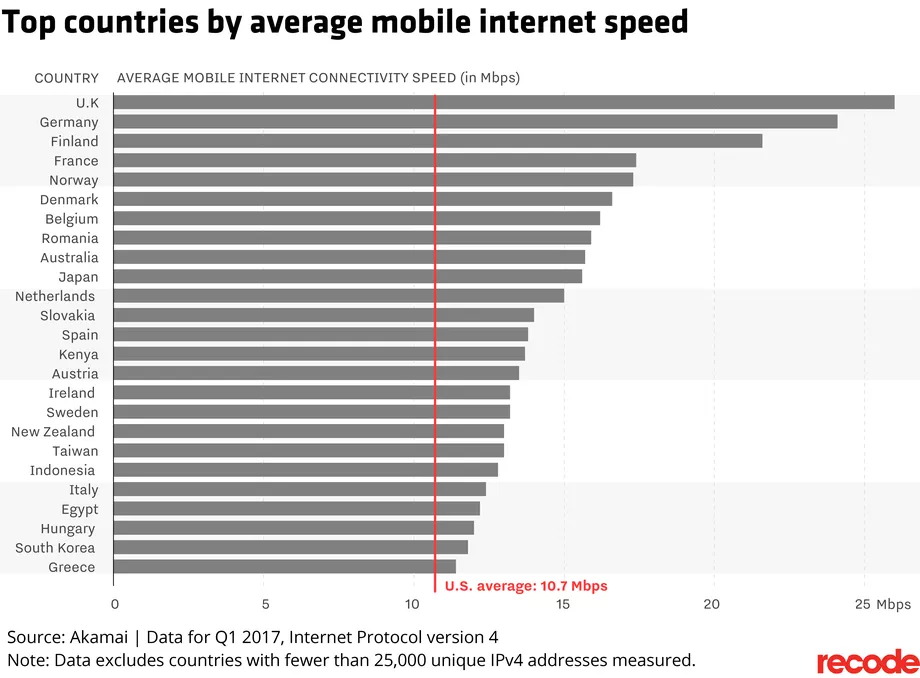
Nor do German 4G speeds seem to have lagged, by about 2017, in comparison to other developed nations. 


The point is that it is not self evident that poor 4G experience explains the lag in uptake. But some might point to coverage, rather than speed, as an explanation. 

“Whereas network providers in the Netherlands, Belgium and Switzerland can almost all offer LTE (4G) connections nearly 90 percent of the time, German communications giant Deutsche Telekom in Germany achieves only a 75 percent rate,” a study by consulting firm P3 says. Vodafone in Germany has 57 percent LTE coverage, P3 says. 

By some estimates, 4G coverage in Germany does not seem underdeveloped, though, and less coverage in eastern regions might be explained by greater rural character in the east. 


According to Germany’s Federal Network Agency (Bundesnetzagentur),  at the end of 2018, there were 107.5m active SIM cards in Germany (excluding M2M and IoT cards), but only 50.5m 4G/LTE SIM cards in active use. This would indicate that roughly half of the active SIM cards were not LTE-enabled

According to Opensignal, 81.4 percent of users that have never connected to 4G had a 4G-capable phone and spent time in 4G-covered areas. “These users likely did not upgrade to a 4G subscription or have disabled 4G connections on their phones,” says Opensignal.

Perhaps 15.6 percent of users who did not connect to 4G networks spent time in 4G-covered areas but did not have a 4G-capable device. 

A small percentage of non-4G users (perhaps three percent) appear not to live in rural areas where 4G is available.

5G: Nothing Static for a Decade

Of all predictions about 5G in 2020, Opensignal’s views are as reasonable as any. The main point, though, is that everything is in motion; all is conditional when a new next-generation network is being built. No claims will prove lasting and every snapshot of progress or status is just that, an assertion about status in a point in time about something constantly in motion. 

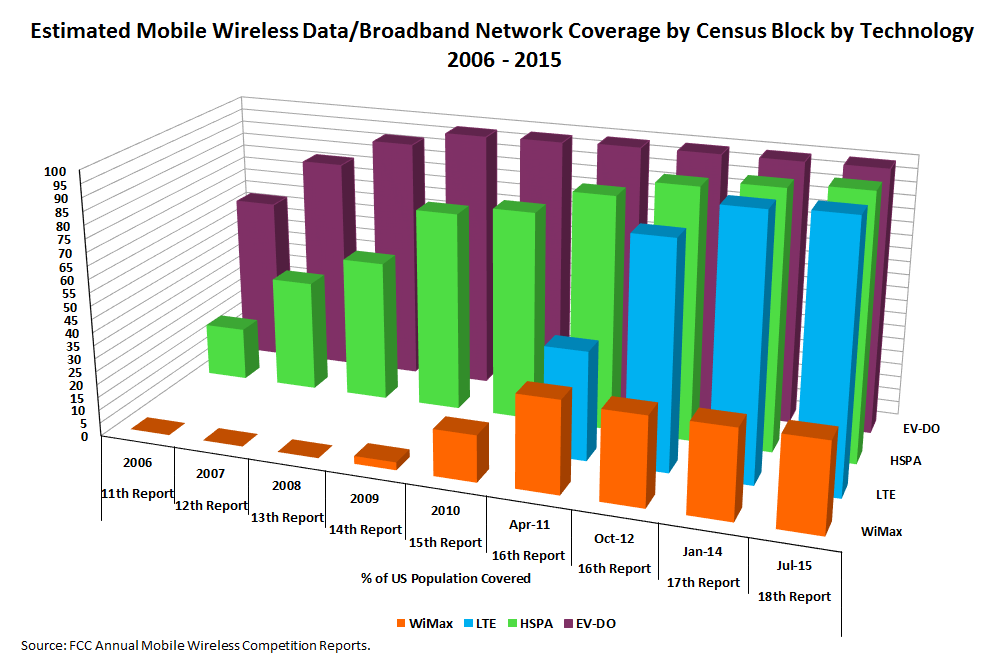
Consider 4G, which launched by Verizon in 2010, with a buildout that essentially reached national coverage similar to 3G in about four years. The other national carriers took longer to reach similar coverage levels. 

5G coverage will be incomplete; even spotty. Older networks will continue to represent the primary connections (either 3G or 4G). 

Though small city states can deploy a whole new network rather quickly, a continent-sized network always requires five years or more to reach significant coverage of the population, and longer to achieve anything close to 98 percent coverage of the surface area. 

Since most people live in cities in most countries, population coverage and territory coverage are not synonymous. Still, U.S. 4G coverage reached about 55 percent of the population after about five years. In Europe, 4G coverage reached about 34 percent of people after five years. In East Asia, 4G reached perhaps 24 percent of people after five years. 


The point is that it is reasonable to expect 5G deployments will reach about half of people in perhaps five years, at best, in North America, Europe or East Asia, with faster adoption possible in smaller countries. 

The point is that we are in for a period of at least half a decade where nearly every claim or assertion is only temporarily correct. Almost every numerical measure will change, continuously, as investment continues. 

Virtually the same might be said for innovations and changes in use cases, applications, subscriber numbers, pricing and other terms of service changes, revenue and cost structures, handset availability, handset cost and features. 

Early on, 5G will often be a capacity reinforcement strategy, as 4G was, early on. Marketing will be challenging, as always when a new network is coming online, as mass media casts too broad a footprint, stimulating demand where supply is not available. 

It is conceivable that some mobile operators will experiment with new retail packaging plans, perhaps moving to emulate fixed network differentiation based on speed tiers. 

In some markets where millimeter wave spectrum is available, some operators might expand unlimited usage plans or use millimeter wave spectrum to compete directly with fixed networks for internet access accounts. Up to this point, mobile spectrum has cost an order of magnitude more than fixed access, making it a poor substitute for fixed network services.

In some cases, millimeter wave assets will allow full competition for the first time. But it will take years before we are able to assess the magnitude of such opportunities, as network coverage and marketing will be limited for some years to come. 

As always, the next-generation 5G network will, at least temporarily, widen the gap between urban and rural services (speeds, especially). That always happens because new networks are built first in cities, where the payback is quickest and demand the greatest. 

“All of the above” will be a key feature of 5G spectrum usage, with different countries using different frequencies.

The bottom line is that any 5G trends will be tentative, possibly short-lived, and ever-changing, for the better part of a decade. That will be true for network coverage, applications and use cases as well as devices and revenue models.

Wednesday, November 20, 2019

In Phillippines, Zero Rating May Correlate with Ability to Pay for Mobile Data

In at least in one country that has embraced zero rating--the Philippines--where consumers have no-charge access to Facebook Basics, and where mobile data rates tend to be low, relatively fewer consumers report they do not use mobile data because of cost. 

According to one study by Pew Research, frequent difficulty paying for mobile phone use is highest in Kenya (24 percent), Jordan (22 percent) and Venezuela (19 percent) and is lowest in India (8 percent), Vietnam (7 percent) and the Philippines (6 percent).


Correlation is not causation. Even some who try to argue for causal relationships between Free Basics and other developments seem to admit there is no causal relationship. Likewise, we cannot tell for sure how much Free Basics contributes to internet usage in the Philippines, in large part because mobile data prices are relatively low. 

But correlation is hard to miss. In the Philippines, internet access doubled in two years after Free Basics was introduced, in a test by Globe Telecom

Offered In collaboration with mobile operators, Free Basics allows people to experience at some of the relevance and benefits of being online, without paying for a data plan, Facebook argues. Such services also allow consumers unfamiliar with mobile internet access and apps to experience them, growing the market for mobile data services. 

The argument against allowing such services is that they offer a walled garden service that benefits the supplier (Facebook in this case) even as it offers value for users; or discriminate against other firms not able to offer such access. For those who support this line of reasoning, no access is a better outcome than some access, at least as a first step. 

“Free Basics acts as an onramp to the broader internet, with services such as news, health information, local jobs, communications tools, education resources, and local government information,” says Facebook. “Any mobile operator can participate, and Free Basics is open to any service that meets the program's technical criteria, which are openly published.”

Device Cost a Big Barrier to Mobile Use in Some Emerging Markets

Relevance and cost are deterrents to mobile phone use in emerging countries, a study by Pew Research finds. Device cost is an issue, but some potential users also believe mobile phones have limited value. Linguistic difficulties and technological literacy also affect non-users, though at somewhat lower rates. 

The cost objection will be the easier problem to overcome, as lower-cost devices are made available, a trend that is well underway. The “not relevant” issue is the more difficult issue. 


Though people cite many reasons for not using mobile  phones, financial constraints are key, Pew Research says. “Across the eight countries with a sufficient sample size to analyze, a median of 51 percent say the cost of a mobile device is a reason they do not own a mobile phone.”

“Among those who gave multiple reasons that they did not use a phone, device cost also is the top reason people cite for not owning a mobile device (a median of 17 percent of non-users across eight countries),” Pew says.

A median of 34 percent also say data costs are a factor in why they do not use a mobile phone, though a median of only five percent say this is their top reason, the study finds. 


Perhaps intriguingly, for most non-users, the cost of data is less of a concern than device cost. That suggests service revenue upside can be boosted if device costs are eliminated as a hurdle. 

In Venezuela, where 89 percent see device costs as prohibitive, half say the cost of data is a reason they don’t use a device. 

While the relative gap between device and data costs may be smaller in other countries, more people in each country say device costs are a hurdle to ownership than say the same of data costs, Pew notes.

Tuesday, November 19, 2019

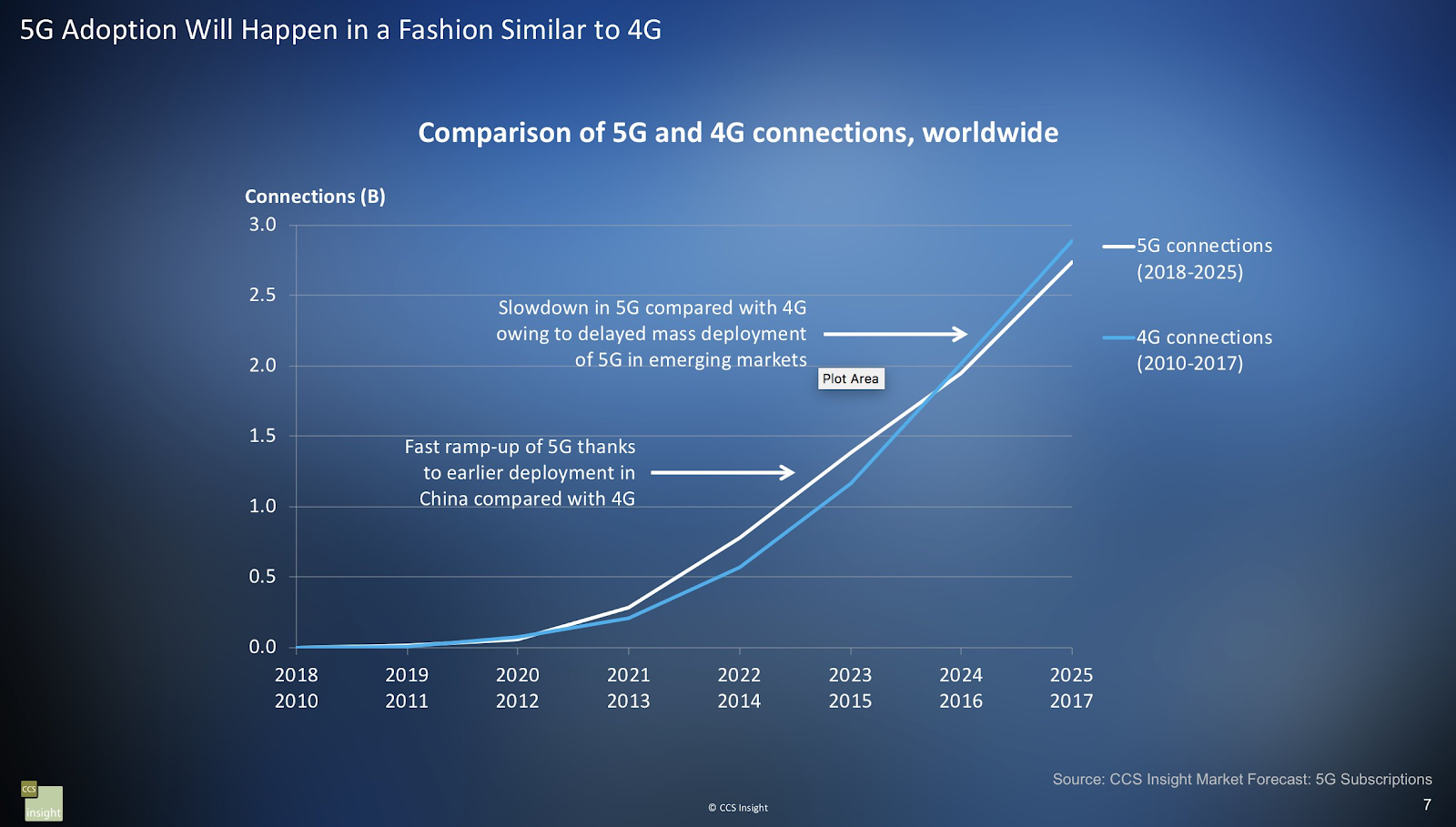
Will 5G be Adopted Faster than 4G?

Qualcomm expects 5G adoption will happen faster than 4G. 


Generally speaking, successful new technologies and platforms get adopted faster than they used to. That was true of 4G, compared to 3G take rates. What happens in the 5G era seems unclear.

Some expect 5G adoption faster than 4G, others expect 5G adoption on about the same pattern as 4G, while others believe 5G might take longer. 


It might be helpful to remember that 3G uptake was slower than some expected, early on, even if later adoption was virtually ubiquitous. In retrospect, the reasons might be somewhat obvious. If 2G was the platform for text messaging as a “digital” service, 3G was the first “mobile internet” generation. 

As with most big innovations, it takes time for people, app developers and businesses to adapt to new capabilities, which would explain why 3G adoption took longer than did 4G, which did not have to confront the “what can I do with this?” issue, and only had to offer the value proposition that user experience for the things people wanted to do, would be pleasant. 

But 5G might be different, and more akin to 3G, in one sense: the value of the platform will have to be discovered, as 4G already supports most of the things consumers want to do. In other words, 5G might be as big a transition as was 3G. As 4G was the first mobile internet platform, 5G will be the first “beyond mobile internet” platform. 


Some might say, as some did early in the early 3G transition, that the platform was a failure, or a waste. Nobody says that, anymore. True, mobile operators dislike the capital investment to create the new platform, and often have argued that “nobody needs this.”

Like it or not, 3G displaced 2G. And 4G displaced 3G, arguably faster than 3G replaced 2G as the standard connection. 

So despite mobile operator misgivings about the timing and scale of investment, virtually nobody expects 5G to fail in its expected role as the next-generation network supplier of connections, ultimately replacing 4G. 

The only issue is whether the adoption pattern by consumers is more similar to 3G or 4G. 


Specifically, the issue is the timing to reach 10 percent of users, or 25 percent of users. Virtually every observer expects 5G to displace 4G as 4G displaced use of 3G, but the adoption rate is the issue in the mid-term (three to five years out). 

Everybody expects low adoption rates in the early years, and high adoption after 10 years. What is unclear is the rate in the middle years. 


If the 3G pattern holds, then 5G adoption by consumers might be slower than 4G. Enterprise and business adoption might be different, especially if 5G used to support internet of things and edge computing use cases is robust. 


Adoption rates in the middle of the cycle could also be faster than 4G is some new proposed consumer use cases, perhaps virtual reality, gaming or augmented reality gain traction. More likely, some new use cases we are not focusing on could develop in the medium term, boosting mid-cycle adoption. 


The typical pattern for successful new technologies is that they are adopted faster than innovations in the pre-digital era. So one argument for faster 5G adoption is that it is a newer technology, and likely to benefit from the “faster adoption” trend in general. 

What seems highly unlikely is the threat of 5G “becoming the Edsel of the mobile phone industry,” as at least one observer referred to 3G in its early adoption phase. That observer called 3G “an expensive, unwanted albatross rejected by consumers and bypassed by other, less costly technologies.” 

As expensive as 3G spectrum licenses were, nobody today would argue 3G was “rejected by consumers.” To be sure, mobile operators learned they could not overspend on spectrum licenses. Consumers did take some time to uncover and discover what mobile internet could supply, in terms of value. 

Those of you old enough to remember BlackBerry’s popularity will recall that the killer app was mobile access to email. Few now would consider that a “broadband” application, but it was the killer app even before mobile web access became a generally-recognized value of 3G. 

The bottom line is that it is hard to know now whether 5G gets adopted faster than 4G. 

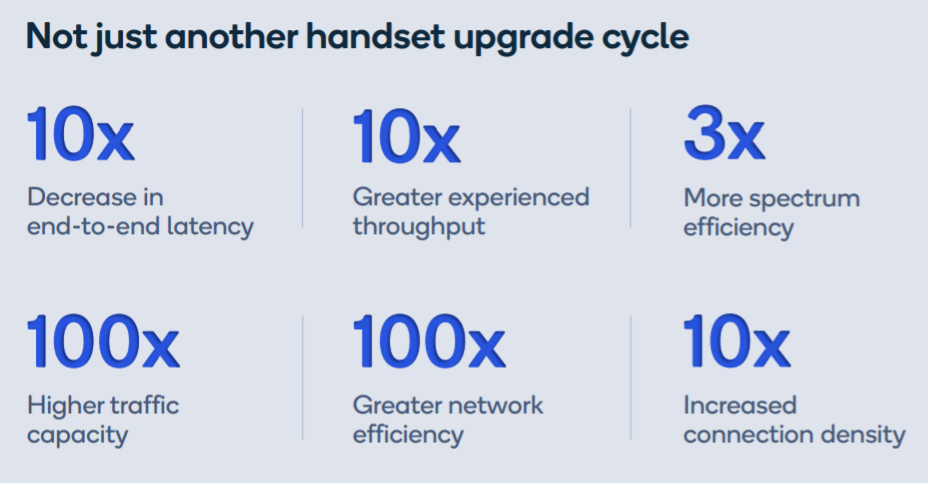
5G "Not Just Another Upgrade Cycle?"

Qualcomm argues that 5G is “not just another handset upgrade cycle,” and that is at least partially true. The decrease in latency and increase in throughput, however, are fairly standard improvements for a next-generation mobile network. Since 2G, each succeeding network platform has boosted throughput at least 10 times, while reducing latency 10 times. So 5G is simply a continuation of those trends. 


A case can be made that other measures of 5G performance, such as connection density, network efficiency or overall traffic capacity are advances above and beyond what has been the past experience.


Is Sora an "iPhone Moment?"

Sora is OpenAI’s new cutting-edge and possibly disruptive AI model that can generate realistic videos based on textual descriptions.  Perhap...