Wednesday, April 12, 2023

5G Will Get Better as Did 4G

The conventional wisdom is that a new next-generation mobile network is introduced about every decade, at least in the digital era starting with 2G networks. In practice, the industry adopts a major platform about every decade, with major tweaks about every five years. 


The interim additions tend to extend the life of the platform by improving performance over the original release. 

source: Dell'Oro Group, 3GPP 


Though faster speeds are virtually certain to be a feature, support for edge and cloud computing, full-duplex communications, spectrum sharing and more incorporation of artificial intelligence and machine learning are likely to be added, some argue. Many features will be aimed at supporting enterprise use cases.


Better support for time-sensitive use cases, integrated access and backhaul and multi-carrier operations are expected as well. 


The emerging pattern seems to be creation of the physical layer, spectrum asset and modulation specs once every decade, with features and spectrum frequencies added five years after the new platform launches. 


It is not exactly “continuous development,” but something closer to that.


Tuesday, April 11, 2023

Video Calling Finally Reached Instant Mass Adoption in 2020

Despite the many predictions about video calling, that use case was not a mass market and routine use case until recently, when the Covid pandemic forced people to start using it. 


AT&T, for example, demonstrated Picturephone at the 1964 World’s Fair, but adoption never happened. 


source: Time


Not until the Covid pandemic forced people to work from home and students to learn from home was there mass adoption of video calling services such as Zoom. 


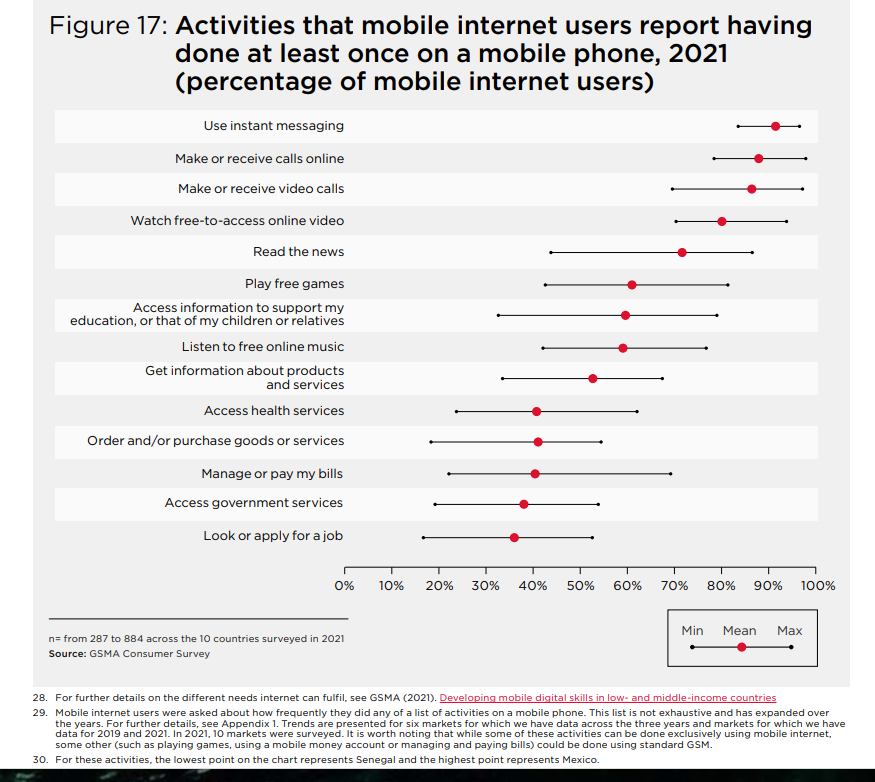
A recent survey of user behavior in 2021, however, shows that video calling follows only instant messaging and voice calling as an activity on a mobile phone.   


source: GSMA Intelligence

Affordability, not Availability is the Big Barrier to Mobile Internet Access

Availability no longer is the main issue preventing people from using mobile internet access. About 95 percent of people globally have access to mobile internet access. About 55 percent use mobile internet access.


As always, affordability is the key barrier. 

source: GSMA Intelligence 


source: GSMA Intelligence 


Monday, April 10, 2023

Even if 6G is About "Experience," How Much can Mobile Operators Benefit?

Ideas never appear in a vacuum. Consider the notion that 6G mobile networks will be about “experience,” as suggested by Interdigital and analysts at Omdia. At some level, this is the sort of advice and thinking we see all the time in business, where suppliers emphasize “solutions” rather than products and virtually all suppliers seek to position them as providers of higher-order value. 


The whole point of home broadband or smartphones with fast internet access is that those capabilities support the user experience of applications. 


And many have been talking about that concept for a while. “The end of communications services as we know them” is the way analysts at the IBM Institute for Business Value talk about 5G and edge computing, for example. 


To be sure, connectivity is not the only business where practitioners are advised to focus on end user benefits, solutions or experiences. But connectivity is among businesses where perceived value, though always said to be “essential” to modern life, also is challenged by robust competition and the ability to create product substitutes. 


One of the realities of the internet era is that although end user data consumption keeps climbing, monetization of that usage by communications service providers is problematic. Higher usage might lead to incremental revenue growth, but at a rate far less than the consumption rate of growth.


That is the opposite of the relationship between consumption and revenue in the voice era, when linear consumption growth automatically entailed linear revenue growth. Though there was some flat-rate charging, most of the revenue was generated by usage of long-distance calling services. 


“On the surface, exponential increases in scale would seem like a good thing for CSPs, but only if pricing keeps pace with the rate of expansion,” the institute says. “History and data suggest it will not.”


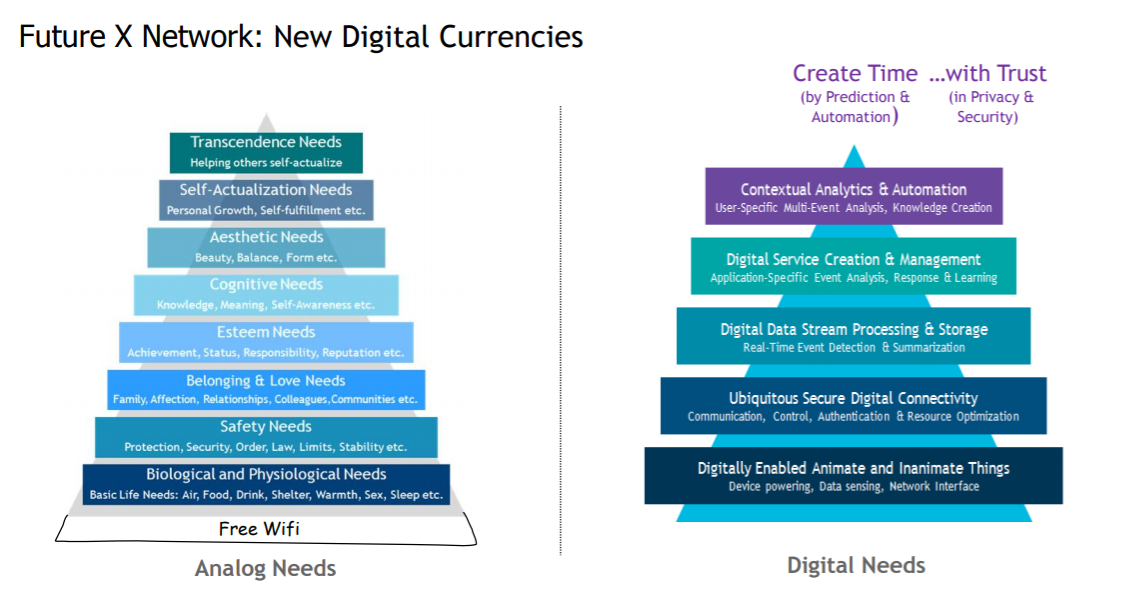
Indeed, Nokia Bell Labs researchers have been saying for some time that "creating time" 

is one way of illustrating the difference between core value propositions in the legacy and today’s market. “We connect you” has been the traditional value prop. But that could shift to something else as “connectivity” continues to face commoditization pressures. 
source: Nokia Bell Labs  


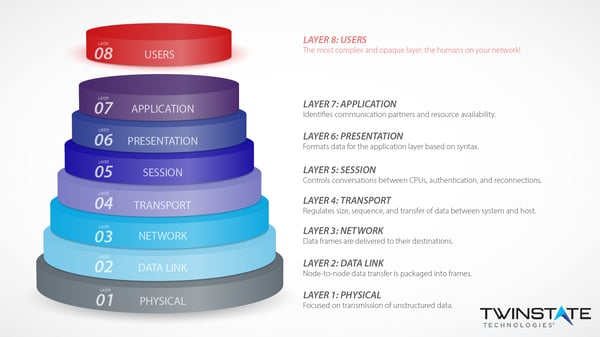
The growing business model issue in the internet era is that conventional illustrations of the computing stack refer only to the seven or so layers that pertain to the “computing” or “software” functions. Human beings have experiences at some level above the “applications” layer of the software stack, and business models reside above that. 


Likewise, physical layer communication networks and devices make up a layer zero that underpins the use of software that requires internet or IP network access. The typical illustration of how software is created using layers only pertains to software as a product. 


Software has to run on appliances or machines, and products are assembled or created using software, at additional layers above the seven-layer OSI or TCP/IP models, in other words.


So we might call physical infra and connectivity services as a “layer zero” that supports software layers one to seven. And software itself supports products, services and revenue models above layer seven of the software stack. 


Some humorously refer to “layer eight” as the human factors that shape the usefulness of software, for example. Obviously, whole whole business operating models can be envisioned using eight to 10 layers as well.  

source: Twinstate 


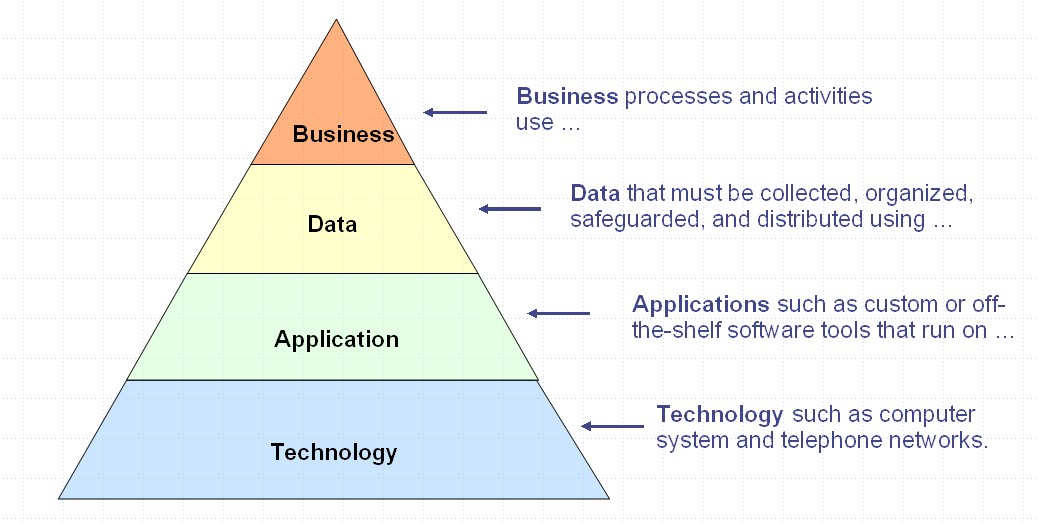
The point is that the OSI software stack only applies to the architecture for creating software. It does not claim to show the additional ways disaggregated and layered concepts apply to firms and industries. 

source: Dragon1 


Many have been using this general framework for many decades, in the sense of business outcomes driving information and computing architecture, platforms, hardware, software and communications requirements. 
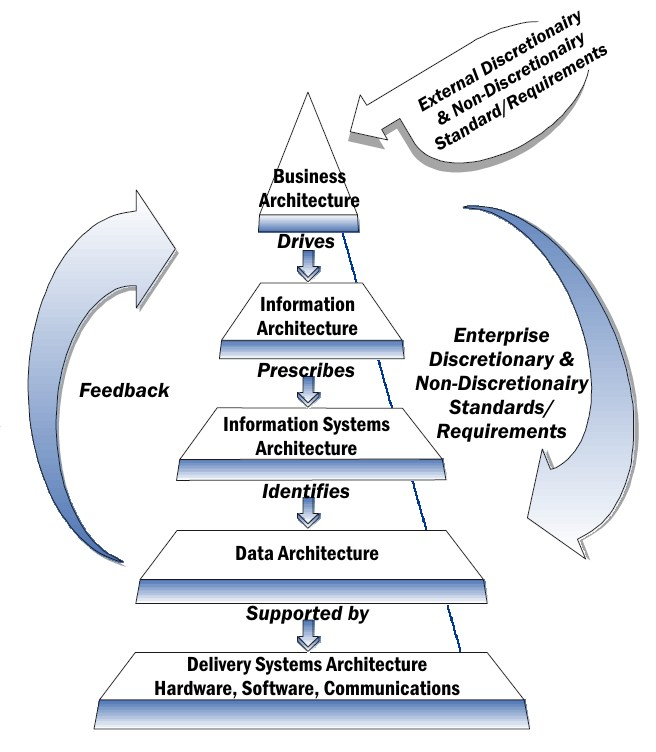

source: Wikipedia


In a nutshell,  the connectivity industry’s core problem in the internet era is the relative commoditization of connectivity, compared to the perceived value create at other layers. 


Layer zero is bedeviled by nearly-free or very-low-cost core services that have developed over the last several decades as both competition and the internet have come to dominate the business context. 


Note that the Bell Labs illustration based the software stack on the use of “free Wi-Fi.” To be sure, Wi-Fi is not actually free. And internet connectivity still is required. But you get the idea: the whole stack (software and business) rests, in part, on connectivity that has become quite inexpensive, on an absolute basis or in terms of cost per bit.  


Hence the language shift from “we connect you” to other values. That might include productivity or experience, possibly shifting beyond sight and sound to other dimensions such as taste and touch. The point is that the industry will be searching for better ways to position its value beyond “we connect you.”


And all that speaks to the relative perception of the value of “connections.” As foundational and essential as that might be, “mere” connectivity is not viewed as an attractive value proposition going forward. 


It remains to be seen how effective such efforts will be. The other argument is that, to be viewed as supplying more value, firms must actually become suppliers of products and solutions with higher perceived value.


And that tends to mean getting into other parts of the value chain recognized to supply such value. If applications generally are deemed to drive higher financial valuations, for example, then firms have to migrate into those areas, if higher valuations are desired.


If applications are viewed as scaling faster, and producing more new revenue than connectivity, and if suppliers want to be such businesses, then ways should be sought to create more ownership of such assets. 


The core problem, as some might present it, is that the “experience” benefits are going to be supplied by the apps themselves, not the network transporting the bits. It is fine to suggest that value propositions extend beyond “connectivity.” 
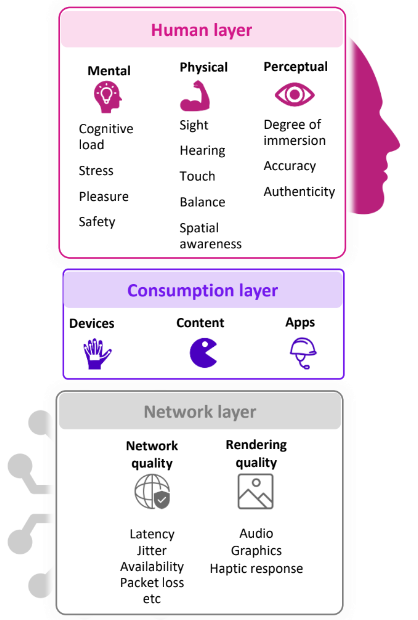

source: Interdigital, Omdia


The recurring problem is that, in a world where layers exist, where functions are disaggregated, connectivity providers are hard pressed to become the suppliers of app and business layer value. So long as connectivity exists, value and experience drivers will reside at higher layers of the business stack. 


Unless connectivity providers become asset owners at the higher levels, they will not be able to produce the sensory and experience value that produces business benefits. Without such ownership, the value proposition remains what it has always been: “we connect you.”


Thursday, April 6, 2023

6G Hype is to be Expected

Hype about each mobile next-generation network has been happening since the time of 3G, and for practical reasons. Operators must convince regulators to release more spectrum. Infrastructure providers have to convince operators to buy the new networks. And investors must be convinced there is revenue upside.


But it also would be fair to question how much of the hyped and hoped-for advancements actually happened in each generation. Progress has occurred; just not as much as the hype suggested.


Aside from faster internet access, 3G networks were touted as creating a platform for development of new end user experiences, use cases and innovative new applications. We forget it now, but 3G also was promoted as offering better audio quality for voice calls. Streaming video, audio and video calling also were touted. 


In many cases, the most widely-used new use case was mobile email, which drove the popularity of the BlackBerry by Research in Motion. Over the life of 3G, that use case diminished in importance, as mobile web browsing supplanted email access as the killer use case. 


Some of us might say it was turn-by-turn navigation that was the killer use case, as it eliminated the need to own and use dedicated GPS devices and services. 


Proponents always emphasized other developments, such as machine-to-machine communications or virtual reality, but VR did not flourish. 


Turn to 4G and many of the same “new use cases” were touted. Mobile video and audio streaming really was not a great experience using 3G networks, but 4G succeeded, in that regard. 


4G also made mobile web browsing more like the desktop experience, while dedicated apps emerged to replace browsing as a preferred interface. Mobile transaction capabilities, including payment, also seemed more usable on 4G networks. 


Location app usefulness also arguably improved on 4G networks. Ride sharing might be considered among the top new use cases produced during the 4G era. Propelled by work- and learn-from-home policies during the Covid pandemic, video calling and conferencing finally emerged as a mainstream activity on smartphones. 


Social media also exploded in the 4G era. 


Virtual reality or other immersive experiences were once again touted for 4G, but mostly did not develop. 


If you look at many depictions of what 5G might bring, you see the same insistence on new use cases, apps and value. Some might say the more futuristic predictions are 5G support for autonomous vehicles, extended reality, internet of things, “smart” cities, remote health care or industrial automation. 


source: Dell 


We can safely argue that most of these use cases will not flourish during the 5G era, just as most hoped-for use cases did not emerge in the 3G and 4G eras, either. That is not to say progress is impossible. It is only to suggest that mass scale adoption of most of these use cases might not happen. 


Comparing claims about mobile enablement to what has happened on fixed networks, it would be fair to note that video calling, video conferencing, streaming content consumption and social media have blossomed over the past several years.


How much we can attribute those trends to lower latency, faster speeds, more-powerful devices, cloud computing, Moore’s Law cost reductions and entrepreneurial effort plus investment is debatable. All played a part. 


The point is that much of the hype about next-generation mobile networks should probably be viewed in the same context as progress on home broadband networks that boosted typical speeds from 10 Mbps to 100 Mbps to 1,000 Mbps. When bandwidth stops being a constraint, apps are developed to match. 


Proponents of each next-generation mobile network are “required” to hype the next generation of networks in part to get governments to allocate them more spectrum, create demand for new infrastructure and increase investment appetite. 


So expect continued hype about each next generation mobile platform.


Network Slicing is Ironic: A Tool to Control Latency, Guarantee Speed Actually has to Reduce Both to Work?

Electronic newsgathering and remote capture of distributed video feeds have been use cases that often require specialized backhaul networks, such as fixed wireless microwave-equipped vans or satellite links on those vans. 


In other cases, where venues are fixed, such as sports stadiums or concert venues, dedicated optical backhaul connections often can be used. 


Remote backhaul of video feeds are one possible use of network slices on 5G networks, Ericsson and others might note. 

source: Ericsson 


Such use cases also might highlight a shift in expected new revenue sources for 5G and possibly 6G and future networks. At least so far, fixed wireless has been the clear early driver of new revenue on 5G networks that can be clearly attributed to the network itself, and that is a business-to-business or business-to-consumer use case. 


For consumers, 5G has actually supplied benefits mostly in the area of “faster connection speed.” But that might be the case for most consumer 5G value for some time, and perhaps for the whole duration of 5G use as the primary mobile network.


Early speculation about 6G centers on new or exotic apps, but might similarly result in new use cases emerging in the business and enterprise spheres, while consumer benefits largely remain driven by faster speeds and lower latency. 


And users might need both, especially if use of virtual private networks increases. The issue with VPNs, as users quickly find out, is a hit to performance. Though the rule of thumb is that VPNs can reduce experienced connection speed by 10 percent to 20 percent, I have found that speeds can be reduced as much as 50 percent or more. 


It is unclear to me whether the VPN speed tax can be eliminated (I cannot see this happening) or vastly reduced, when using a 5G network slice. In principle, a network slice would have to increase processing, which would add some latency, and also reduce connection speed, as do all other VPNs.  


The good news for remote video backhaul is that latency is not an issue for non-real-time or real-time video that is streamed, once the steam is launched. So long as the connection has enough capacity, the VPN-imposed processing should not be a troublesome issue, either. 


That might not be the case for latency-sensitive, highly-interactive sessions, however. Which is ironic, if you consider the amount of hype about network slicing and its ability to control and limit latency and also provide guaranteed bandwidth.


Tuesday, April 4, 2023

T-Mobile Using Both 5G Fixed Wireless and Wholesale to Offer Home Broadband in Colorado

T-Mobile’s move into home broadband in Colorado illustrates the various platforms available to that firm, ranging from use of its own 5G network to supply fixed wireless as well as use of wholesale fixed network facilities. 


At least for the moment, T-Mobile’s foray into home broadband in Northglenn, Colo. appears to use Intrepid Fiber facilities on a wholesale basis. Intrepid is a new facilities-based internet service provider serving that community and reportedly has invested about $100 million in the new facilities. 


The firm is lead by Jack Waters, company CEO. Other offices include

  • Britt Kane, President and Chief Operating Officer

  • Shing Lin, Chief Technology Officer

  • Andy Greene, Vice President of Engineering

  • RJ Knisley, Director of Network Development

  • Tim Bruny, Chief Financial Officer

  • Robert Macaluso, General Counsel

  • Sadia Murray, Chief Marketing Officer


It is not yet clear when the firm will begin connecting customers, as the full network will take a couple years to build out. But the firm undoubtedly will begin marketing to, and connecting customers, on a rolling basis, as is typical for a newbuild network. 


In Pueblo, Colo. and Denver, on the other hand, T-Mobile appears to be using its own 5G network to supply home broadband using fixed wireless.


Is Sora an "iPhone Moment?"

Sora is OpenAI’s new cutting-edge and possibly disruptive AI model that can generate realistic videos based on textual descriptions.  Perhap...