Friday, December 16, 2022

When Advanced Infrastructure Does Not Drive Economic Growth

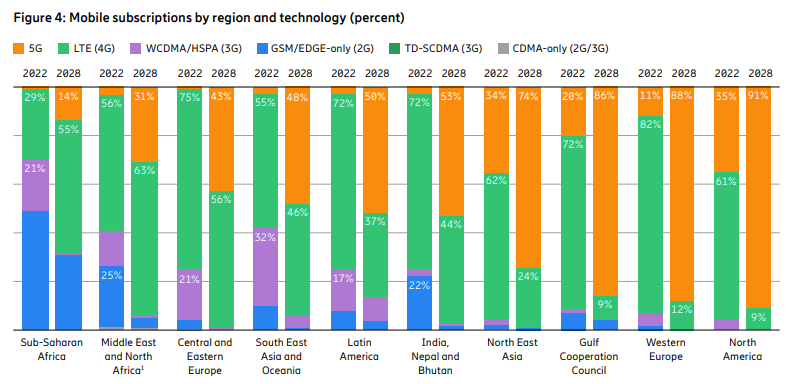
Even if a next-generation mobile network is launched about every 10 years, the actual lifespan of any particular generation can extend for a few decades, in part because the legacy network has value even after the next generation starts to be commercially deployed. 


Also, any new next-generation network is adopted first in some regions and later in others. 


source: Ericsson 


5G,for example, is most available in Europe, North America, East Asia and parts of the Middle East. 5G should then roll out on a wider basis to India, Southeast Asia, Latin America, Eastern Europe and Sub-Saharan Africa.  


But 4G will still be a significant commercial network by about 2030 in many of those regions. 


That is true of almost all fixed network deployments as well. Within any single country, deployment begins first in the urban areas and suburbs. Only later does service appear in smaller towns and then rural areas. 


Some might be tempted to argue that if 5G deployment were to happen faster in a trailing region, that economic outcomes might be significantly or notably higher. The theory will always be hard to validate. 


Historically, next-generation networks are built where the demand is greatest, and the payback easier. That is the urban and suburban regions of any country. Such regions of countries already have customer density and economic activity levels that make adoption more likely, as well as typical recurring revenue levels that are more favorable than in rural areas, generally. 


In other words, advanced networks are built where the greatest chance of early financial returns are possible. Deploying such networks first in the most-difficult places is risky, as it delays a return on investment. 


By analogy, we might also argue that deploying a next-generation network in a low-density, rural area with few enterprise customers and less economic activity overall than an urban area is quite unlikely to result in near-term boosts of economic activity. 


In other words, the argument that better broadband or the latest mobile network will lead to higher economic growth is questionable. Growth happens in urban areas in part because the population is greater, hence all markets and the volume of economic activity are bigger. 


Simply building high-quality home broadband or the latest-generation mobile network in a low-density area with relatively-little existing economic activity will not change matters, in and of itself. 


Normally some level of subsidy is required, and even then, the outcomes desired are more along the lines of social inclusion rather than serious expectation of a dramatically-changed economic growth rate.


Wednesday, December 14, 2022

Can Mobile Operators Become Something They are Not?

Can mobile service providers become something they are not? Can they change their revenue models to move beyond connectivity and subscriptions?


That question often is in the background of all efforts to “move up the value chain,” enter new parts of the internet ecosystem, radically change revenue and business models or create new products and services that extend beyond connectivity. 


In other words, telcos once were functionally monopoly suppliers of voice services over fixed networks. These days they are more aptly known as internet service providers who also deliver voice communications over mobile and fixed networks. 


There are a smattering of other services and products some telcos supply, but the core revenue driver remains subscriptions, data connectivity and some declining amount of voice and messaging. 


Most efforts to become platforms, techcos or digital service providers have the intention of moving connectivity providers into different roles within the ecosystem. As a practical matter, the simple motivation is growing revenue and attaining profit margins more akin to software and app firms. 
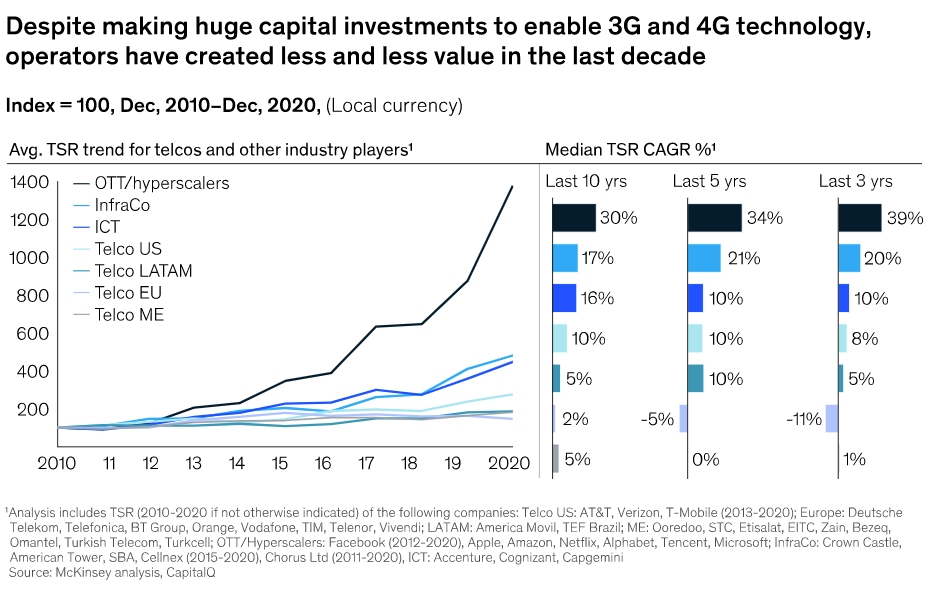
source: McKinsey 


Thinking about such questions uses different language at different times. 


A recurring discussion over the past couple of decades has been held over the question of whether telcos could become platforms. Perhaps the latest version of this debate asks the question of whether telcos can become techcos or digital services providers. 


None of these concepts are easy to explain, or commonly understood. Some might argue the “digital services provider” evolution means offering services such as internet of things, connected cars, smart cities or smart homes. Presumably the concept is that a connectivity provider supplies the apps that provide the value. 


So a connectivity provider acts as a home security firm, an industrial IoT system supplier, a connected car app, traffic management system or energy management firm. In other words, the connectivity provider is the branded developer and provider of the application, not just the connectivity provider supporting any app or use case. 


It is no easier to explain--and have people agree upon--what a “platform” or “techco” evolution means. 


It never is completely clear why telco executives really mean in touting the transformation from telco to “techco.”


Many telcos--or those who advise and sell to them--say telcos need to become techcos. So what does that mean?


At least as outlined by Mark Newman, Technotree chief analyst and Dean Ramsay, principal analyst, there are two key implications: a culture shift and a business model.


The former is more subjective: telco organizations need to operate “digitally.” The latter is harder: can telcos really change their business models; the ways they earn revenue; their customers and value propositions?
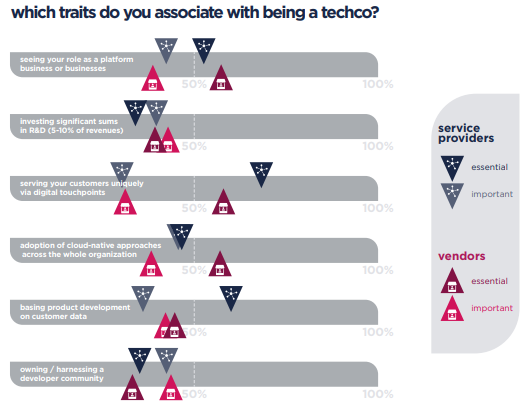

source: TM Forum


It might be easier to describe the desired cultural or technology changes.  Digital touchpoints; higher research and development spending; use of native cloud computing; a developer mindset and data-driven product development or use of use artificial intelligence all might be said to be part of becoming a “techco.”


Changing the business model is the more-problematic objective. 


As helpful as it should be to adapt to native cloud, developer-friendly applications and networks, use data effectively or boost research or development, none of those attributes or activities necessarily changes the business model. 


If “becoming a techco” means lower operating costs; lower capital investment; faster product development or happier customers, that is a good thing, to be sure. Such changes can help ensure that a business or industry is sustainable. 


The change to “techco” does not necessarily boost the equity valuation of a “telco,” however. To accomplish that, a “telco” would have to structurally boost its revenue growth rates to gain a higher valuation; become a supplier of products with a higher price-to-earnings profile, higher profit margins or business moats. 


What would be more relevant, then, is the ability of the “change from telco to techco” to serve new types of customers; create new and different revenue models; develop higher-value roles and products or add new roles  “telcos” can perform in the value chain or ecosystem. 


We face the same sorts of problems when trying to explain what a “platform” looks like. 


Korea Telecom wants to become a digital platform company, not a telco. That ambition arguably is shared somewhat widely among tier-one connectivity service providers globally and has been a strategy recommended in some form by most bigger consulting companies. 


Simply, becoming a platform company changes the business model from direct supplier of products to a role as an ecosystem organizer or marketplace. That arguably is an aspirational goal more than anything else. 


What that aspiration means in practice is that KT as a digico “will shift our focus from the telecommunications sector, where growth is stalled due to government regulations, to artificial intelligence (AI), big data, and cloud computing businesses to become the nation's number-one platform operator in the B2B market," said KT CEO Koo Hyun-mo.


So there are qualifications. KT, if successful, would become a platform in the business market, not the consumer market. It would explicitly aim to become the center and organizer of an ecosystem for artificial intelligence, big data analytics and cloud computing. 


Purists and researchers will likely argue about whether all of that actually adds up to KT becoming a platform, in the sense that Amazon, eBay, Alibaba, ridesharing or lodging apps  might be considered platforms. 


A platform, definitionally, makes its money putting buyers and sellers and ecosystem participants together. In computing, a platform is any combination of hardware and software used as a foundation upon which applications, services, processes, or other technologies are built, hosted or run.


Operating systems are platforms, allowing software and applications to be run. Devices are platforms. Cloud computing might be said to be a platform, as systems are said to be platforms. 


Standards likely are thought of as platforms by some. 


In other cases components such as central processing units, physical or software interfaces (Ethernet, Wi-Fi, 5G, application programming interfaces) are referred to as platforms. Browsers might be termed platforms by some. Social media apps are seen as platforms as well. 


The platform business model requires creation of a marketplace or exchange that connects different participants: users with suppliers; sellers with buyers. A platform functions as a matchmaker, bringing buyers and sellers together, but classically not owning the products sold on the exchange. 


A platform orchestrates interactions and value. In fact, a platform’s value may derive in large part from the actions and features provided by a host of ecosystem participants. Facebook’s content is created by user members. Amazon’s customer reviews are a source of value for e-tailing buyers. 


Consumers and producers can swap roles on a platform. Users can ride with Uber today and drive for it tomorrow; travelers can stay with AirBNB one night and serve as hosts for other customers the next. Customers of pipe businesses--an airline, router or phone suppliers, grocery stores-- cannot do so. 


So KT can increase the percentage of revenue it earns from supplying digital, computing, application or non-connectivity services without becoming a platform. As a practical matter, that is what most telco executives have in mind when talking about becoming platforms. 


For KT, even limiting its ambitions to generating more digital and non-connectivity revenue does not make it a platform. That would still be an important, valuable and value-sustaining move. But KT has a very long ways to go, even in its stated objectives of becoming a B2B platform.


Total KT revenue is about 24 trillion won. All B2B revenues at the end of 2020 were about 2.78 trillion won (about 11.5 percent). Information technology services were about 1 trillion won, or about four percent of total revenues. AI and other digital services were about 0.5 trillion won, or about two percent of total revenues. 


It might be a long time between non-connectivity revenues in the B2B part of its business are as much as half of total revenues. And those revenues might not represent a platform transformation of the business model.


KT could win significantly without ever becoming a platform. And some might argue few telcos can ever actually hope to become platforms in the classic sense. Perhaps the more important goal is simply to reduce reliance on traditional connectivity revenues.


Unfortunately, what platform, techco or digital services provider actually means in practice falls far short of the grander visions. We still have no conclusive answer to the question of whether telcos can become something they are not.

Monday, December 12, 2022

5G and 6G Hype is Real, But Also Does Not Matter

It is not too hard to find critics who say 6G being overhyped, as was 5G. Though true, such criticism also is largely irrelevant. On either fixed or mobile networks, we see major upgrades of capacity at least every decade. For mobile operators, that coincides with the launch of a next-generation network. 


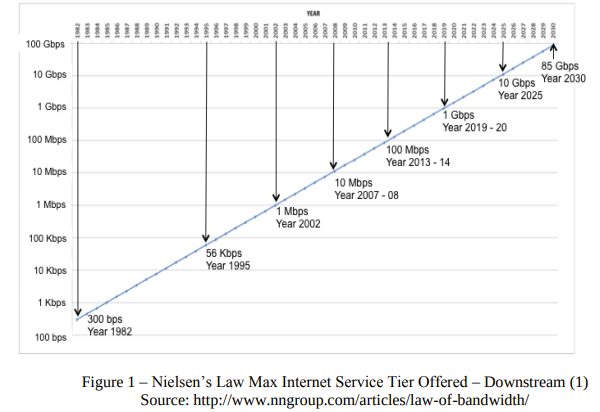
The fixed network process is less structured, but still happens. Edholm’s Law states that internet access bandwidth at the top end increases at about the same rate as Moore’s Law suggests computing power will increase. Basically, that results in an order of magnitude (10 times) increase in the headline internet access bandwidth about every five to six years. 


Nielsen's Law essentially is the same as Edholm’s Law, predicting an increase in the headline speed of about 50 percent per year. 


Ignore all the hype about new services. Fixed and mobile networks have to keep increasing bandwidth every decade. On fixed networks, bandwidth increases by an order of magnitude about every five years. 


Nielsen's Law, like Edholm’s Law, suggests a headline speed of 10 Gbps will be commercially available by about 2025, so the commercial offering of 2-Gbps and 5-Gbps is right on the path to 10 Gbps. 

source: NCTA  


Headline speeds in the 100-Gbps range should be commercial sometime around 2030. 


Mobile networks--because of the need to allocate new radio frequency spectrum, add an order of magnitude of new capacity about every 10 years based on new spectrum. Use of small cell architectures can add more capacity on existing and new spectrum, as well. 


Sure, 5G and 6G will be overhyped. But it does not matter. We will need the new networks simply to keep up with capacity demand.


Revenue Growth is Key Issue for U.S. Mobile Operators

Revenue growth is arguably the paramount strategic concern for access service providers in developed markets that are virtually completely saturated, meaning almost every person who wants to use mobile devices and networks already is a customer. 


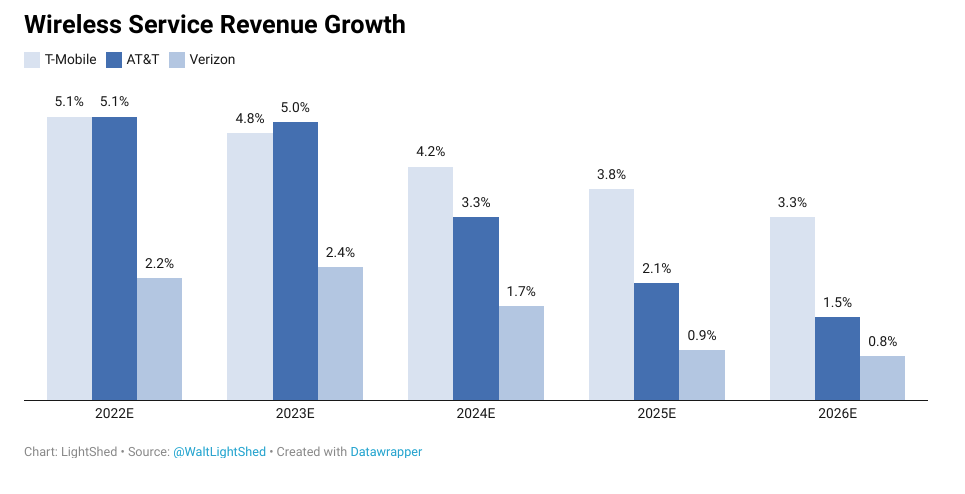
In the U.S. mobile market, for example, revenue growth has been slowing. 

source: Lightshed Partners 


But connectivity service provider revenue growth rates have been slowing globally as well. Growth rates of about 2.4 percent are predicted by Analysys Mason. IDC is a bit less optimistic, forecasting 1.9 percent growth over the next five years. 


Looking only at fixed broadband and mobility services, Omdia predicts growth of up to 14 percent. Total revenues will grow at negative or slower rates, as voice, messaging and enterprise revenues contract in many markets. 


Precedence Research thinks revenue growth could reach nearly five percent per year through 2030. Most of that growth, everyone expects, will come in developing regions which are adding subscribers. 


In developed regions, growth will be quite slow because of market saturation. 


The issue for some leading mobile providers is growing competition from cable industry providers, with some additional danger from Dish Network, a new 5G mobile network provider. T-Mobile has been the aggressor, taking market share steadily on a “value” platform, but also now on a “network quality” dimension, as many surveys show end user experienced speeds on T-Mobile’s network rival those of Verizon, which historically has positioned itself as the quality leader, with higher average revenue per account.


Losing the clear “quality” positioning undermines the argument for a price premium Verizon wants. 


AT&T’s mobile market positioning has seemed unclear to some of us. AT&T has not been the clear “network quality” leader or the “value” leader. That might help explain why AT&T now has fallen to be only the third-biggest service provider by accounts. 


So perhaps the biggest single influence on subscription revenue will continue to come from market share shifts between T-Mobile, Verizon and AT&T, in both consumer and business segments. Over the past year, both T-Mobile and AT&T have been taking share. 


Efforts to boost average revenue per account will help, as well new accounts supporting internet of things devices. How much that will matter remains to be seen, as account shifts will probably matter most. 


Maintaining or raising prices in a competitive market never is easy and arguably is doubly hard in saturated markets. 


It is a problem service providers in all markets increasingly face.


Saturday, December 10, 2022

Cable Denies Fixed Wireless is a Long-Term Threat, But Near Term? Another Story

There’s a good reason why cable operators dismiss the long-term  threat of fixed wireless internet access: they do not believe capacity growth can keep pace with fiber to home or hybrid fiber coax, long term. 


Whether a fully correct assessment or not, those long-term  reasons are reasonable. In the near term, on the other hand, fixed wireless is a major weapon for shifting market share from cable to Verizon or T-Mobile platforms. 


In its report on fixed wireless, T-Mobile notes that over the past year, fixed wireless accounted for 78 percent of  total home broadband net account additions, counting only gains from Verizon and T-Mobile. Other independent wireless internet service providers virtually certainly made some gains as well. Those estimates used data from Leichtman Research Group and Openvault. 

source: T-Mobile 


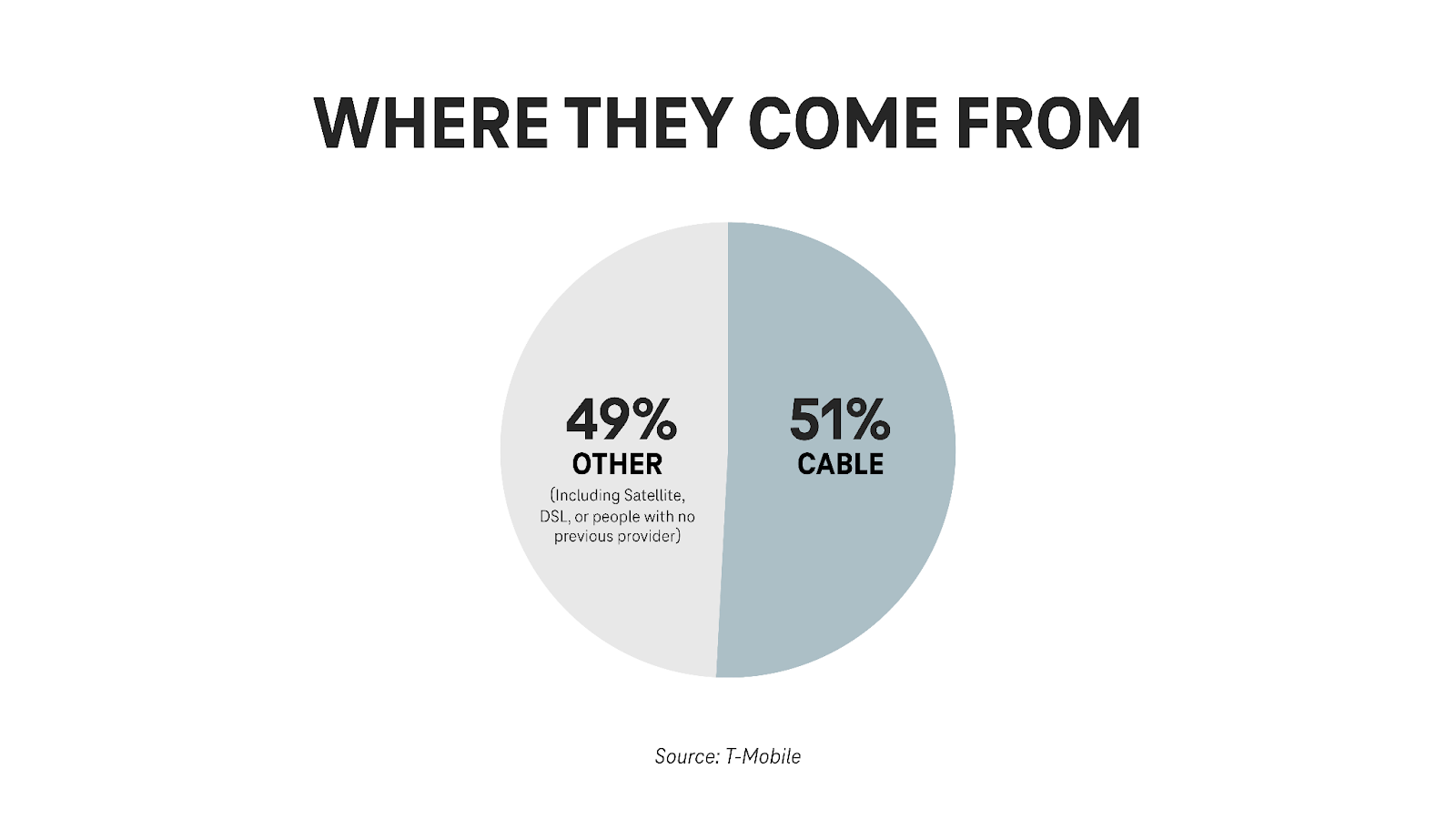
Some might argue that T-Mobile and Verizon are getting switchers from the price-sensitive segments of the market. T-Mobile might argue it is picking up rural market customers.But rural customers are only the second-biggest source of accounts. In fact, suburban accounts lead the account  additions. 


source: T-Mobile 


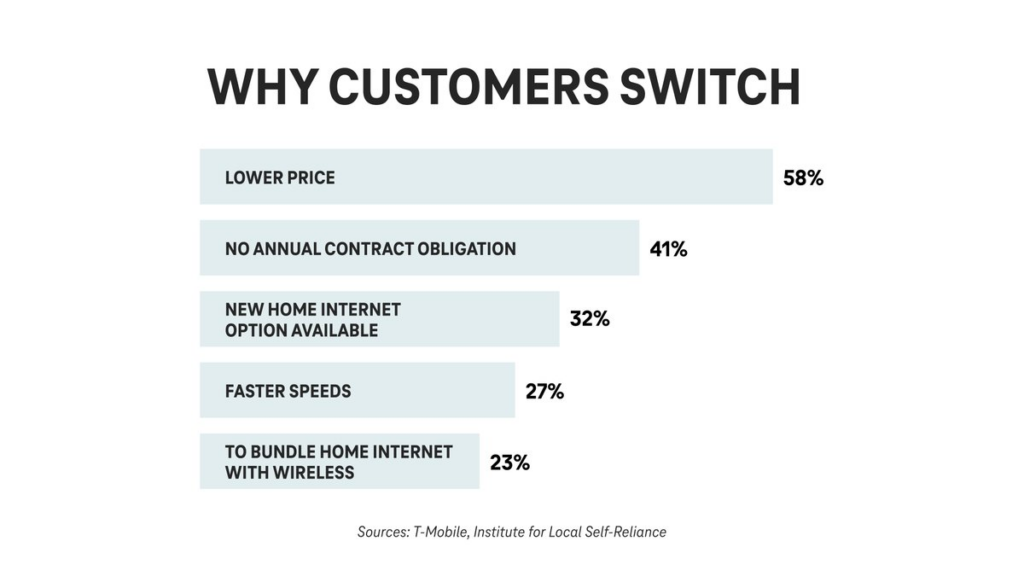
But price seems to be a driver of switching behavior, in any case. Some 58 percent of switchers cited “lower price” as the top driver of behavior. 


Close to half of switchers reported that “no contract” obligation was a motivator. 


“Speed” is a lesser driver of behavior. 

source: T-Mobile


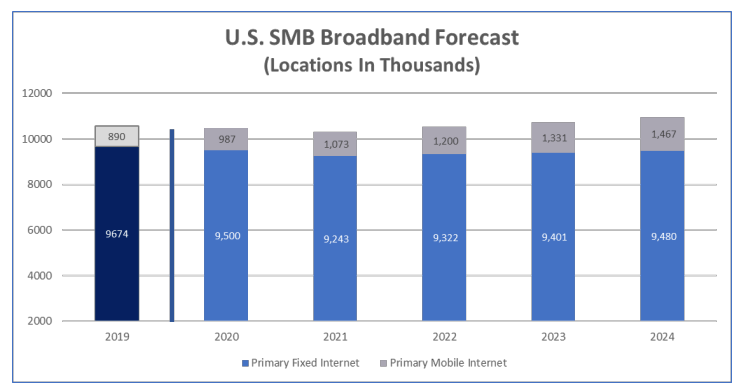
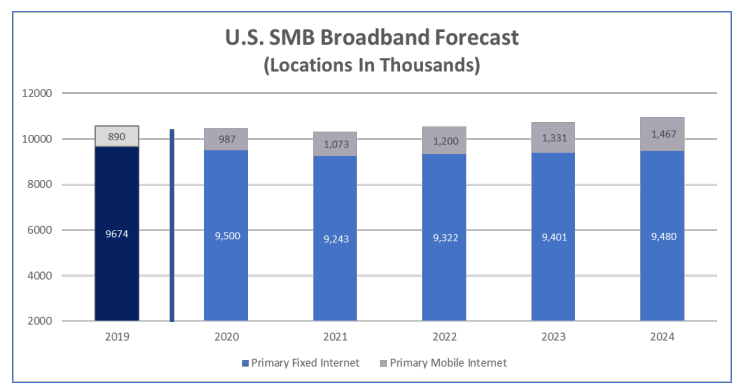
T-Mobile and Verizon are expected to have 11 to 13 million total fixed wireless customers by the end of 2025. If total U.S. internet  accounts are somewhere on the order of 111 milliion accounts, and if small business users account for 11 million of those accounts, then home users might amount to about 100 million accounts. 

source: Ooma, Independence Research 


If Verizon and T-Mobile hit those targets, their share of the home broadband market--counting only fixed wireless accounts-- would be about 10 percent. Significantly, most of those accounts will be gained “outside of region” for Verizon. That is significant as Verizon’s fixed network only reaches about 20 percent of U.S. households. Fixed wireless allows Verizon to grow its account base among the 80 percent of U.S. home locations that cannot buy Verizon fixed network service. 


For T-Mobile, which in the past has had zero percent market share in home broadband, all of the growth is incremental new revenue. If those accounts add $600 per year in added revenue, then the 11 percent share of home broadband supplied by fixed wireless represents perhaps $6.6 billion in new revenue for the two firms. 


That is a big deal, considering how hard it is for either firm to create a brand-new line of business that generates at least $1 billion in new revenue. 


The other apparent takeaway is the size of the market segment that cares more about price than performance. 


Segments exist in the home broadband business, as they do in many parts of the digital infrastructure and digital services businesses. In other words, even if some customers want faster speeds at the higher end of commercial availability, up to 20 percent of the market cares more about affordable service that is “good enough.”


The center of gravity of demand for 5G fixed wireless is households In the U.S. market who will not buy speeds above 300 Mbps, or pay much more than $50 a month, at least in the early going. T-Mobile targets speeds up to 200 Mbps. 


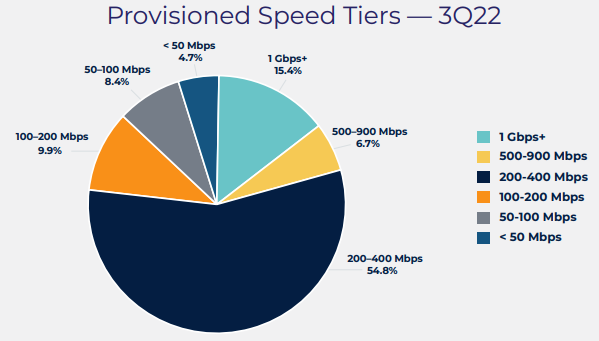
During the third quarter, about 22 percent of U.S. customers bought service at speeds of 200 Mbps or below. In other words, perhaps a fifth of the home broadband market is willing to buy service at speeds supported by fixed wireless. 


source: Openvault  


Friday, December 9, 2022

Will Verizon and T-Mobile Have 11% Share of Home Broadband by 2025?

T-Mobile and Verizon are expected to have 11 to 13 million total fixed wireless customers by the end of 2025. If total U.S. internet  accounts are somewhere on the order of 111 milliion accounts, and if small business users account for 11 million of those accounts, then home users might amount to about 100 million accounts. 

source: Ooma, Independence Research 


If Verizon and T-Mobile hit those targets, their share of the home broadband market--counting only fixed wireless accounts-- would be about 10 percent. Significantly, most of those accounts will be gained “outside of region” for Verizon. That is significant as Verizon’s fixed network only reaches about 20 percent of U.S. households. Fixed wireless allows Verizon to grow its account base among the 80 percent of U.S. home locations that cannot buy Verizon fixed network service. 


For T-Mobile, which in the past has had zero percent market share in home broadband, all of the growth is incremental new revenue. If those accounts add $600 per year in added revenue, then the 11 percent share of home broadband supplied by fixed wireless represents perhaps $6.6 billion in new revenue for the two firms. 


That is a big deal, considering how hard it is for either firm to create a brand-new line of business that generates at least $1 billion in new revenue. 


The other apparent takeaway is the size of the market segment that cares more about price than performance. 


Segments exist in the home broadband business, as they do in many parts of the digital infrastructure and digital services businesses. In other words, even if some customers want faster speeds at the higher end of commercial availability, up to 20 percent of the market cares more about affordable service that is “good enough.”


The center of gravity of demand for 5G fixed wireless is households In the U.S. market who will not buy speeds above 300 Mbps, or pay much more than $50 a month, at least in the early going. T-Mobile targets speeds up to 200 Mbps. 


During the third quarter, about 22 percent of U.S. customers bought service at speeds of 200 Mbps or below. In other words, perhaps a fifth of the home broadband market is willing to buy service at speeds supported by fixed wireless. 


source: Openvault  


The other takeaway is that home broadband net account additions over the past year have disproportionately come on the fixed wireless platform, representing about 78 percent of all net new accounts. 

source: T-Mobile 


To hang on to those accounts, Verizon and T-Mobile will have to scale speeds upwards, as the whole market moves to gigabit and multi-gigabit speeds. Some percentage of those upgraded accounts could come on some fiber-to-home platform. Even out of region, both firms could strike deals for use of wholesale assets. 


But the bigger part of the retention battle is going to center on ways of increasing fixed wireless speeds to keep pace with the ever-faster “average” speed purchased in the home broadband market. 


And that almost certainly means using millimeter wave spectrum to a greater degree. In the end, even using small cell architectures, there is only so much capacity one can wring out of low-band or mid-band spectrum. 


As a practical matter, almost all the future bandwidth to support mobility services or fixed wireless is to be found in the millimeter wave regions. 


Thursday, December 1, 2022

What Comes Next for Mobile Operator Revenue Drivers?

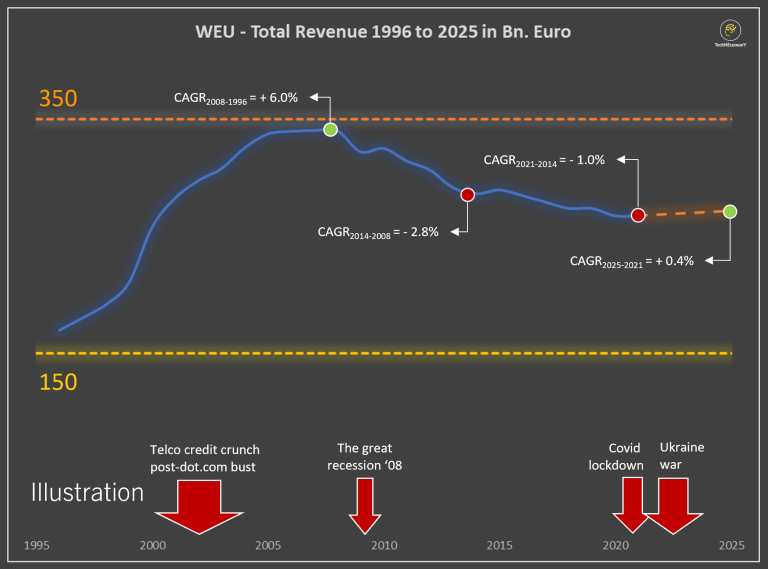
If you subscribe to the theory that every product has a life cycle, and if you are a mobile service provider, then this data on European mobile revenue should worry you. The reason is that the data fits the product life cycle suggesting that every product eventually reaches saturation and then declines. 


And it that is true, the mobile business--in the most mature markets--faces product decline issues. One might well argue that the mobility business already has had to deal with such product life cycles. It replaced 1G (analog voice) with 2G, then 3G, then 4G and now 5G, with 6G coming in about eight more years, virtually indefinitely. 


Subscriptions have been the mobile revenue driver, but the value proposition and revenue contributions have evolved over time. The value of a mobile subscription once rested solely on voice communications. 


But average revenue per account began to decline in the 2G era, and growth came from text messaging. That revenue source, in turn, declined, to be replaced by mobile internet access during the 4G era. What changes in the 5G era is not yet decided.


source: Techeconomy 


One might also note other life cycles at work. Though subscriptions are essentially saturated in developed countries, subscription growth continues at a high level in other markets that have not yet reached saturation (virtually everyone has a mobile subscription).


The point is that European mobile operator revenue trends might suggest that “mobile device service” has reached a phase of decline, unless other new services can be created to run on the platform, as has happened in the past. 


Perhaps metaverse or augmented or extended reality services could provide that driver. It is just too early to say. 


We might also note product life cycles in the fixed networks business as well. Revenue once was driven by voice services, and profit by international and national long distance calling. As voice revenues dwindled some operators sparked growth by adding subscription TV, financial services or home security. Only linear video proved to be a major revenue driver.


With the decline of linear video, internet access has emerged as the growth driver. But even that product has reached saturation levels in many markets. 


One might argue that internet access products also have changed, though. Dial-up internet access at kilobit-per-second levels arguably is a different product than access at megabit-per-second levels. Access at 100 Mbps arguably is a different product than gigabit-per-second access. 


And multi-gigabit service arguably will be a different product than gigabit access. For fixed network operators, no less than mobility service providers, the issue is to keep finding new products with mass appeal, to replace maturing products. 


Both mobile and fixed network services also have had business and consumer segments, though the business segment has been easier to delineate in the fixed, compared to mobile networks. In the fixed networks business, there are products that “only” businesses buy. 


In the mobility access business, businesses have essentially purchased the same product, albeit with different packaging (volume discounts, more-detailed account tracking). 


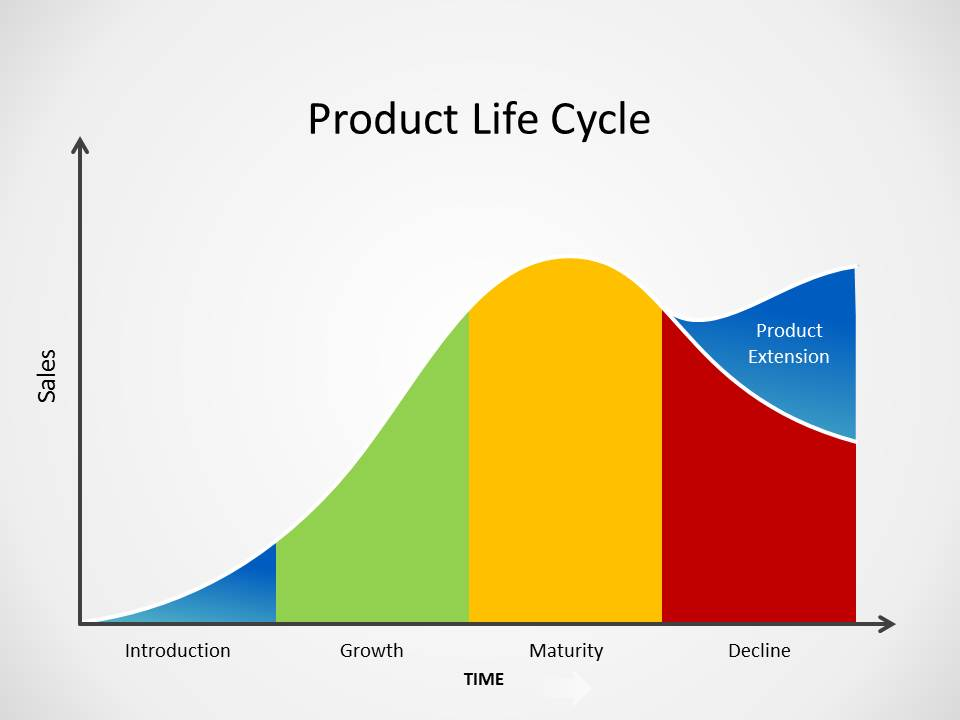
 Here is a generic product life cycle illustration, with the possibility that product extensions can extend a product’s useful commercial life. Of course, some would argue that what is here noted as a “product extension” actually is a different product, with a different life cycle. 


Think about mobile subscriptions. In that analogy, mobile voice is one cycle; text messaging another; mobile internet access a third. Others might argue that text messaging was a product extension, as was mobile internet access. 


https://wholesalesuiteplugin.com/product-life-cycle/ 


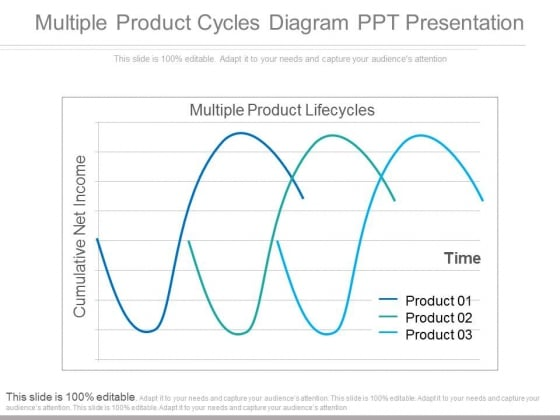
If one assumes text messaging and mobile internet access actually are different products from voice, albeit sold using the same common platform, then one has a sort of conceptual product roadmap. As product 01 reaches saturation--and before decline--work must have begun on product 02. Before product 02 reaches saturation, work must have begun on product 03, and so forth. 


source: Slidegeeks 


The big question we might ask is “what drives revenue growth after mobile broadband saturates?” If one views the mobile access network as a platform, what is the next big driver of revenue that can be developed on the platform? 


Many would argue that internet of things, edge computing, private networks or network slicing are part of the answer. And they could help. On the other hand, it is hard to see any single one of those innovations driving total revenue the way that voice, messaging or internet access has done. 


Applying the Pareto theorem, which generally is popularized as “20 percent of the instances drive 80 percent of the results,” ask yourself whether it seems possible that edge computing, private networks, IoT or network slicing could, at some point, drive 80 percent of total mobile operator revenue. If the answer is “no,” then those are not the drivers of the next wave of mobile operator revenue, in the mold of voice, messaging or internet access.


Is Sora an "iPhone Moment?"

Sora is OpenAI’s new cutting-edge and possibly disruptive AI model that can generate realistic videos based on textual descriptions.  Perhap...