Tuesday, August 7, 2018

Why Spectrum Prices are Dropping

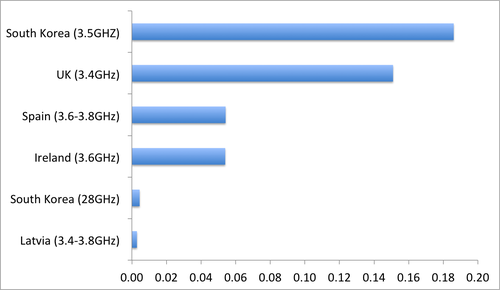
It should come as no surprise that spectrum costs to support 5G are dropping, on a MegaHertz per POP (person) basis, which is how we measure prices.

MHz-POP prices are dropping for reasons of basic supply and demand. First of all, supply is growing by 10 to 100 times over the total amount of mobile spectrum presently available. More unlicensed spectrum also is coming, as well as spectrum sharing and spectrum aggregation, plus heavier use of small cells, all of which expand the effective amount of bandwidth.

Price per MHz-POP also is declining because of buyer expectations about potential profits and business models. Simply, potential buyers believe they must pay less than in the past to acquire licensed spectrum.

Smaller cell architectures have been one of two primary ways of increasing the effective use of spectrum, and in many cases carriers are choosing to use network architecture as an alternative and complement to spectrum purchases. Verizon, for example, is among firms that have said they believe cell division--a traditional tool--is a viable alternative to buying spectrum.

New spectrum is part of the explanation. But millimeter wave assets at higher frequencies are far more capacious than spectrum in the traditional lower-frequency (sub-2 GHz) bands.

Buyers also recognize that millimeter spectrum has propagation limits, limiting its perceived value, compared to lower frequency assets.  

The point is that it should not be surprising why spectrum prices are dropping. Spectrum value was in the past was scarce. It now will be plentiful.

source: Light Reading

Monday, August 6, 2018

Enduring Value of Mobility is Mobility

“In an ‘always on’ society, people expect to be connected everywhere,” a new Ofcom report simply notes. And that, in the end, is the primary and enduring value of mobile internet connectivity.

“We know from our mobile research, which looks at information on data service availability, that while at home, for 76 percent of the time Android users with access to 4G mobile technologies were using apps, they were connected to WiFi,” Ofcom says. “In contrast, while away from home, almost 65 percent of app usage time on Android smartphones was through a mobile network.”

It is worth asking the question of how behavior could change if 5G brings mobile network speeds faster than fixed connections, and if tariffs are changed to eliminate the difference between the cost of using a fixed or mobile internet access location. Logic suggests consumers might simply stay connected to the mobile network, in such cases.

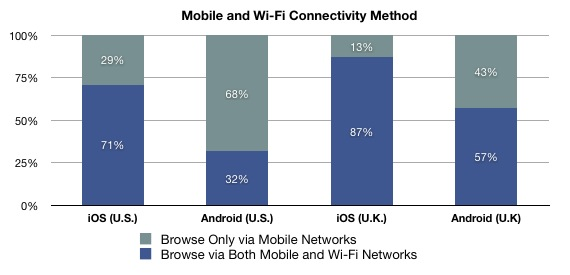
One might note that there already are differences in network connection preferences among device users in both the United States and United Kingdom, as comScore noted in 2012.

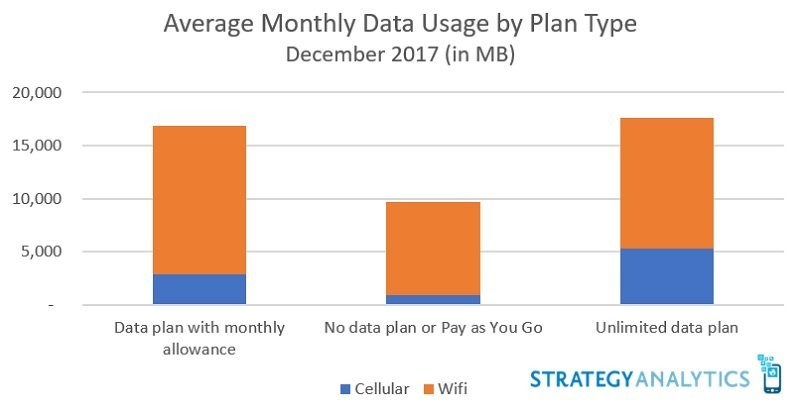
Other studies done in 2017 likewise suggest that users who do not have to worry about their data usage (unlimited plans) use far more data on the mobile network.

That is a major behavioral trend we must be alert to discern.

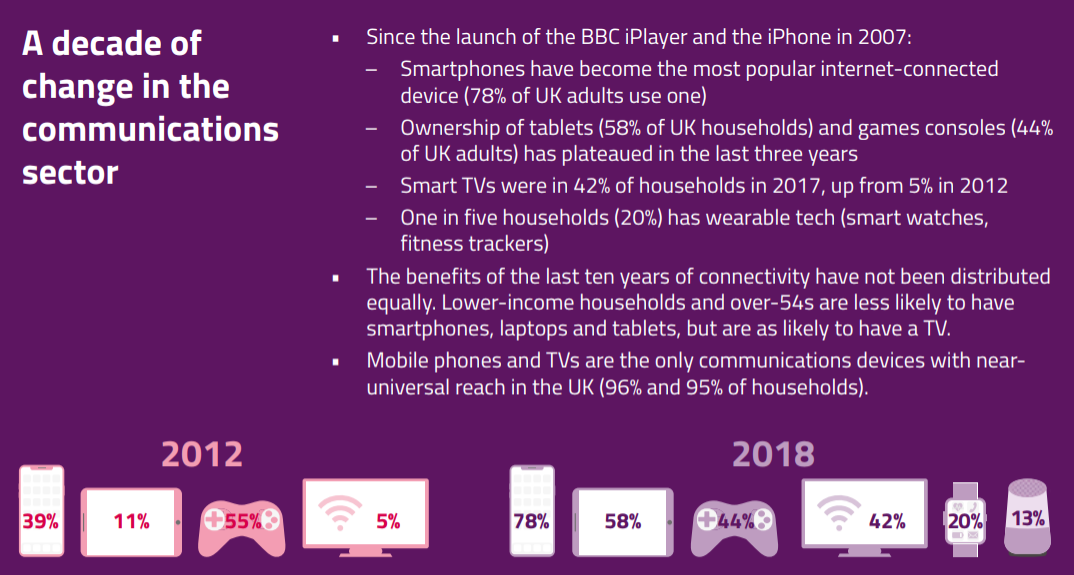
The other obvious point is that smartphones are used by people (as are smartwatches or fitness trackers), where other internet-connected devices are used by households (TVs, game consoles, PCs), although in single-person households there is an identity between “per person” and “per household” use of such appliances.

It also is worth noting that, in terms of ubiquity of usage, only two devices--the smartphone and the TV--are in most homes. That explains the high interest mobile service providers have in video streaming: phones and TVs are the two ubiquitous devices, because the services those devices support are ubiquitous.


Saturday, August 4, 2018

Where Will Initial 5G Revenue Upside Happen?

Though the big upside from 5G, for mobile service providers might eventually come from new applications requiring ultra-low latency or support for internet of things sensors, the near term revenue will come largely when phone users switch from 4G to 5G for internet access, assuming there is some initial price premium for doing so.

The other areas where we should be watching for incrementally-new revenue sources, however, will come outside internet access, in the form of mobile-optimized video streaming and use of 5G fixed wireless to take market share from fixed network suppliers.

That seems most germane for AT&T, Verizon and T-Mobile US at the moment (it is hard to say what happens if the Sprint merger with T-Mobile US is not approved). All three of those service providers are likely to launch video entertainment services, while two or all three will launch fixed wireless assaults on fixed network internet access providers as well.

So the initial revenue boosts for 5G might come from consumer upgrades to 5G internet access (with some incrementally-higher revenue), new video services and internet access market share gains taken from fixed networks.

If Verizon and T-Mobile US launch as expected, it is conceivable they might take 15 to 20 million accounts from fixed network internet service providers by about 2024.

Sure, the big hope is that 5G will lead to huge new revenue sources in the internet of things ecosystem. But the immediate revenue will come from phone users upgrading internet access plans, entertainment video and fixed network internet access market share.

It now seems clear that T-Mobile US acquisition of Layer3, the video streaming platform, though premised in part on creating “up the stack” opportunities for T-Mobile US as a supplier of mobile service. But it appears there also was some thinking about how such an asset could support any future T-Mobile US assault on fixed network connectivity markets, including a bundling of internet access with entertainment video for consumer accounts.

“What's really interesting and we went into Layer3 with the idea in the back of our heads of the new T-Mobile (a proposed merged Sprint plus T-Mobile US),” said Mike Sievert, T-Mobile US COO.

“What's really interesting is what component it could become when the 5G network of the new company starts to unfold, because this 5G network is a network where we intend to plunge into broadband, not just mobile connections like today, but in the in-home broadband, because this network has the depth and breadth of 5G that's simply unprecedented in the market,” said Sievert.

In fact, Sievert went so far as to predict a bigger T-Mobile (with Sprint assets) could gain as many as 10 million fixed network accounts by about 2024. Some of those gains would come because T-Mobile US intends to offer service at lower prices.

Assume the market is about 96.5 million existing fixed network internet access accounts. If so, then 10 million accounts represents about 10 percent market share, almost all of which would be taken from a telco or cable TV supplier.

If those losses were equally split between telco and cable suppliers, incumbent market shares stand to fall about five percent each, overall, in the medium term (six to eight years).

T-Mobile US clearly expects to grab market share from incumbent telcos and cable operators. Severt says 50 percent of the U.S. fixed network market has only one--and in some cases zero--suppliers offering “broadband” service. The minimum definition is 25 Mbps, but T-Mobile US seems to be viewing the “broadband” market as services in the hundreds of megabits per second.


Verizon, for its part, thinks it has an opportunity of about 39 million U.S. households (about 30 percent of all U.S. households for its out of region fixed wireless business, and a bigger share of housing that actually is occupied, or occupied full time).

Were Verizon to capture 20 percent share where it operates, the potential share shift nationwide could be 7.8 million households. At a 30-percent capture rate, Verizon could shift 11.7 million homes from other existing providers.

Call the gains 10 million. Combined with a share loss of 10 million to T-Mobile, some 20 million accounts out of a base of 96.5 million accounts represents a shift of nearly 21 percent of the market. Split equally, and ignoring for the moment all other providers, that would drop telco share to perhaps 30 percent, and cable share to perhaps 50 percent or less.

That would be painful, and for telcos, puts them close to the threshold of profitability, as 30 percent tends to be the level at which operations are sustainably profitable.

If T-Mobile US expects to take that share, video entertainment likely is a necessary component of the offer.  

“The TV is even more interesting because you're offering the broadband and you can offer the TV on top of it,” said Sievert. “So that's a big piece of the future of the new T-Mobile.”

The big unknown is whether T-Mobile would take this move even if the Sprint merger does not happen. There is a reasonable possibility it still would move forward with its assault on fixed network internet access and video service markets.
T-Mobile US Attack on Fixed Network Internet Access Will Feature Lower Prices

Observers of U.S. internet access markets often argue that prices have increased over the past two decades. That argument typically refers to prices that are not inflation adjusted, not adjusted for the different tiers of service customers buy, and virtually always refer to price trends for fixed access.

Everyone agrees on only one thing: prices per bit on fixed networks have continually dropped.

The new wrinkle is what has been happening on mobile networks, especially as it now appears certain 5G will usher in a new use of mobile platforms to challenge fixed network service directly.

T-Mobile US executives, for example, note that, if “you go back to 2013, our customers have enjoyed a 12-fold increase in the data that they can use with about an 11 percent decline in price, says Mike Sievert, T-Mobile US COO.

MetroPCS customers (a T-Mobile US prepaid brand) have seen prices between 17 percent and 25 percent lower, Sievert says.

T-Mobile US now says it expects to be a significant player in providing major new competition for internet access services provided by fixed network providers as well, if its merger with Sprint is approved. In truth, T-Mobile US is likely to do so even if the merger with Sprint is not approved.

That assault obviously will include a “lower price” attack. Referring to a planned assault on fixed network internet access markets, “we think about 10 million will choose us over the first few years, because we'll be offering a better price broadband offering,” said Sievert.  

Friday, August 3, 2018

Video Matters for New Competition in Fixed Network Internet Access Markets

It now seems clear that T-Mobile US acquisition of Layer3, the video streaming platform, though premised in part on creating “up the stack” opportunities for T-Mobile US as a supplier of mobile service. But it appears there also was some thinking about how such an asset could support any future T-Mobile US assault on fixed network connectivity markets, including a bundling of internet access with entertainment video for consumer accounts.

“What's really interesting and we went into Layer3 with the idea in the back of our heads of the new T-Mobile (a proposed merged Sprint plus T-Mobile US),” said Mike Sievert, T-Mobile US COO.

“What's really interesting is what component it could become when the 5G network of the new company starts to unfold, because this 5G network is a network where we intend to plunge into broadband, not just mobile connections like today, but in the in-home broadband, because this network has the depth and breadth of 5G that's simply unprecedented in the market,” said Sievert.

In fact, Sievert went so far as to predict a bigger T-Mobile (with Sprint assets) could gain as many as 10 million fixed network accounts by about 2024. Some of those gains would come because T-Mobile US intends to offer service at lower prices.

Assume the market is about 96.5 million existing fixed network internet access accounts. If so, then 10 million accounts represents about 10 percent market share, almost all of which would be taken from a telco or cable TV supplier.

If those losses were equally split between telco and cable suppliers, incumbent market shares stand to fall about five percent each, overall, in the medium term (six to eight years).

T-Mobile US clearly expects to grab market share from incumbent telcos and cable operators. Severt says 50 percent of the U.S. fixed network market has only one--and in some cases zero--suppliers offering “broadband” service. The minimum definition is 25 Mbps, but T-Mobile US seems to be viewing the “broadband” market as services in the hundreds of megabits per second.


Verizon, for its part, thinks it has an opportunity of about 39 million U.S. households (about 30 percent of all U.S. households for its out of region fixed wireless business, and a bigger share of housing that actually is occupied, or occupied full time).

Were Verizon to capture 20 percent share where it operates, the potential share shift nationwide could be 7.8 million households. At a 30-percent capture rate, Verizon could shift 11.7 million homes from other existing providers.

Call the gains 10 million. Combined with a share loss of 10 million to T-Mobile, some 20 million accounts out of a base of 96.5 million accounts represents a shift of nearly 21 percent of the market. Split equally, and ignoring for the moment all other providers, that would drop telco share to perhaps 30 percent, and cable share to perhaps 50 percent or less.

That would be painful, and for telcos, puts them close to the threshold of profitability, as 30 percent tends to be the level at which operations are sustainably profitable.

If T-Mobile US expects to take that share, video entertainment likely is a necessary component of the offer.  

“The TV is even more interesting because you're offering the broadband and you can offer the TV on top of it,” said Sievert. “So that's a big piece of the future of the new T-Mobile.”

The big unknown is whether T-Mobile would take this move even if the Sprint merger does not happen. There is a reasonable possibility it still would move forward with its assault on fixed network internet access and video service markets.

Thursday, August 2, 2018

In 5G Era, ARPU Will be Highly Variable

It is an almost-inescapable conclusion that 5G will lead to a tug of war between higher and lower overall average revenue per user metrics for mobile service providers. On one hand, ARPU for the latest mobile generation tends to be higher than for each older generation. So it is not unreasonable to argue that 5G ARPU will be higher than 4G, higher again in relation to 3G and 2G.

On the other hand, to the extent that much 5G revenue growth will come from new use cases, ARPU per account could vary by an order of magnitude from current “phone account” levels. Today, ARPU is driven primarily by phone accounts.

But 5G is going to add a number of other revenue sources, with highly-disparate ARPU implications. Internet of Things sensors might each generate less than $1 a month in connection revenue.

Fixed wireless services will generate ARPU more in line with fixed internet access services, an order of magnitude higher than IoT devices, and perhaps double what a phone connection might generate each month.

So we are entering an era where various use cases generate as much as two orders of magnitude more ARPU variance. So ARPU will start to have less relevance. Think of whether ARPU makes sense when looking at grocery store sales.

We have been moving in this direction for decades, it is worth noting. Retail service providers no longer track “lines” as such, but rather “units sold.” The net result is a revenue per service and revenue per account metric that matters more than “revenue per line.”

The other important development is that retailers now sell a mix of services with different profit margin contribution, video entertainment now providing maybe 15 percent to 20 percent margins, while internet access can generate 40 percent margins. Voice margins likely are someplace in between.

Many of the newer services (home security, advertising, internet of things, connected car, streaming) are not yet big enough or, in some cases, mature enough to produce predictable margins.

The larger point is that ARPU will now become something that hinges on sales volume and operating costs for a variety of discrete products, each with distinct margin and gross revenue profiles.

Wednesday, August 1, 2018

42 Countries are Moving to Release 5G Spectrum

Some 42 countries are either formally considering introducing certain spectrum bands for terrestrial 5G services, holding consultations regarding suitable spectrum allocations for 5G, have reserved spectrum for 5G, have announced plans to auction frequencies or have already allocated spectrum for 5G use, according to the GSA.

Another 15 countries are taking such initiatives in relation to spectrum that is not being specifically allocated to 5G.

As the Small Cell Forum has estimated, many 5G cell sites will be based on small cell architectures starting in 2018.


Some countries have multiple initiatives underway. In Europe, four countries have already completed auctions of 5G spectrum (Ireland, Latvia, Spain and UK) with another three (Germany, Greece, Norway) having recently completed auctions of spectrum that could potentially be used for 5G.

Ten countries are known to have confirmed 5G spectrum auctions between 2018 and 2020 (Austria, Finland, France, Germany, Greece, Italy, Netherlands, Romania, Sweden, Switzerland) with three others planning auctions of potentially suitable bands (Norway, Slovakia and Switzerland).

There are 5G auctions/allocations confirmed in at least six countries in the Asia Pacific (Australia, China, Hong Kong, Malaysia, Japan, and South Korea) region.

In June 2018 Korea completed a 5G auction for spectrum in the 3.42–3.7 GHz and 26.5–28.9 GHz frequency bands.The United States has issued spectrum on a technology neutral basis that can be used for 5G in the 600 MHz range. It has also confirmed rights to use the spectrum at 28 GHz (27.5–28.35 GHz) and 39 GHz (37–40 GHz) for 5G.

The 2.5 GHz band also will be used for 5G. Canada has announced licensing of spectrum at 600 MHz.

Five countries have completed 5G allocations or licensing procedures in at least one spectrum band (Ireland, Latvia, United Kingdom, United States and South Korea).

Is Sora an "iPhone Moment?"

Sora is OpenAI’s new cutting-edge and possibly disruptive AI model that can generate realistic videos based on textual descriptions.  Perhap...