Monday, June 5, 2017

Will AI-Based Cloud Computing Create New Possibilities for Mobile Networks?

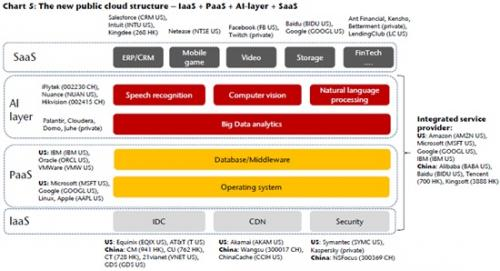
It is not yet clear how big a role mobile networks can play in cloud computing infrastructure and services built on edge computing and artificial intelligence. It does seem clear that to the extent real estate (facilities at the edge, power and physical security at the edge) and artificial intelligence as a service are important, and if AI itself becomes a cloud service,  some new role is conceivable.

If the AI operations have to be done externally to any specific appliance, it is clear that cloud computing assets will be involved.

If many new apps require low latency response and use of artificial intelligence and machine learning, computing at the edge is almost necessary.

Also, as AI becomes a standard cloud service, or a feature of other cloud services, it will be possible for many new app providers to build services and apps on AI and machine learning, buying such capabilities as they buy compute cycles or storage.

If artificial intelligence becomes a big part of the next big wave of growth for cloud computing, that should therefore allow firms of all sizes to use advanced machine-learning algorithms just as they today buy computing or storage. And that obviously will be possible for app units of mobile operator businesses.

In other words, though it has not been so clear what natural advantages telco networks could bring to cloud computing infrastructure, there might be a different potential for mobile networks.

That seems especially true for apps that require both AI and low latency, such as automated vehicles.

We can assume that cloud workloads of the future likely will include AI capabilities. “We believe AI will revolutionize almost all aspects of technology, making it easier to do things that take considerable time and effort today like product fulfillment, logistics, personalization, language understanding, and computer vision, to big forward-looking ideas like self-driving cars,” said Swami Sivasubramanian, Amazon AI VP.


“Today, building these machine learning models for products requires specialized skills with deep Ph.D. level expertise in machine learning,” he said. “However, this is changing.”

Increasingly,  AI will be part of cloud services and open source software as well, he argues.

Amazon Web Services has added predictive analytics for data mining and forecasting, to its cloud services, opening up machine-learning algorithms first developed for internal use, to customers of AWS.

Google application program interfaces are being made available to its cloud services customers to support translation, speech recognition and computer vision.

Microsoft likewise talks about  “conversation as a platform,” where voice-responsive systems use artificial intelligence to handle simple customer requests.

Over time, though, that capability will extend, allowing the AI-enhanced interfaces to integrate information from different sources, allowing more complicated transactions to be supported.

AI will be democratized, some would say.


Source:Google  

Near Term, Dish is Spectrum Wild Card; Long Term, Plenty of Spectrum

The mobile business historically has been based on spectrum scarcity, as without licenses, no contestant could be in the facilities part of the business. Based on licenses held in the traditional bands, and the number of accounts to support, Verizon has the greatest need for additional spectrum (though small cells are a functional substitute).

Eventually, that could change, and for reasons beyond any future Verizon acquisition of additional spectrum.

With the caveat that millimeter wave spectrum assets have the potential to dramatically affect the business value of spectrum (licensed and unlicensed), it remains easy to see that Dish Network is the wild card.

Present mobile licensed spectrum holdings of the largest four mobile suppliers, plus Dish Network spectrum, are based on::

  • Low Band: 600 MHz, 700 MHz and Cellular/SMR
  • Mid Band: PCS, AWS-1/2/3/4
  • High Band: WCS (2.3 GHz), EBS/BRS (2.5 GHz)

Millimeter wave spectrum has the potential to rearrange spectrum holdings--and value--by an order of magnitude or two orders of magnitude, over a decade or so. One might argue that spectrum scarcity is going to substantially end, as more millimeter wave assets are commercialized, as spectrum sharing and lots of new unlicensed spectrum are added in the U.S. market.

Still, in the traditional lower band frequencies, it is Dish Network that potentially could rearrange spectrum holdings, assuming those assets are acquired or deployed on behalf of any of the leading four mobile service providers.


Artificial Intelligence Will Drive Mobile, Cloud, Edge Computing

 It is hard right now to know whether internet of things apps and services, enabled largely--but not exclusively--by 5G, are going to be as important as expected. But it is reasonable to argue that artificially-intelligent systems of all sorts will have a computing support requirement that would be difficult to handle on a traditional cloud compute platform.

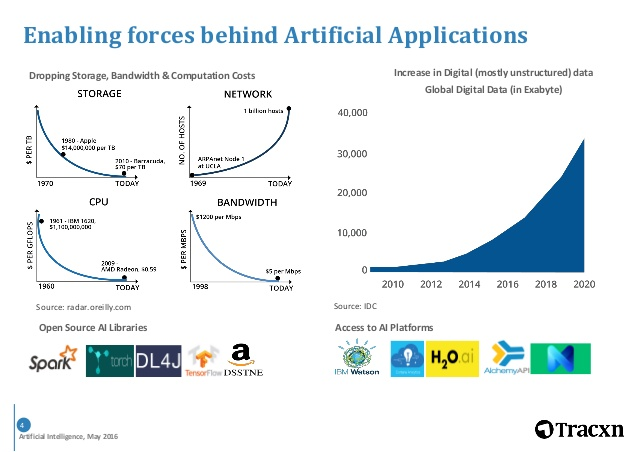
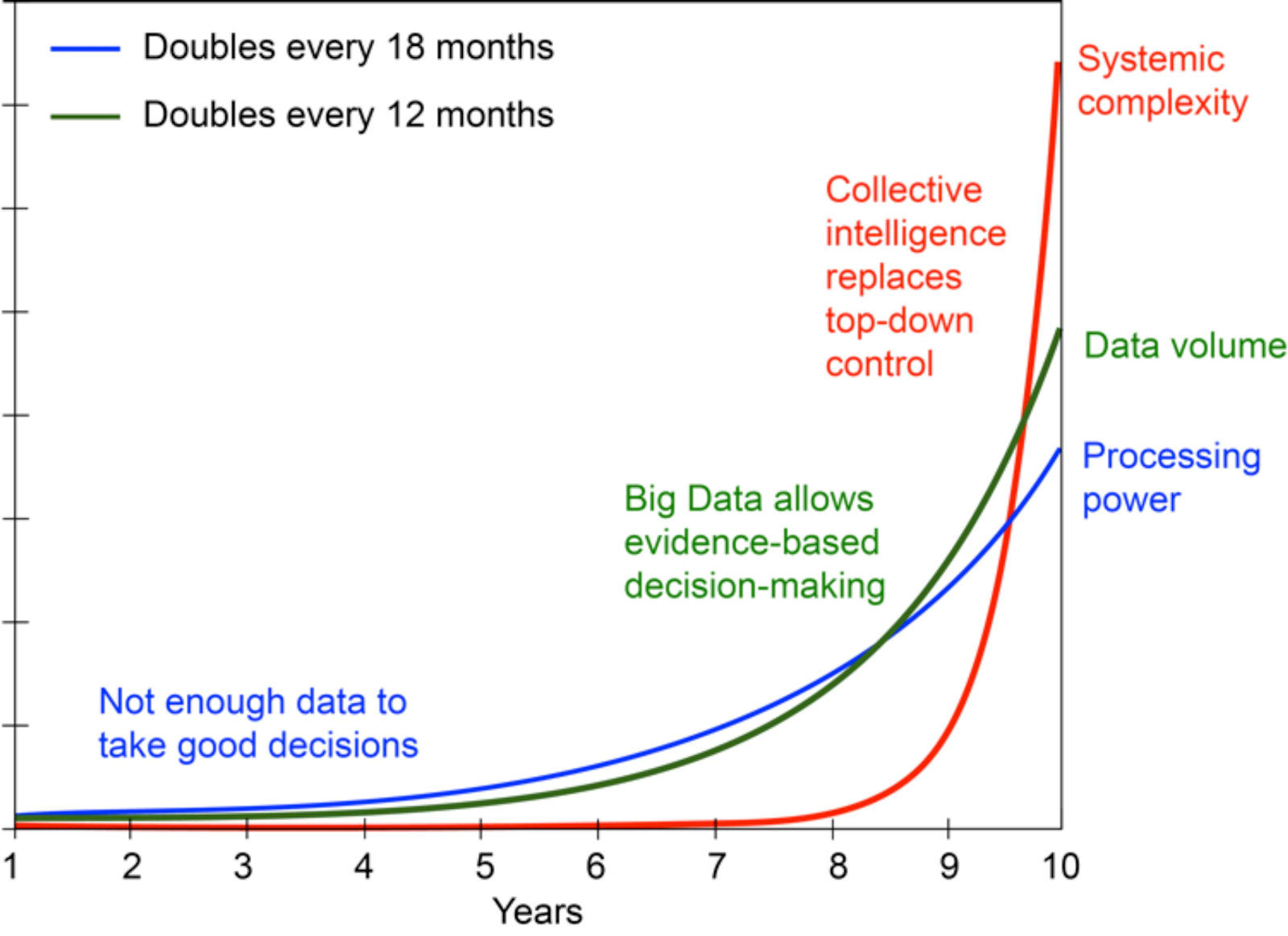
A single autonomous vehicle, for example, could have hundreds of central processing units. Beyond that, the sheer amount of unstructured data being produced is growing exponentially. In fact, some believe artificial intelligence represents the next wave of growth for cloud computing overall.

In addition, 5G is a platform that could enable mobile service providers “moving up the stack” in enterprise and some consumer services.


Edge computing, in other words, required by many proposed new apps, the most-frequently-mentioned being autonomous vehicles, which will require such low latency that cloud computing has to be done at the edge of the network. The issue, perhaps, is how many other new apps then could benefit from an edge computing network.

"Software gives us this capability to actually play in a different space than the connectivity
space for the consumer and the enterprise," said Ed Chan, Verizon SVP.

The assumption is that many new apps will require those interactions to be nearly real-time, requiring mobile edge computing. MEC is about packing the edge with computing power, like "making the cloud as if it's in your back pocket," Chan said.

Many of the apps benefitting from edge computing might be a bit prosaic. Real-time video at stadiums might provide one example. Even high-end metropolitan-area networks often have capacity to support about 100 Gbps, supporting uploads of 1080p streams from only 12,000 users at YouTube’s recommended upload rate of 8.5 Mbps. A million concurrent uploads would require 8.5 terabytes per second.

Some have predicted that,  by 2018, some 40 percent of IoT-created data will be stored, processed, analyzed, and acted upon close to, or at the edge, of a network, according to IDC.

Some even argue that analyzing data from offshore oil rigs, or managing automated parking systems or smart lighting, could require edge computing.


Sunday, June 4, 2017

Apple, Verizon Face Major Strategy Challenges

Apple and Verizon both face a similar problem. Both have had a strategy based on “premium” positioning. Apple, in phones or computers, always emphasized “quality,” but not “low price.”

Verizon, to this point, has been able to have leading market share (measured by subscribers) as well as staking out the “premium” position in the mobile operator market.

All that becomes problematic once markets saturate, or competitors start to match quality,  though. In a saturated market, how does a supplier grow if the “premium” customers already have been gotten?

How can a new set of values be created to recapture quality leadership? And even if that can be done, will consumers continue to pay for such perceived quality advantages?

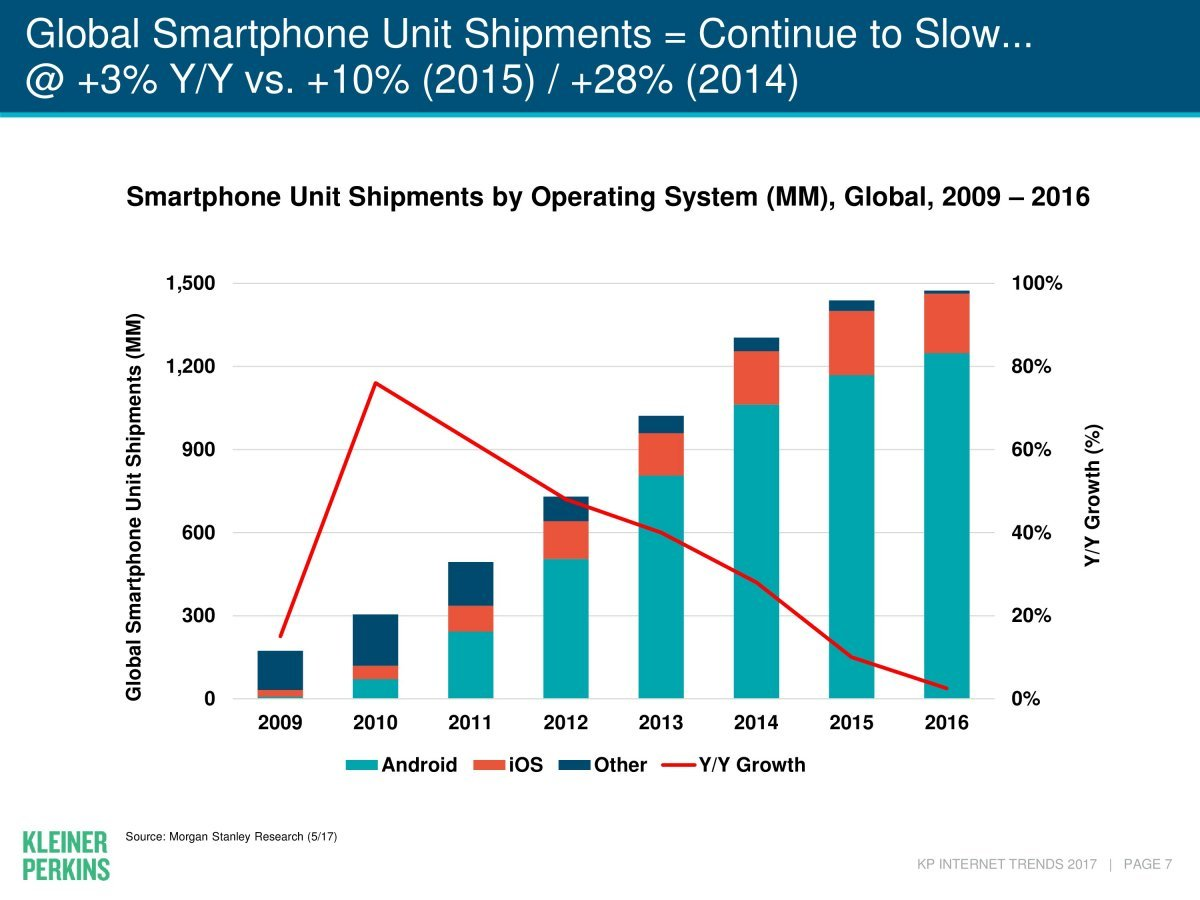
It is hard to say whether Apple or Verizon faces the bigger challenge. As was the case in the personal computer market, Apple has about 15 percent share of the smartphone installed base, but its growth has slowed to the point where one has to conclude the present market is saturated.

So it is reasonable to argue that the old model--premium product, premium price--has reached a limit. The rest of the market seems to be either in the “low cost device, less advanced features” or “good enough value, reasonable price device” or “prefer a high-end Android” segments.

Apple hates to move “down market,” but it is hard to see how it keeps growing share if it does not do so.

Verizon’s tasks are even harder, as it is tougher to differentiate an app or device than an access service. Verizon might have hoped to take clear leadership of the emerging 5G market, but all of its competitors are moving fast to close off that avenue.

Though Verizon traditionally has differentiated on the quality of its network, it will be very hard to do so in the 5G era, as its leadership in 4G was eroded as well.

As a practical matter, even if Apple and Verizon both face a similar problem--exhaustion of growth in the “premium” segment--the strategies possibly could be opposites. Apple has to move down market. Verizon has to restore some credible “premium” value.

If not, Verizon also has to move down market. That is not in either company’s cultural heritage.

source: Kleiner Perkins

Friday, June 2, 2017

HHI Still is a Barrier to Sprint-T-Mobile US Combination

While it always is conceivable that U.S. Department of Justice attorneys will ignore their traditional horizontal merger guidelines, it seems unlikely that any proposed horizontal merger increasing the Herfindahl–Hirschman Index by more than 200 points

The agency generally considers markets in which the HHI is between 1,500 and 2,500 points to be moderately concentrated, and consider markets in which the HHI is in excess of 2,500 points to be highly concentrated.  

Transactions that increase the HHI by more than 200 points in highly concentrated markets are presumed likely to enhance market power under the Horizontal Merger Guidelines issued by the Department of Justice and the Federal Trade Commission.  

The proposed AT&T acquisition of T-Mobile would have resulted in AT&T having 43.7 market share, resulting in an HHI of 3,335, an increase of 951 points. It is no surprise that the merger effort failed. The AT&T acquisition of T-Mobile also would have raised HHI scores by more than 200 points in 94 percent of markets. By some estimates, HHI would increase by more than 416 points.

So the issue is what regulators might make of increased market concentration any merger between Sprint and T-Mobile US would entail.

The Justice Department will generally investigate any merger of firms in a market where the Herfindahl-Hirschman Index (HHI), a test of market concentration, exceeds 1000 and will very likely challenge any merger if the HHI is greater than 1800.

The U.S. market has an HHI of about 2500. That is not so concentrated as many other markets.

Looking at the biggest 36 mobile markets globally, analyst Chetan Sharma found that the average HHI score of a typical market ranks 3440 on the scale.

Developed markets have an HHI of 3270. So the U.S. market, with an HHI of 2500, lies between “heavily concentrated” and “moderately concentrated.”

Still, two prior proposed horizontal mergers (AT&T with T-Mobile US; and Sprint with T-Mobile US) have failed.

Some might argue the odds of approval of any T-Mobile US combination with Sprint are higher than in the past. Others might argue that T-Mobile US has proven to be the dynamic force shaking up the U.S. mobile market and delivering competitive benefits for consumers. Sprint argues a combined Sprint-T-Mobile US would be a more-powerful competitor, in that regard.

Others are going to question that assertion. Equity analysts uniformly believe the markets will be less competitive after any such merger, which will allow firms to raise prices.


It always can be argued that the combination will involve significant disposition of assets. Some might argue the new company could spin off subscribers (assuming it wants to keep its spectrum). Of course, that sort of negates the whole point of acquiring subscriber bulk.

Wing Lee, YTL Communications CEO to Discuss 5G at Spectrum Futures

Having made at least one transition of mobile platform (WiMAX to LTE), Wing Lee, YTL Communications CEO will speak at the Spectrum Futures conference about the transition to 5G.

In terms of access speed positioning, his view is straightforward: “5G will go high and low.” In other words, low-bandwidth apps and then high bitrate apps will benefit most.

Spectrum Futures, to be held 18/19 September 2017, will spend two days exploring the business models, network changes and revenue upside from 5G, as well as how the transition from 4G might proceed.

A heavy tutorial schedule also will provide instruction on new spectrum, shared spectrum, unlicensed spectrum to be used by 5G networks.


Thursday, June 1, 2017

How Much of 5G Will Rely Directly on Unlicensed Spectrum?

How much of tomorrow’s 5G business will be based on use of unlicensed spectrum in a direct sense? And how much activity will be be produced by traditional mobile operators, compared to new providers that might more resemble Boingo or even Wi-Fi hotspots.

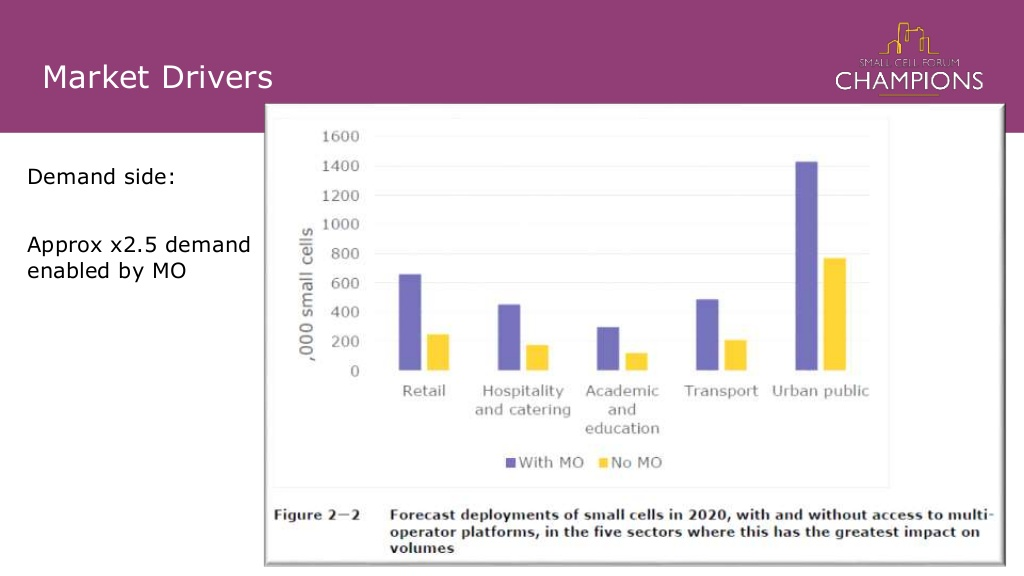
By at least some estimates, it is possible that neutral host or other small cell deployments not owned by a mobile operator could represent a third to perhaps half of deployments in some venue use cases.


One potential driver is licensed shared access, such as Citizens Broadband Radio Service (CBRS). Another driver is the ability to use mobile protocols entirely within unlicensed spectrum, or to do so in conjunction with licensed spectrum assets.

MulteFire, for example, supports operation of networks using 4G Long Term Evolution platforms, in unlicensed (using unlicensed spectrum only) or shared spectrum (aggregating licensed and unlicensed LTE capacity).

In principle, enterprises could create their own LTE networks, presumably to support multi-supplier indoor mobile connections.That would be especially helpful to some service providers, such as Comcast, which have huge networks of hotspots in consumer venues, but could use CBRS to create enterprise venue coverage.

In-building neutral host solutions are common for enterprise Wi-Fi and also distributed antenna system (DAS) deployments.

The issue is how much more that could be extended as small cell networks become more important. In principle, that could include both creation and operation of neutral host facilities that allow people to use their mobile phones with any mobile operator’s service.


In other cases, enterprises might also use the LTE in unlicensed spectrum to support custom applications on a campus or venue basis.

Is Sora an "iPhone Moment?"

Sora is OpenAI’s new cutting-edge and possibly disruptive AI model that can generate realistic videos based on textual descriptions.  Perhap...