Friday, December 4, 2015

Ofcom Postpones Auction of 190 MHz of Mobile Spectrum

Ofcom’s planned auction of 190 MHz of spectrum in the 2.3 GHz and 3.4 GHz bands, presently allocated for military use, has been postponed until the European Commission had completed its deliberations on the proposed merger of O2 and Three. That might mean a delay until mid-May 2016.

But the European Commission is reviewing the merger on market concentration grounds, as the merged entity would control 40 percent of the U.K. mobile services market.

The new spectrum is to be released for mobile communications.

Smartphone Sales Drop Into Single Digits for First Time, Globally

For the first time in 2015, smartphone sales will drop into single digits, according to IDC. Global smartphone shipments will have grown 9.8 percent in 2015 to a total of 1.43 billion units.

Slowing growth in the Asia/Pacific region, excluding Japan, Latin America, and Western Europe are largely responsible for the slower growth.

China has largely become a replacement market and sales will grow in the low single digits. The Middle East and Africa region will see the highest growth in 2015, with shipments expected to increase nearly 50 percent year over year.

In many markets, where low-cost smartphones (sub-$100) drive sales, replacement cycles will dip below two years, IDC projects.

Android's market share is expected to grow slightly from 81 percent in 2015 to 82 percent by 2019.

Apple iOS market share will drop from the 2015 level of 16 percent to about 14 percent in 2019. The majority of Apple's core markets have transitioned into replacement markets.

Region
2015* Shipment Volumes
2015* Market Share
2015* YoY Growth
2019* Shipment Volumes
2019* Market Share
2019* YoY Growth
5 year CAGR
Android
1,161.1
81.2%
9.5%
1,538.1
82.6%
4.8%
7.7%
iOS
226.0
15.8%
17.3%
263.4
14.1%
3.1%
6.5%
Windows Phone
31.3
2.2%
-10.2%
43.6
2.3%
11.4%
4.5%
Others
11.3
0.8%
-16.8%
17.1
0.9%
6.5%
4.7%
TOTAL
1,429.8
100.0%
9.8%
1,862.3
100.0%
4.7%
7.4%
source: IDC

Wednesday, December 2, 2015

International Travelers Boost Hotspot Business Models

International travelers are an attractive customer segment for operators of public hotspot networks since 70 percent of international travelers do not use international roaming services and rely instead on Wi-Fi access, according to the Wireless Broadband Alliance.

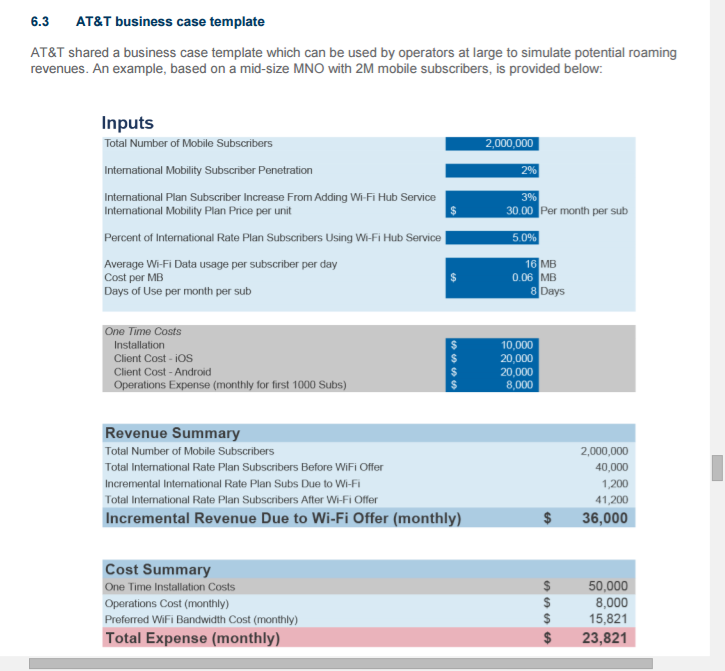
In one example, based on a mobile operator with two million customers, of which two percent buy international plans, and five percent of those subscribers also use an international  Wi-Fi access service costing $30 a month, two-year earnings can reach $242,000, according to AT&T.

Satellite Industry Dodges Bullets at WRC-15

Most in the satellite industry are likely happy with outcomes of the International Telecommunications Union’s (ITU) 2015 World Radiocommunications Conference (WRC-15).

Satellite interests were most concerned about preserving use of the C-band frequencies coveted by mobile telecom interests.

To be sure, some 200 MHz from 3.4 GHz to 3.6 GHz will be allocated for mobile broadband communications, but the rest of the band is preserved for satellite.

Many had feared the spectrum losses would be much worse.

With the exception of Region 2 (Americas), a “no change” position was adopted for the majority of C-band ranging from 3.6 to 4.2, with only a few countries in Region 2 identifying the 3.6 GHz to 3.7 GHz band for mobile use.

The satellite industry also gained some new spectrum at WRC-15 as well. In Ku-band, the industry gained a downlink allocation in the 13.4 to 13.65 GHz band in Region 1 and country-specific allocations in the 14.5 to 14.8 GHz in several nations.

WRC-15 voted not to look at globally harmonized 5G spectrum in C-, Ku- or Ka-band at WRC-19, instead agreeing to evaluate high-frequency bands above 24 GHz for 5G mobile services.

WRC-19 will also include studies on IMT spectrum above 6 GHz.

Chrome "Data Saver" Mode Removes Images to Improve Experience

Removing image content from webpages can reduce mobile data consumption as much as 70 percent,  a feature not every consumer wants, but which will likely be most welcome in regions and countries where 2G is the platform for Internet apps, where 3G is available but slow, and where affordable data allotments are parsimonious.

For such reasons, Google created “Data Saver mode” in Chrome, which reduces the amount of data used when a user visits a webpage, including most images.

After a page has loaded, users can tap to show all images or just some images.

The net result is a faster web experience and less stress on data usage allotments.

Chrome users in India and Indonesia will be the first to get this expanded Data Saver mode, with additional countries in the coming months. Users can simply flip on Data Saver mode in a Chrome app on Android devices, said Tal Oppenheimer, Product Manager.

Tuesday, December 1, 2015

Internet Access Across South Asia: What to Do Next

Spectrum Futures has posted a new white paper: Increasing Internet Access Availability Across South Asia: What to Do Next. 

Fundamentally, there are a few ways mobile operators and other Internet service providers can add more bandwidth, and those choices are crucial in Asian Internet access markets, for the simple reason that half the world’s Internet users, smartphone users and bandwidth consumption will happen in Asia.

Simply, mobile operators can gain the use of more spectrum; create smaller cells or improve modulation and radio efficiency. But most platforms--fixed or untethered--rely fundamentally on the concept of cellularizing coverage.

Wi-Fi suppliers can deploy more cells and use both 2.4 GHz and 5 GHZ bands, or use multi-array antennas.

Fixed network suppliers also rely on use of smaller “cells.” In principle, a fiber “serving area” (fiber to neighborhood) is a form of network cellularization. Fiber to the premise essentially creates a very small cell that can use all the bandwidth of a lightguide, consistent with the chosen optoelectronics.

Some potential new transport or access platforms also use a form of “cellularization.” Drones can orbit over a particular area. Free-floating balloons or low earth orbit satellites create moving areas of coverage that are the equivalent of “cells.”

Likewise, there arguably are several  ways for national regulators to stimulate the quality and quantity of communications services and bandwidth. Among those methods:

  • release additional spectrum
  • license new competitors
  • remove barriers such as high taxes, fees
  • expedite infrastructure approval processes


Bharti Airtel to Invest $9 Billion in Mobile and Fixed Networks in India Over 3 Years

India’s largest operator Bharti Airtel will invest INR600 billion ($9.04 billion) as part of its Project Leap, aiming to provide mobile broadband access to 500,000 villages and fixed network high speed access to 250,000 small towns over the next three years.

Airtel, with 23.5 percent mobile market share and 234 million mobile connections, aims to nearly double the number of base stations, adding 160,000 sites over that period, in addition to 70,000 base stations added to March 2016.

Airtel also will swap its legacy networks and base stations over a three year period and replace them with smaller, more compact and efficient technologies that will significantly improve customer experience. All these modern base stations will use a single radio access network to manage multiple spectrum bands.

By March 2016, about 60 percent of Airtel’s india network will be capable of supporting “mobile broadband” services.

Airtel also will be investing in additional domestic and international optical fiber, and upgrade more than three million copper fixed network connections with channel bonding technologies that will boost bandwidth to 50 Mbps.

In addition Airtel plans to deploy fiber to the home and offer upto 100 Mbps speeds, at some locations.

Is Sora an "iPhone Moment?"

Sora is OpenAI’s new cutting-edge and possibly disruptive AI model that can generate realistic videos based on textual descriptions.  Perhap...