Sunday, May 31, 2020

FCC Will Look at Fixed Wireless in Rural Digital Oppportunity Fund Applications

The Federal Communications Commission has decided to allow fixed wireless internet service providers--including those using 5G platforms--to compete for Rural Digital Opportunity Fund support intended to bring internet access to unserved areas. 


The question of “who is eligible” always is an important issue for rural communications support, as the FCC always has favored support for local telcos in such instances. The latest program also includes consideration for “universal service” obligations.


“The principle of competitive neutrality also does not preclude us from addressing other reasonable regulatory objectives, including ensuring that an entity bidding in Auction 904 is expected to be reasonably capable of meeting the relevant public interest obligations if awarded support and that we are spending our universal service fund efficiently to serve as many consumers as possible.,” says the FCC. 


Every applicant must be certified as an “eligible telecommunications carrier” in the state where applicant proposes to operate, for example. 


In addition to financial qualifications and coverage commitments, and despite a generally technology-neutral approach, there are some barriers to specific deployments.


“We will prohibit service providers that intend to use any form of satellite technology from selecting the Gigabit performance tier,” the FCC says. ISPs proposing to use fixed wireless or DSL technologies to supply gigabit tiers of service will be evaluated on a  case-by-case basis, but will face a “high burden” of proof. 


Beyond the technical requirements, voice service is necessary and there are price guidelines as well. “Support recipients are permitted to offer a variety of broadband service offerings as long as they offer at least one standalone voice plan and one service plan that provides broadband at the relevant performance tier and latency requirements, and these plans must be offered at rates that are reasonably comparable to rates offered in urban areas,” the FCC says. “For voice service, a support recipient will be required to certify that the pricing of its service is no more than the applicable reasonably comparable rate benchmark that the Bureau releases each year.”


Past eligibility rules have restricted funding to a single entity in any service area as well, meaning support for both a mobile and fixed provider have been banned. Irt appears the expectation is that only a single entity will be funded in any area. At least, that is what I glean from an admittedly-cursory reading of the regulations.


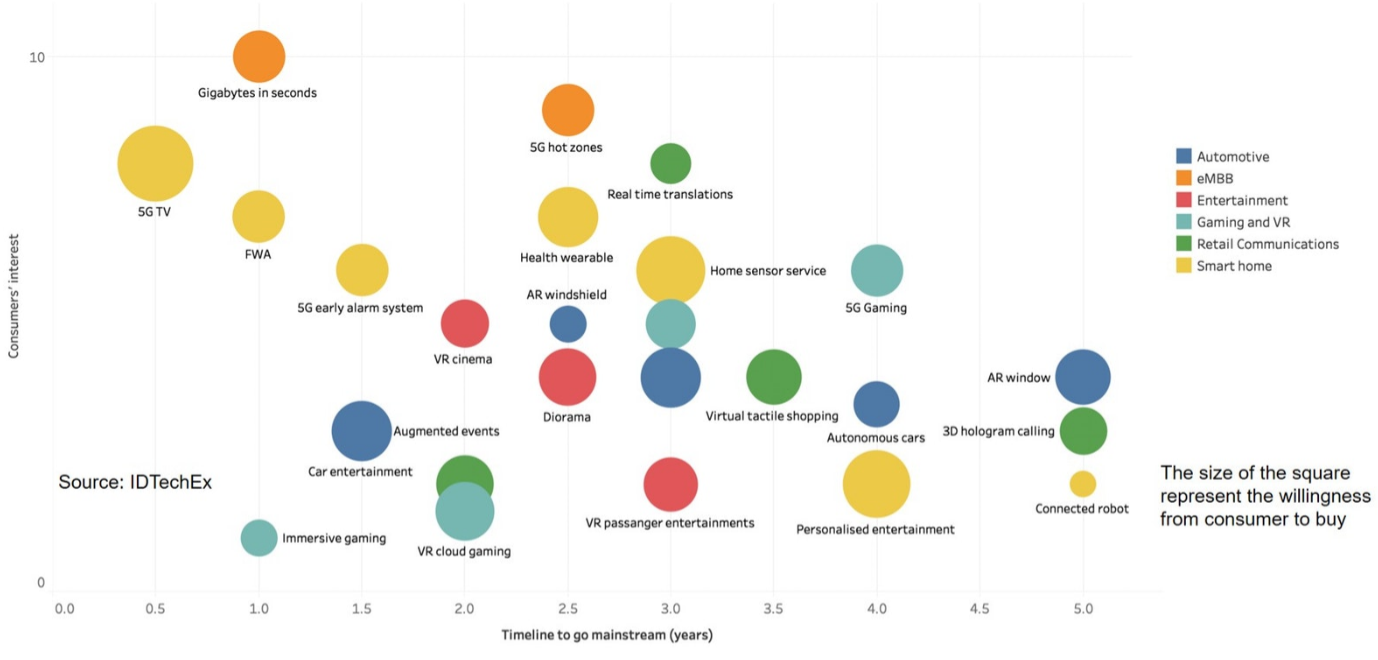
5G Killer Apps?

As was the case for 3G, many 4G predicted use cases did not occur. In fact, it has been the case that advanced apps often take up to 20 years to become significant. Apps touted for 3G did not become mass market behaviors until 4G. It therefore would not be unprecedented if many touted 5G use cases do not actually become common until the era of 6G. And there is a high probability we will be surprised by use cases that do become common. 


source: IDTechEx


More likely to happen is that predicted 4G use cases actually become feasible with 5G. Live mobile streaming was supposed to be a killer app. To be sure, people often capture video, but it is not so often actually live streamed. “Portable routers” were supposed to be a killer app. Never happened. 


Consumption of streamed video entertainment did become mainstream. But physical textbooks have not been replaced. And the prediction that magazine and newspaper publishers would create multimedia premium content sold as part of “premium” services has failed to happen. 


Nor has augmented reality navigation or widespread telemedicine actually happened. 


Nor is that unusual. Neither 3G or 4G had a killer app that everyone would recognize, though a few use cases, such as using mobile phones to access web  content, or using 4G to watch video, were common new behaviors for 3G and 4G respectively. 


The point is that our predictions or hopes for 5G use cases are likely to prove frustrating, or simply quantitative extensions of what already was happening with 4G. IoT apps have been in commercial use since 2G, for example. 


Changes will happen. Just as was the case for 3G and 4G, developers will find useful ways to build apps using the platform. But we might well be surprised about what those new apps or use cases happen to be. 


Friday, May 29, 2020

Mobile Productivity has Soared Because Scale Matters

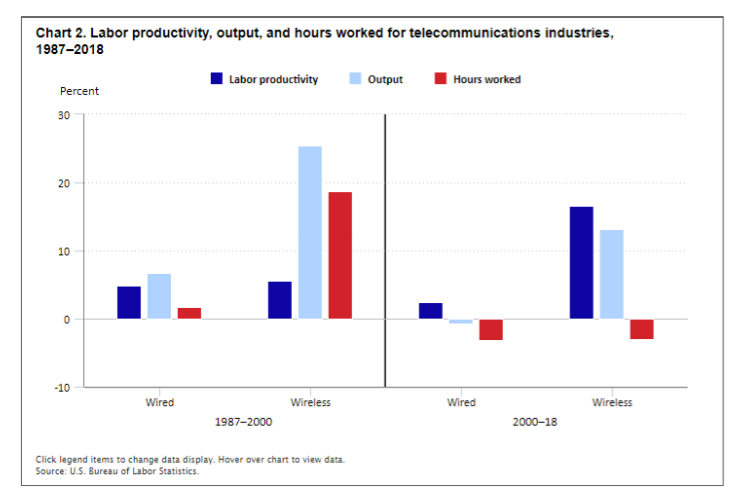
Since 2000, productivity growth in the U.S. fixed network business has plummeted, while productivity in the mobile segment of the business has increased dramatically. Prior to 2000, labor productivity growth for the mobile industry was only a little faster during the 1987 to 2000 period. All that has changed since 2000.


Levels of technology investment might explain some of the divergence. But demand shifts arguably account for most of the change.


In the wired industry, output peaked in 2000. In fact, the fixed network part of the industry actually produced less output in 2018 than it did in 2000. Conversely, output for the mobile industry has continued to multiply, growing at an average annual rate of 13.1 percent since 2000, says the U.S. Bureau of Labor Statistics.

source: BLS


The issue is how to explain the differences. If one believes there is a causal relationship between technology adoption and productivity, lower capex for fixed networks--and much higher investment in mobile--might be part of the answer. 


But it also is easy to point to diminished customer demand for products delivered on a high fixed cost platform. As subscriptions have fallen by about half, the cost to serve each remaining customer is correspondingly higher. That automatically hits productivity. 


In the U.S. market, fixed network revenue peaked around 2000, and has steadily fallen since then. For example, long distance minutes of use peaked in 2000. The number of U.S. landlines in service peaked about 2001. Long distance revenue peaked about 2001 as well. 


Put another way, most productivity problems in the fixed networks segment of the business could be fixed if customer demand were to double.


Thursday, May 28, 2020

EE Reports Shift of Network Traffic During Pandemic

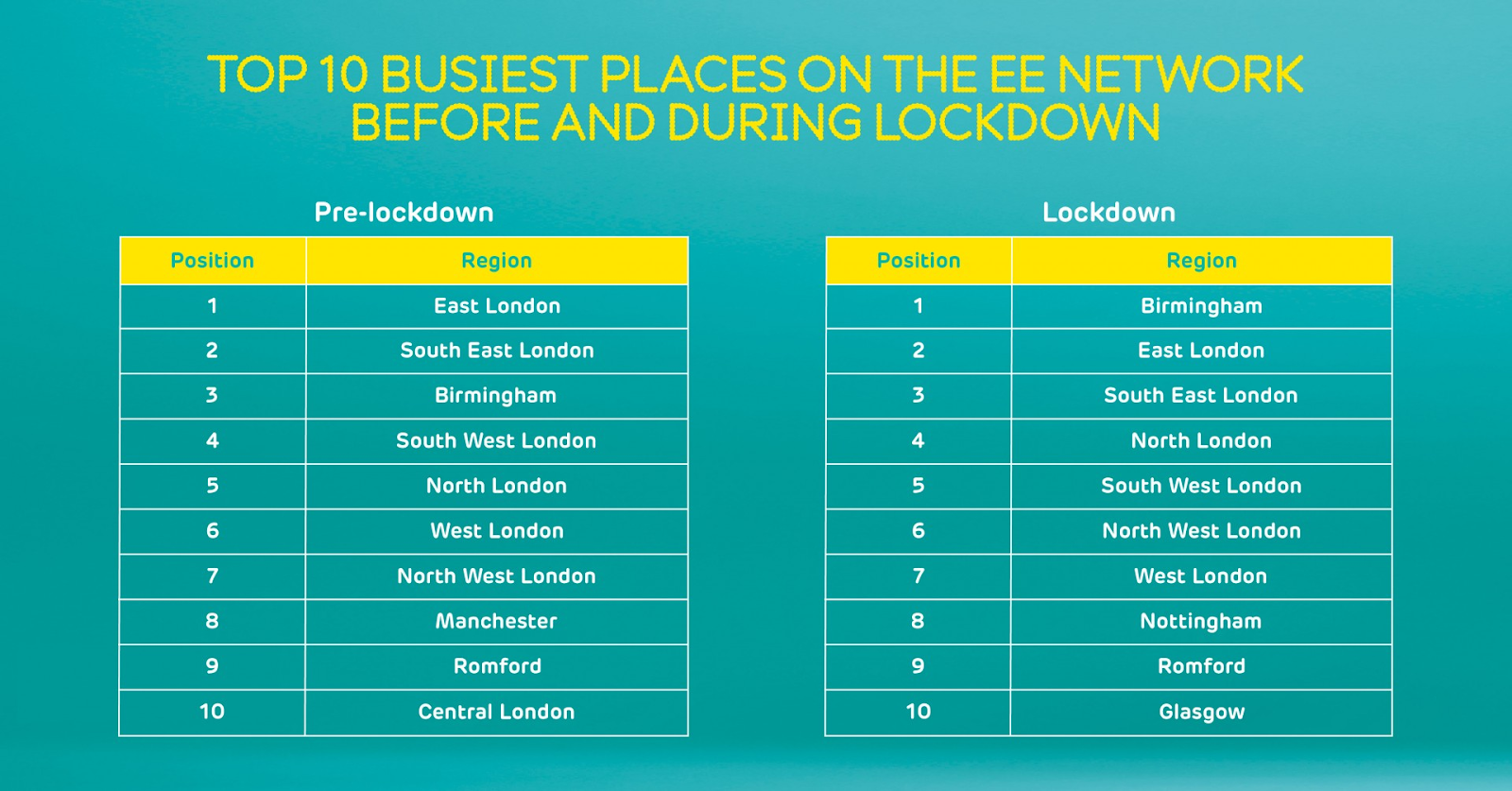
U.K. mobile service provider EE reports a 45 percent increase in communications app traffic on its network, including WhatsApp, Houseparty, Skype and Teams​ between February 2020 to May 2020, because of the Covid-19 lockdown. 


Because of the lockdown, network usage also changed. EE’s busiest sites shifted from cities to suburban areas. Stevenage, a popular London commuter town, saw a 120 percent increase in data usage for communication apps, for example. 


source: EE


Voice calls lasting for more than five minutes doubled, with overall voice usage increasing by 45 percent. 


Users of video conferencing app Zoom grew more than five times.


What changes could be permanent when the pandemic ends is the question. If the former underlying and pre-existing trends and behaviors mostly reassert themselves, behaviors will not change as much as some believe. 


Despite frequent predictions that “nothing will be the same” after the Covid-19 pandemic ends, it likely will be hard to quantify the impact over a longer period of time, say five to 10 years. That has been the case when looking at changes after the internet bubble burst of 2001, the Great Recession of 2008 or events such as 9/11. 


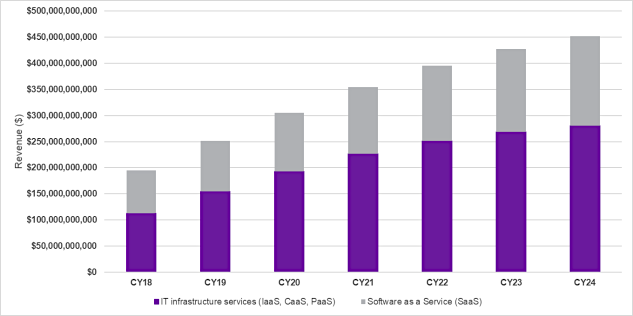
This forecast of hyperscale data center revenues from 2018 to 2024 might provide an example. One cannot actually see the impact of the pandemic. In some cases, it might take two to four years for prior trends to reassert themselves. In some cases it will not even take that long to hide the Covid-19 impact on time series data sets. 


source: Omdia


The point is that predictions that “everything has changed” or that a “new normal” will emerge post-Covid are likely to disappoint those who want those changes to happen. Underlying trends tend to reassert themselves once a disruptive event has happened, and passed.


Wednesday, May 27, 2020

Fixed Wireless Market Headed for 500 Million Subscribers?

About 100 million households globally already buy fixed wireless access, offered by 401 mobile operators that have launched LTE fixed wireless access services.


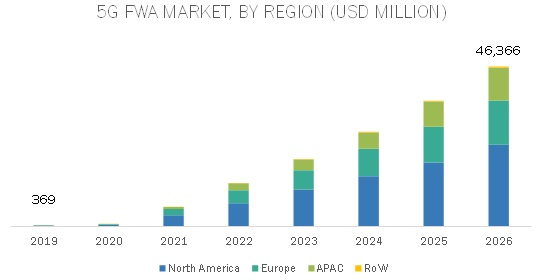
GSA believes 500 million might be doing so by 2025, in large part using 5G, generating revenue approaching $46 billion by 2026.


source: Markets and Markets


“It is exciting that we reached 100 million households with FWA  and the industry expects 500 million households by 2025,” said by Joe Barrett, the president of GSA. “There are 401 operators deploying FWA services, which becomes the best choice for home broadband in many cases.”

Tuesday, May 26, 2020

5G Infrastructure Market Will Reach $496 Billion in 2027, Grand View Research Says

The global 5G infrastructure market size is estimated to reach USD 496.6 billion by 2027, registering a CAGR of 106 percent from 2020 to 2027, according to a new study by Grand View Research. Most of that spending will be driven by public network mobile service providers, but some will be for support of private networks operated by enterprises. 


In the contest of past mobile capex in the range of $354 billion annually, that suggests 5G capex will constitute virtually all mobile capex by 2027. 


The radio access network segment is estimated to reach a market size of USD 214.7 billion by 2027, expanding at a CAGR of 112 percent from 2020 to 2027, Grand View Research says. 


The sub-6 GHz segment is expected to account for the largest market size of USD 302.4 billion by 2027, largely attributed to the focus by governments on releasing sub-6 GHz frequency bands.


Monday, May 25, 2020

Advanced 4G Networks Keep Coming

It is easy to forget, in the 5G launch, that advanced 4G networks still are being built, and continue to supply the bulk of mobile internet connect time. The Global Mobile Suppliers Association reports that 315 operators have deployed LTE-Advanced networks in 142 countries or territories. Some 327 operators in 138 countries/territories are investing in at least one of the three key Gigabit LTE component technologies.


37 operators (representing nearly 12 percent of all the deployed/launched LTE-Advanced networks) can support UE Cat-16 peak theoretical DL speeds (up to 750 Mbps) or above. Some 32 of those 37 have announced Gigabit (or very near at 979 Mbps) peak theoretical throughput, or better, in the downlink in their deployed/commercial networks.


12 of them have pockets of LTE network capable of delivering the maximum DL speeds supported by Cat-18 devices (up to 1.2 Gbps). Five of those have announced parts of their network can deliver a maximum rate in its commercial LTE network of between 1.2 Gbps and 1.6 Gbps (Cat-19).


For many customers, advanced LTE is likely to provide the experience required, making 5G optional in the short term. That will change over time as consumer demand for bandwidth outstrips the ability of 4G to continue adding capacity. 


Is Sora an "iPhone Moment?"

Sora is OpenAI’s new cutting-edge and possibly disruptive AI model that can generate realistic videos based on textual descriptions.  Perhap...