Tuesday, September 11, 2018

AT&T Adds More 5G Cities

AT&T says it will launch mobile 5G based on the 3GPP 5G New Radio standard in 2018 in Atlanta, Charlotte, Dallas, Houston, Indianapolis, Jacksonville, Louisville, New Orleans, Oklahoma City, Raleigh, San Antonio and Waco.

Additional launches will follow in early 2019 in parts of Las Vegas, Los Angeles, Nashville, Orlando, San Diego, San Francisco and San Jose.

AT&T Communications Chief Technology Officer Andrew Fuetsch said 5G apps are being developed for smart cities, enterprise applications, AR/VR and volumetric video.

T-Mobile US Value Proposition Resonates with Growing Number of Consumers

You might not find it surprising that T-Mobile US, the self-proclaimed U.S. mobile leader for value and price, is seen that way by consumers. In fact, according to a Business Insider survey, consumers believe T-Mobile US has made the greatest gains in “value for cost” between 2017 and 2018. Only AT&T seems to have slipped, over that period.

T Mobile Value for Cost


T-Mobile's streamlined plans and additional perks explain its value to subscribers, Business Insider believes.
T Mobile Customer Satisfaction

The T-Mobile US “Binge On” program, for example, exempts streaming video and audio from data usage, and unused data can be rolled over from month to month.

AT&T, Verizon Plan to Use 5G Fixed Wireless in Different Ways

At least at the moment, AT&T sees 5G fixed wireless as an in-region tool to provide internet access. Verizon tends to look at 5G fixed wireless as a tool to attack outside of region. In addition to those outdoor internet access apps, each firm also sees in-building applications.

Some believe the 3.5-GHz Citizens Broadband Radio Service (CBRS) shared spectrum band is most significant because it creates new opportunities for venue communications. Others say the importance is the innovation in methods of allocating spectrum; creating ways of rapidly creating new use cases and business models for new entities without physical relocation of incumbent users.


Yet others might point to the new use cases for fixed wireless rural communications. AT&T is looking at all those angles, according to Igal Elbaz, AT&T SVP Wireless Technology


“We think there are a number of compelling use cases for this spectrum including private LTE networks for enterprises, utilizing it as a ‘neutral host band’ in large indoor venues like stadiums and smart factories, and deploy fixed wireless internet (FWI) in rural and underserved areas,” he said.


CBRS also will play a role in 5G densification in urban areas, Elbaz said.


“We will start by using LTE in CBRS spectrum and then migrate to 5G,” said Gordon Mansfield, AT&T VP, Converged Access and Device Technology. “We will primarily use the CBRS solution to deliver home and enterprise broadband services.”


“In many cases a fixed wireless access (FWA) architecture can cost-effectively reach homes and businesses where fiber cannot,” he noted.


Monday, September 10, 2018

FCC Looks at Reallocation or Shared Use of 2.5 GHz and 5.9 GHz Spectrum

As the U.S. Federal Communications Commission looks possibly to reallocate access to blocks of spectrum in the 2.5 GHz and 5.9 GHz bands that earlier were allocated to specific users and use cases, we are reminded that rights to use spectrum lie at the heart of every business model, and every industry, that builds on rights to use spectrum.

And, as always, perceived private interests exist whenever spectrum policy is weighed. In this case, 5G and Wi-Fi would be winners; educational TV and a specific protocol for auto communications will be the losers.

Scarce resources always drive issues around highest and best use.

As with real estate taxation, where land is taxed at the rate reflecting the “best” or “highest” economic value, so thinking on spectrum now follows a somewhat similar principle, as the FCC continues to shift thinking from “use case specific” allocations to “use case independent” principles.

Federal Communications Commission member Rebecca Rosenworcel now argues that the agency take another look at use of blocks of spectrum that were in the past allocated for purposes that arguably are not the “highest and best use.”

In 1999, the FCC set aside 75 megahertz of spectrum in the 5.9 GHz band for dedicated short range communications, or DSRC. DSRC was designed for cars to talk to each other in real time to help reduce accidents.

“But in the nearly twenty years since the FCC allocated this spectrum, that really hasn’t happened,” she argues. “Today, autonomous vehicles have moved beyond DSRC to get around and communicate, whether that’s with radar, LIDAR, cameras, sensors, on-board mapping tools, or cellular and Wi-Fi networks.”

“Our bet on DSRC didn’t pan out the way we thought it would,” she said. Instead, she argues, the 5.9 GHz band is “the ideal place to explore Wi-Fi expansion.”

“There is no shame in correcting course,” she said. “And I think it’s time to be ambitious and find a way forward that puts the 5.9 GHz band to fuller use.”

The other area Rosenworcel wants to reexamine is the 2.5 GHz Instructional Fixed Television Service, or ITFS. “Like with the 5.9 GHz band, there’s no shame in admitting the 2.5 GHz band has not lived up to its potential.”

Small Cell Rules Could Save ISPs $2.4 Billion in Deployment Costs

Even prior to the coming small cell era, cell tower siting has been a laborious, expensive, time-consuming chore.

So recent moves by the Federal Communications Commission to expedite and streamline small cell deployments should both reduce cost and time to deploy.

CMA Strategy Consulting analysts, hired by Corning, looked at the implications of annual caps for attaching a 5G small cell to a utility pole of no more than $270 per unit, with a $100 application fee.  

Those proposed caps are set for an FCC vote Sept. 26, 2018.

Under the new proposals, municipalities would also be required to review and make decisions on new small cells and related infrastructure within two to three months.

"The sensitivity analysis concludes that reducing small cell and application fees could reduce deployment costs by $2 billion over five years, or $7,500 per small cell built," Thomas J. Navin, an attorney for Corning with Wiley Rein LLP, said in a filing with the analysis.

"These cost savings could lead to an additional $2.4 billion in capital expenditure due to additional neighborhoods moving from being economically unviable to becoming economically viable, with 97 percent of this capital expenditure going towards investment in rural and suburban areas."

The predicted cost savings also could mean an additional two million rural and suburban households connected to high-speed mobile service, observers say.

Saturday, September 8, 2018

Will Protocol Conversion Upend U.S Telecom Regulation?

“If it walks like a duck, it’s a duck.” That adage actually describes the general line of thinking that federal level regulators have followed whenever technology transitions happen in the “telecommunications” (common carrier) industry.

But a new issue is raised by a Minnesota district court, and affirmed by an appeals court: if protocol conversion is an attribute of a “data service,” and if such protocol conversion happens in customer premises equipment, then a regulated telecom service is a non-regulated data service.

If performing the conversion from TDM to IP inside a customer’s home is sufficient to convert a telecommunications service into an information service, as the district court has reasoned, then any other service provider could, in principle, greatly reduce its regulatory burden simply by moving converter boxes (where protocol conversions happen) inside customers’ homes.

A simple change of physical location would transform what used to be telecommunications services to information services. Experts say the FCC never has specifically ruled on protocol conversions, or where those protocol conversions occur.

In general, federal regulators looking at new technology in the telecom industry have followed a rule that essentially assumes that the purpose of a platform and its use by customers dictates its nature. In other words, if phone calls start and terminate on edge devices “as calls,” then no matter what happens in the network, those operations are “phone calls” for purposes of regulation.

Were that not the case, every major introduction of new technology (digital central office switches, packet switches, each new generation of mobile networks) would be cause to reexamine regulatory formats.

Three decades ago, for example, big questions were raised about whether voice over Internet Protocol should be regulated the same way as time division multiplex telecom services, or whether VoIP was a data service that should be unregulated.

To make a long story short, regulators have settled on the notion that when VoIP is used and sold as a telecommunications service (interconnected voice service), that is how it will be treated. When messaging or other forms of IP voice are used as a peer-to-peer app, such uses have continued to be seen as unregulated information services.

But another period of potential rulemaking seems to be arising again. A district court and appeals court has ruled that VoIP is an information service, essentially challenging the prior notion that VoIP is a telecommunications service.

“The district court ruled that Charter’s VoIP service is an ‘information service’ under the Telecommunications Act and that state regulation of Charter’s VoIP services was therefore preempted. Because we agree with the district court, we affirm,” the appeals court has ruled.

One might think we have settled the issue of how to regulate VoIP, but the Minnesota Public Utilities Commission and Charter Communications disagree. The MPUC wanted to regulate “Charter Advanced,” the business unit that offers the VoIP service, as a “telecommunications service.” That is rather something many had assumed was settled decades ago.

Charter argues that its service “Spectrum Voice” is an “information service” under the Telecommunications Act of 1996. That then leads to the notion that Spectrum Voice cannot be regulated by the PUC.

The court actions are a shock. They conflict with federal policy and therefore will have to be resolved, again, by a higher court. One has to assume that the principle of federal preemption will be invoked again.

In the past, new technology has raised issues about state level versus federal level regulations, among them the argument that “50 different sets of laws” will inhibit the supply of advanced new technology. The result, in such cases, has tended to be federal preemption of state-level rules.

The appeals court decision almost has to be appealed to the Supreme Court, as the recent decisions once again raise issues, not only about jurisdiction (who gets to decide?) but on the fundamental issue of whether voice is an information service, for purposes of regulation, or a telecommunications service.

I thought that issue--whether VoIP is an information service or telecom service--was settled some decades ago. Perhaps the Supreme Court will agree that, indeed, the issue has been settled. It might also happen that the U.S. Congress steps in, as is its right, to settle the issue legislatively.

There are several sets of issues: who has jurisdiction over VoIP and telecom services, and in what areas? Also, there is the fundamental issue of whether interconnected voice is a “telecom” service, with telecom regulatory rules, or an information service, with data services rules.

One attribute of information services are that protocol conversions happen. Cable companies argue they do this inside customer homes. Telcos tend to do so at central offices and other locations outside the home (IP in the middle, or network, but TDM to the home).

Many believe the current and possible ultimate decisions will have implications for network neutrality rules, as the Federal Communications Commission rules specifically state that the FCC’s rules preempt state rules on net neutrality. That is the jurisdiction issue.

What seems even more fundamental, though, is the issue of whether interconnected voice actually is an information service. That is a decision with profound implications. Since all voice services--interconnected or peer-to-peer--now use IP platforms, there now is at least an opening for a major reexamination of utility regulation for voice services generally.

There are huge institutional barriers to reconceiving voice services as “data services,” for purposes of regulation. For that reason alone, it seems unlikely we will see another major reexamination of how VoIP should be regulated (aside from jurisdictional issues).

But it is stunning to see such court decisions three decades after courts and regulators essentially settled the issue.

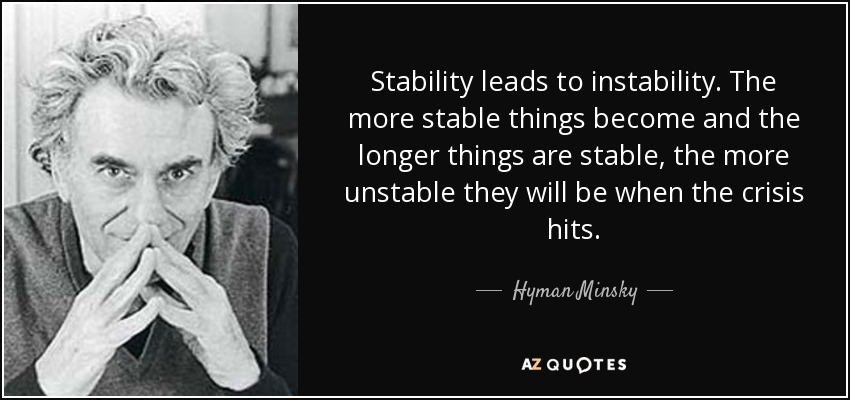
Perhaps it is misplaced, but I am reminded of an adage coined by economist Hyman Minsky.


In other words, stability is destabilizing. Long periods of calm cause risk taking behavior that make the next downturn more violent. Paradoxically, instability is stabilizing, since it reduces the amount of risky behavior people and companies are willing to take.
Maybe our long period of stability in telecom regulation has created more pent-up instability. Certainly some of us might find the recent court decisions shocking.

Telecom regulation of VoIP has been that “If it walks like a duck, and quacks like a duck, it is a duck.” The Minnesota district court and appeals court rulings suggest the opposite.  

Friday, September 7, 2018

CBRS As Competitive ISP Platform

As important as Citizen Broadband Radio Service (CBRS) likely will be for venue communications, it might be more important for competitive internet service providers or application providers seeking to use the shared spectrum platform for outdoor access use cases.

CBRS makes up to 150 MHz of new spectrum available, of which 70 MHz can be used in 10-MHz allotments sing the licensed approach, or up to 80 MHz by any single service provider in an area, using the unlicensed approach.

To evaluate the potential upside for a competitive service provider, consider that some tier-one U.S. mobile service providers have only about 130 MHz of total licensed spectrum. Incumbents might be more inclined to use CBRS as a supplement to existing spectrum. Upstarts are more likely to use CBRS in standalone fashion.


To be sure, would-be users of CBRS in outdoors settings have other platforms and approaches to consider, ranging from new 5-GHz licensed or unlicensed spectrum, Wi-Fi spectrum aggregation, reliance on small cell architectures and use of advanced radio platforms as well.

Is Sora an "iPhone Moment?"

Sora is OpenAI’s new cutting-edge and possibly disruptive AI model that can generate realistic videos based on textual descriptions.  Perhap...