Saturday, November 5, 2016

Matching IoT Networks to Apps

One clear point of disagreement already has arisen about requirements for networks supporting Internet of Things devices and applications: bandwidth. Mobile operators argue IoT networks must support both broadband and narrowband apps. Operators of specialized IoT networks emphasize narrowband apps and lower transmission speeds.

LoRaWAN, for example, features data rates range from 0.3 kbps to 50 kbps.

Sigfox devices are even more restricted. Sigfox can handle approximately 12 bytes per message, and at the same time no more than 140 messages per device per day. Where Sigfox excels is battery life, up to 20 years.

As always is the case, supporters tout the use cases that match network capabilities. Sigfox is best for sensors that only need to transmit very-small messages, where the requirement is to support messages requiring less bandwidth  than voice or even text messaging throughput, and perhaps equivalent to paging.

LoRaWAN is better for communications that require sending of more data, just below the requirements for traditional carrier voice.

Internet of Things networks have five essential requirements, said Prabhakar Chitrapu, lead member of the technical staff for small cell platforms at AT&T. Some of the requirements are similar to all general-purpose mobile networks these days. Among those common features, IoT networks must operate at scale, support both narrowband and broadband apps.

Among the general features, IoT networks must offer much lower cost than is typical to support smartphone users and devices and also support much-longer battery life.

That point of view is particular to operators of mobile networks, however. Many specialized IoT networks, such as LoRaWAN, emphasize narrowband connections, not broadband.

Friday, November 4, 2016

Google, Sprint Launch RCS

Google and Sprint have partnered to deploy the GSMA’s Universal Profile for Advanced Messaging , allowing customers of Sprint’s service to use the Messenger app for Android devices seamlessly with carrier text messaging, while upgrading features.

Sprint is the first mobile operator to launch the new universal RCS profile, adding features including group chat, high-res photo sharing, read receipts, and more to the standard messaging experience on Android.

The universal profile also aims to ensure a consistent messaging service across mobile devices and service providers globally.

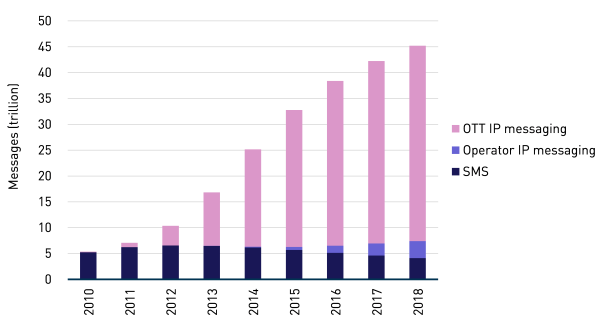
Adoption of RCS arguably has been slow, and also competes, as a standard, with WebRTC. Indeed, some predict that over the top messaging usage already vastly exceeds carrier messaging.


The Universal Profile aims to reduce cost and time-to-market for device suppliers by allowing them to use the same client for both operator customers and open market devices. It will also mean that users have uniform feature sets and a consistent user experience.

In 2017, all new Android devices from Sprint will come pre-loaded with Messenger for Android.

“We are delighted that Sprint has become the first operator to roll out the Universal Profile to their subscribers and hope that this will encourage other markets across the world to follow their lead,” said Alex Sinclair, Chief Technology Officer, GSMA.

Are E-SIMs a Good Thing--And Where--for Mobile Service Providers?

It always is possible to argue that “service-provider-agnostic” subscriber identity modules (SIMs) are a  good thing--or a bad thing--for various participants within the internet ecosystem.

In other words, are remotely-programmed SIMs, supplied with devices, good or bad, from the perspective of mobile operators, device suppliers, app providers and customers?

A few years ago, mobile service providers generally considered such “open” SIMs a bad thing, while Apple and other device suppliers generally considered them a good thing. Consumer advocates might have considered e-SIMs a good thing. App providers might generally have taken the same view.

The initial reaction by mobile service providers was that “ownership and control over SIM cards” was a source of business advantage. After some reflection, that attitude could be changing, in part because the e-SIM approach makes lots of sense for the Internet of Things and machine-to-machine services business model.

In other words, remote activation of mass-market-sourced or business-to-business IoT devices helps mobile operators more effectively and efficiently supply services to such devices. That helps the business model, as it reduces cost.

There arguably is less enthusiasm about e-SIMs for smartphones, since in that segment of the market there is potential disintermediation of primary subscriber relationships. Put another way, it is one more step towards shifting value away from the “access” provider and to the “device” supplier.

For that reason, it might be viewed as one more shift of the access provider role to “dumb pipe” services.

Still, a more positive attitude is likely directly a result of perceived upside of e-SIM approaches for IoT and M2M, if some ambivalence remains about use of e-SIMs for smartphones.

In 2011, Apple was granted a U.S. patent to create a mobile-virtual-network-operator (MVNO) platform that would allow mobile service providers to place bids for the right to provide their network services to Apple, which would then pass those offers on to iPhone customers.

Three years later, in 2014, Apple released its own SIM card—the Apple SIM. Installed in iPad Air 2 and iPad Mini 3 tablets in the United Kingdom and the United States. The new Apple SIM allowed customers to select a network operator dynamically, directly from the device.

At least in principle, stakeholders are going to continue to wrangle over the implications for “customer experience and account “control.”  Though such electronic subscriber identity modules might first become mass market features to support machine-to-machine or other Internet of Things devices and sensors, service providers have yet to embrace the same approach for smartphones.


Wednesday, November 2, 2016

Radio-Neutral Networks are Coming

Access networks that are “radio neutral” are coming, argues Adlane Fellah, WiFi360 managing director. Some might go further and suggest that “access neutral” networks also might develop, where a new end-to-end platform is created.

In that view, fifth generation mobile networks are actually more than a change of radio interface, but a re-architecting of the core networks as well, resulting in a more-virtualized platform.

Software defined networks,  network virtualization, self-optimizing networks (SON), flexible approaches to spectrum licensing, bonding of licensed and unlicensed spectrum, shared spectrum all will help create

“The result will be a flexible, radio-neutral 5G environment in which a whole new generation of business models will be able to thrive in unlicensed as well as licensed spectrum, building on a long history of innovation in the Wi-Fi community,” argues Fellah.

Small Cells Drive Crown Castle Strategy

Most in the communications business know Crown Castle as a “mobile tower” company, which it is. Crown Castle owns 40,000 cellular towers. But Crown Castle also owns or has rights to use 17,000 route miles of optical fiber, a network Crown Castle says supports small cell deployments.

Crown Castle also is acquiring FPL FiberNet Holdings, adding another 11,500 route miles of fiber installed and under construction in Florida and Texas, including 6,000 route miles of fiber in top metro markets.  

After the acquisition, Crown Castle will own or have rights to approximately 28,500 route miles of fiber.

“The addition of FiberNet’s complementary footprint in top metro markets in South Florida and Texas bolsters our fiber available for small cells in markets where we see significant demand from our wireless carrier customers,” said Jay Brown, Crown Castle’s Chief Executive Officer.

That language speaks to the opportunity Crown Castle sees in developing and operating small cell infrastructure.


Why Has Coca-Cola Invested in Internet Access?

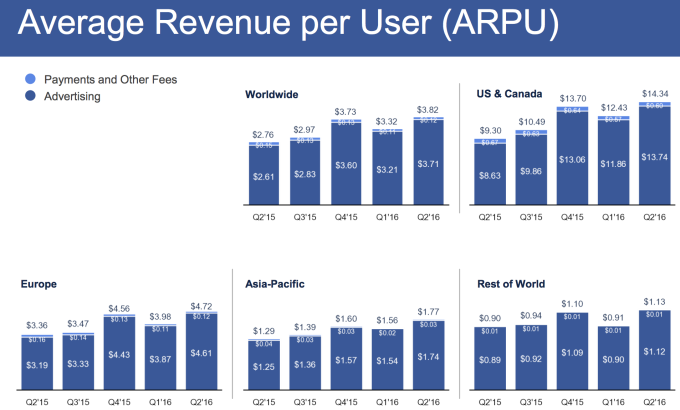
What does Facebook have in common with Coca-Cola? Both believe their core businesses support investments in Internet access. Neither Coca-Cola nor Facebook want to become retail Internet access providers. But both firms are investing significant money and effort into the access function.

Coca-Cola in 2015 iinvested an unknown amount in satellite Internet services provider OneWeb, which plans to build a constellation of low earth orbit satellites to provide internet access literally anywhere on the surface of the earth.

Coca-Cola believes the investment will help the firm expand its global footprint, manage its supply chain and potentially help raise incomes, which could also increase demand for Coca-Cola products, according to Bea Perez, Coca-Cola’s chief sustainability officer.

“We operate in 207 countries as a business,” said Perez. “A lot of those countries are beyond what most people would consider a point of access.”

“Fifty-four percent of the world is not connected,” Perez argued. “So, if you’re a big company, then you’re limiting your markets.”

Some might argue the investment is a small amount and a bit of a vanity project for Coca-Cola. The business case for “connecting the unconnected” is not as clear for Coca-Cola as it is for Facebook. Internet users drive the advertising reach upon which Facebook builds its business.

For Coca-Cola, there is an indirect relationship, at best, between people using the Internet and Coca-Cola revenues.

source: Facebook

Tuesday, November 1, 2016

Internet Access: Doing the Hard Part


The economics of ubiquitous communications networks likely have not changed much over the last century, despite advances in access platforms, processing, radios, optical fiber and other transport technologies that have dramatically affected the cost of connecting customers in hard-to-reach and rural areas.

Basically, profits made in urban areas subsidize service in rural areas, while profits made from business customers subsidize services for consumers. In the same way, most mobile service provider tower sites either lose money (in rural areas) or roughly break even (many suburban locations), and earn most of the actual profits from perhaps 10 percent to 15 percent of cell sites.

In other words, it still likely remains the case that ubiquitous network services providers continue to lose money serving rural customers.

Looking at connecting the unconnected, “we have gotten the easy ones,” said Chris Weasler, Facebook director of global connectivity.

Spectrum Futures 2016 Participants
Spectrum Futures 2016 Participants: Gary Kim, Reza Arefi and Jonathan Brewer

The economics continue to evolve, but it remains to be seen just how much break-even models can improve. In many cases, community-owned networks are possible. For tier-one networks, building affordable networks at scale remains the challenge, though. Open source might help, as it has done in other areas of computing.

The Telecom Infra Project, a wide-ranging effort to create open source telecom infrastructure, now has 300 members, according to Lance Condray, Facebook infrastructure strategist.

Those members include Axiata, EE, Deutsche Telekom, Globe Telecom, Indosat Ooredo, MTN, MyRepublic, SK Telecom, Tata Communications, Telefonica and Vodafone.

Acadia Networks, Accenture, Adva Optical Networking, Amdocs, Broadcom, Ciena, Equinix, Facebook, Gilat, Infinera, Intel, Juniper Networks and Nokia are some of the suppliers also working with TIP.

Facebook, Intel, and Nokia have pledged to contribute an initial suite of reference designs, while other members such as operators Deutsche Telekom and SK Telecom will help define and deploy the technology as it fits their needs

“A few years ago, Facebook was faced with a data center problem familiar to many scale companies: We depended on proprietary systems and hardware that were inflexible and expensive,” said Jay Parikh, Facebook Global Head of Engineering and Infrastructure. “We realized quickly that this approach would not be sustainable; we needed to find a new way.”

Note the language: traditional rack and stack approaches were “unsustainable.”

“We recognized that telecom infrastructure could benefit from the same innovations taking place in the data center,” Parikh said.

“It was clear that the raw building blocks of what we were developing for our own infrastructure could be applied to telecom networks with great benefit,” he said.

At first, “TIP will focus on disaggregating the components of network infrastructure that are traditionally bundled together and vendor-specific,” said Parikh.

As one early example, Facebook has been working in partnership with Globe, deploying a low-cost, solar-powered network-in-a-box solution, bringing mobile coverage to a village. “In the first week alone, we connected more than 60 percent of the community,” said Parikh.

Project groups also have been created to address “the most pressing industry needs including connecting the unconnected or underserved populations, and augmenting the development of powerful new technologies like 5G.”

The access system integration and site optimization group is chaired by SK Telecom.

The unbundled solutions group is co-chaired by SK Telecom and Nokia, and will seek cost-effective, low-power and low-maintenance solutions.

Media-friendly solutions, chaired by Intel, will focus on mobile experience, especially for close-to-edge solutions.

In the backhaul area, Facebook heads the effort to develop “thin and extensible software stack to autonomously coordinate routing, addressing and security related functions in packet-switched IPv6 networks.”

The open optical packet transport project is co-chaired by Facebook and Equinix, and is working on Dense Wavelength Division Multiplexing (DWDM) open packet transport architectures that avoid supplier lock-in.

The core network optimization project is chaired by Intel, and seeks to disaggregate
core network components.

The greenfield telecom networks group is co-chaired by Nokia, Facebook and Deutsche Telekom, and will work on IT-based network architecture.

Is Sora an "iPhone Moment?"

Sora is OpenAI’s new cutting-edge and possibly disruptive AI model that can generate realistic videos based on textual descriptions.  Perhap...