Thursday, October 11, 2018

More Spectrum Sharing in 6-GHz Band?

Reallocation of communications spectrum from satellite to mobile uses has been, and remains, an area of contention between the satellite and mobile industries. But reallocation over the past few decades has been nearly continuously in the direction of more mobile allocations, based on burgeoning mobile communications volume.

In the U.S. market, the 3.7 GHz to 4.2 GHz band is among the latest bands to be considered for a broader range of uses that preserver fixed satellite operations but also allow for greater fixed and mobile terrestrial use.

Those bands are adjacent to the Citizens Broadband Radio Service. The CBRS will use a novel “shared” approach to spectrum that has use cases including rural fixed wireless internet access, campus and enterprise private mobile networks.

Such moves seem possible now, at least in part, because existing satellite users seem less value in that particular block of spectrum, and believe they can profit financially by releasing use of such spectrum to new users willing to pay for use of the assets.

Some advocate other moves, using spectrum sharing, to open up the 6 GHz spectrum (5.925 to 7.125) for unlicensed use. That would essentially move many satellite users out of the “C band,” which has used the 4-GHZ range for downlinks and the 6-GHz band for uplinks.

That proposal, if adopted by the Federal Communications Commission, would free up 1700 megahertz of spectrum, including 500 megahertz for licensed use and up to 1200 MHz for unlicensed purposes.


Mobile Revenue Growth Globally Stalls at 1%

Though some exceptions exist, mobile revenue growth is a big problem, globally. Once almost everyone who wants to use a mobile phone service, and internet access, does so, where is the next big driver of growth?

Opinions will differ about what to do, in a practical sense. Even some who believe connectivity revenues cannot drive future growth might agree that, in the short term, acquisitions to gain scale can forestall the “end of revenue growth.”

Still, one trend worth noting is that growth rates which were disparate back in 2010 now are converging on a one percent annual growth rate. “Best or worst” no longer exists, as it did in 2010. In essence, growth in the “best” markets has cooled dramatically, while climbing marginally in the “worst” markets.

So on a longer term basis, connectivity seems an unlikely source of major revenue growth. And that is why some of us believe service providers who can do so must diversify their revenue sources.


Tuesday, October 9, 2018

Narrowband IoT Networks Will Need Scale to Generate Profits

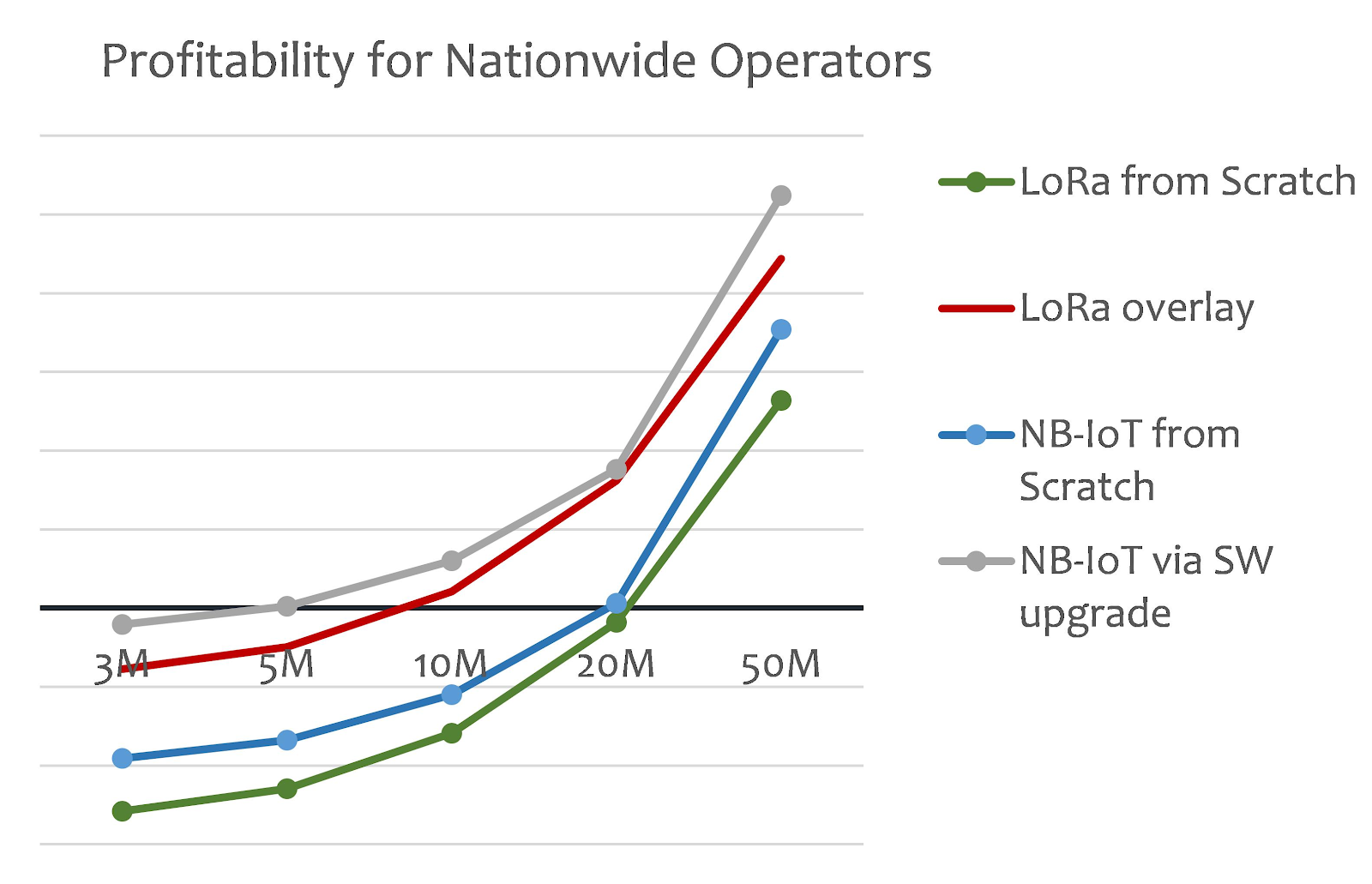
Any way you look at it, a profitable nationwide narrowband internet of things network requires scale: lots of scale. One recent analysis by Mobile Experts suggests that any such network, whether a standalone LoRa network or an overlay NB-IoT network running on 4G LTE, will reach operating breakeven between five and 10 million accounts, in the best of cases, where an overlay network is possible.

If not, a greenfield narrowband IoT network might not break even on an operating basis until about 20 million accounts are obtained.

The biggest issue is funding the client devices. If the end user will pay $15 to $20 (€13.08 – €17.43) for the device, the business case works much better. If the operator needs to give away devices to get the service account,  it’s difficult to make profits, Mobile Experts says.


At scale, with perhaps 50 million accounts, a narrowband IoT network can be quite profitable.


How Can Mobile Operators Create Speed Tiers?

The notion that 5G retail packages could be created on the model of fixed network services (speed tiers rather than simply usage allowances) is intriguing in large part because it would create a “tier of service” differentiation for the first time.

Also intriguing is the idea that new tiers could be created based on low latency, for gaming apps, for example. AT&T says it is considering such moves, for example.

The issue is how mobile operators would do so. The problem is pretty simple. On a fixed network, the router controls speed tiers. Think of your home internet access gateway and router, or the router in your office’s communications or server closet.

In those cases, it is easy to set up speed tiers, as each location has its own router.

How to set up individual user accounts with different speed privileges on a mobile network is more complicated, since a mobile tower will typically have one or more routers that serve all the radios on a tower. In principle, some way has to be created for each user device connecting with radios on a single tower to have its own “virtual router.”

According to Cisco, the solution includes an intelligent core network, policy suite that can control charging and apply the service tier rules, plus analytics and network orchestration.

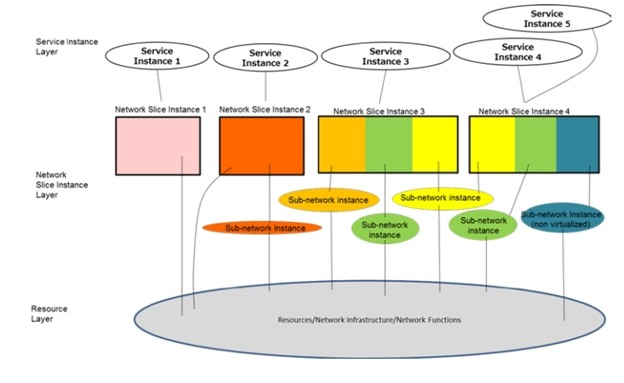
Perhaps another way is to use network slicing to create several different virtual access networks, supporting access at differing rates, and directing customers to connect with the virtual network corresponding to their rate plan.

In that case, each speed tier corresponds to a service instance.


Saturday, October 6, 2018

What Reliance Jio, Comcast and AT&T Have in Common

Telecom service provider business models have diverged in the competitive era, and likely will continue to move apart over the next decade. Some service providers will concentrate on connectivity; others will move into other segments of the internet value chain. A relative few carriers will remain globally focused; most others will have to concentrate on one or a few countries.

Some service providers will operate across mobile and fixed realms; others will remain in one or the other. It also is possible that at least some application, platform or device suppliers themselves take on “connectivity” functions on a wider scale.

That would be especially disruptive as the business model will rely on revenues generated elsewhere in the value chain (advertising, marketing, commerce and transactions, content) while integrating connectivity either as support operations, as services that basically aim only to cover cost or possibly as retail operations.

One of the bigger differences will be between tier-one providers that use connectivity to support other operations, and those operators who maintain a primary reliance on connectivity revenues as the mainstay of the business.

Comcast, AT&T and Reliance Jio are among the more-salient tier-one suppliers that aim to recreate their businesses.

“Reliance Jio’s business model will be fully realized as it shifts gears to becoming a media, content and advertising company, similar to what Verizon and AT&T have been trying to achieve with a series of multibillion-dollar acquisitions over the past two years,” says analyst Neil Shah.

Though few other tier-one service providers are likely to be so aggressive, Jio basically has sought to commoditize voice and data access revenues, while building the revenue model on hardware, software, apps, content and other services.

Jio offers Jio TV (live TV), Jio Cinema (on-demand movies, TV shows), Jio Music (streaming music store with millions of HD songs in 17 languages), Jio Tunes (caller tunes), Jio Mags, Jio XpressNews, Jio Newspaper (news, newspaper and magazines), Jio Money (mobile wallet for online and offline transactions), Jio Cloud (free and paid cloud storage subscription), Jio Security (antivirus, device security and privacy) and more, says Shah.

The next step involves rolling out Jio GigaFiber across 1100 cities nationwide to enable a quad-play strategy. This quad play would involve offering FTTH broadband internet, TV content packages, voice and smart home offerings, says Shah.

But few tier-one suppliers globally will have the scale to take such an approach.

Thursday, October 4, 2018

Global Mobile Churn Drops to Less than 3%

Global mobile account churn now is less than three percent per month, according to Strategy Analytics, which tracks such measures for 259 mobile operators. The firm calls that the lowest level of postpaid churn and a prepaid churn since 2009.

Content bundling, multi-play bundles, and digital self-service options have been key to improving customer loyalty in the wireless market, Strategy Analytics says.

It is the direction of change that is most important. Since three percent monthly churn still means 36 percent annual churn, the typical mobile operator still loses more than a third of its customers every year, and essentially turns over 100 percent of its base every three years.

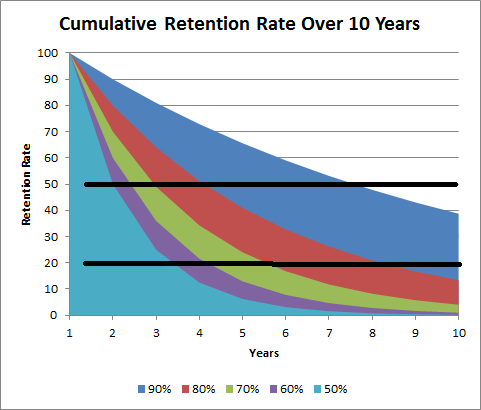
In practice, the losses tend to be less, as the number of lost customers decreases as the cohort base  shrinks (three percent monthly attrition is a smaller number of customers as the pool of accounts shrinks). By some measures, a three-percent monthly churn in any single cohort (one month’s account additions, for example) means 70 percent of those customers are gone in three years.

In the U.S. market, AT&T and Verizon tend to have churn below one percent a month, by way of comparison.


source: TechCrunch

Tuesday, October 2, 2018

Globally, Mobile Churn Declines to Less than 3% a Month

Global mobile account churn now is less than three percent per month, according to Strategy Analytics, which tracks such measures for 259 mobile operators. The firm calls that the lowest level of postpaid churn and a prepaid churn since 2009.


Content bundling, multi-play bundles, and digital self-service options have been key to improving customer loyalty in the wireless market, Strategy Analytics says.

In the U.S. market, AT&T and Verizon tend to have churn below one percent a month, by way of comparison.


It is the direction of change that is most important. Since three percent monthly churn still means 36 percent annual churn, the typical mobile operator still loses more than a third of its customers every year, and essentially turns over 100 percent of its base every three years.

Image result for churn rates
source: TechCrunch

Of course, churn tends to vary quite a lot. Most of the churn happens with new customers, who might be the most prone to respond to offers and inducements. Churn for customers of longer tenure tends to be quite low.

In fact, most churn happens in the first months to years of an engagement, in each cohort of new customers. "Average" churn, in that sense, is misleading. What matters is the churn rate for each new group of customers, and how that cohort churn rate changes over the first several years. 

Image result for churn rates
source: For Entrepremeurs

Is Sora an "iPhone Moment?"

Sora is OpenAI’s new cutting-edge and possibly disruptive AI model that can generate realistic videos based on textual descriptions.  Perhap...